Automated Compliance Reporting Software for Multi-Site Dealer Networks
Automated compliance reporting software gives 25-500 site dealer networks a live compliance view instead of a quarterly snapshot. Infrastructure, ROI, and CAP tracking explained.
Automated Compliance Reporting Software for Multi-Site Dealer Networks
By Naseef Umar, Founder and CEO, AutoSmart Solutions
Automated compliance reporting software is a platform that captures audit findings, calculates weighted scores, and assembles a live network-wide compliance view without any manual consolidation step, replacing the quarterly spreadsheet cycle that leaves leadership working from stale data. For a dealer network running 25 to 500 sites across multiple regions, that shift changes what leadership can act on and when.
The status quo is familiar. Audit data sits in regional Excel files until someone downloads, reconciles, and sends it up the chain. By the time a consolidated picture reaches a boardroom, the underlying findings are six to twelve weeks old. Non-compliance costs average $14.82 million per incident, 2.71 times the average compliance investment of $5.47 million (Globalscape and Ponemon Institute via SanctionsLookup, 2026). A three-month visibility lag turns that risk from manageable to structural.
This post explains what automated compliance reporting software changes at the infrastructure level for dealer networks, how it connects to corrective action closure and Original Equipment Manufacturer (OEM) incentive programmes, and what a 25-500 site network actually requires to make the shift work.
Key Takeaways
Automated compliance reporting software eliminates the manual consolidation step between audit completion and management visibility, moving the compliance view from quarterly to real-time.
Every non-compliance should become an owned, dated, trackable action item through to closure. Without that closed loop, the report is the end of the process rather than the start.
A 25-500 site network requires offline-first mobile capture, multi-tier hierarchy support, weighted auto-scoring, and a drill-down dashboard to make cross-site comparisons defensible.
Multi-franchise dealer groups managing three to eight OEM standards can run all programmes in a single platform with brand-specific configurations and role-based access controls.
Almajdouie Motors cut its audit cycle from 10 days to 3 days after digitising its audit and reporting process (AutoSmart Audit case study, 2025).
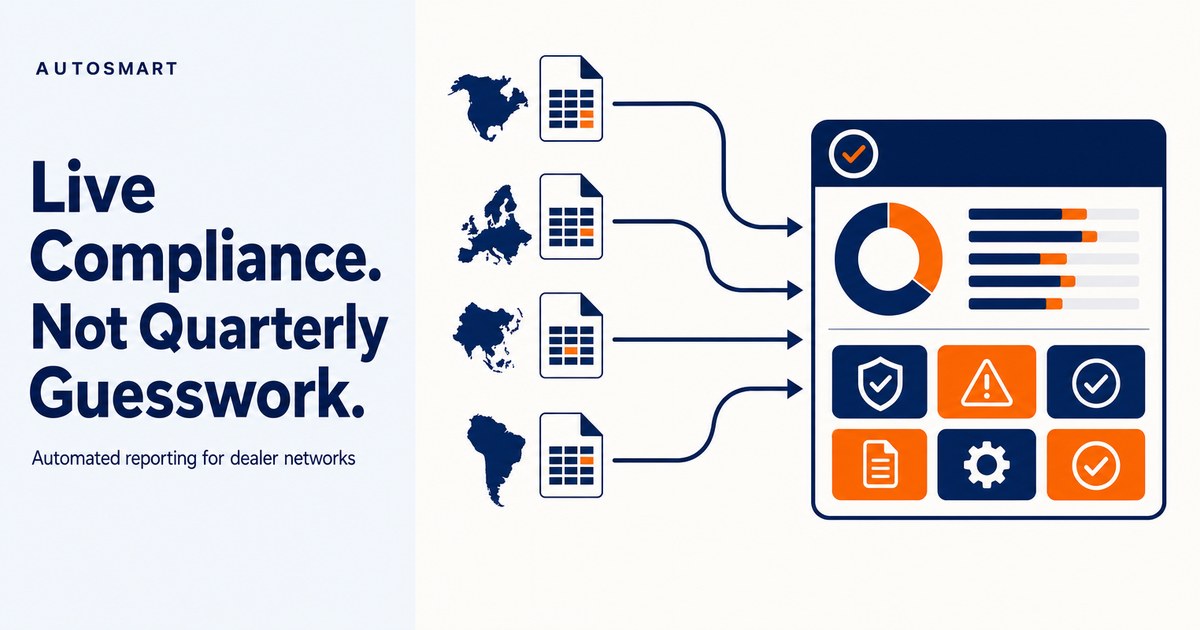
Quarterly compliance reports fail multi-site dealer networks because audit data stays locked in regional spreadsheets for weeks before anyone consolidates it. By the time leadership sees a score, the findings are a month or more old. Non-compliance costs average $14.82 million per incident, 2.71 times the average compliance investment (Globalscape and Ponemon Institute via SanctionsLookup, 2026), making a three-month visibility lag a measurable financial risk.
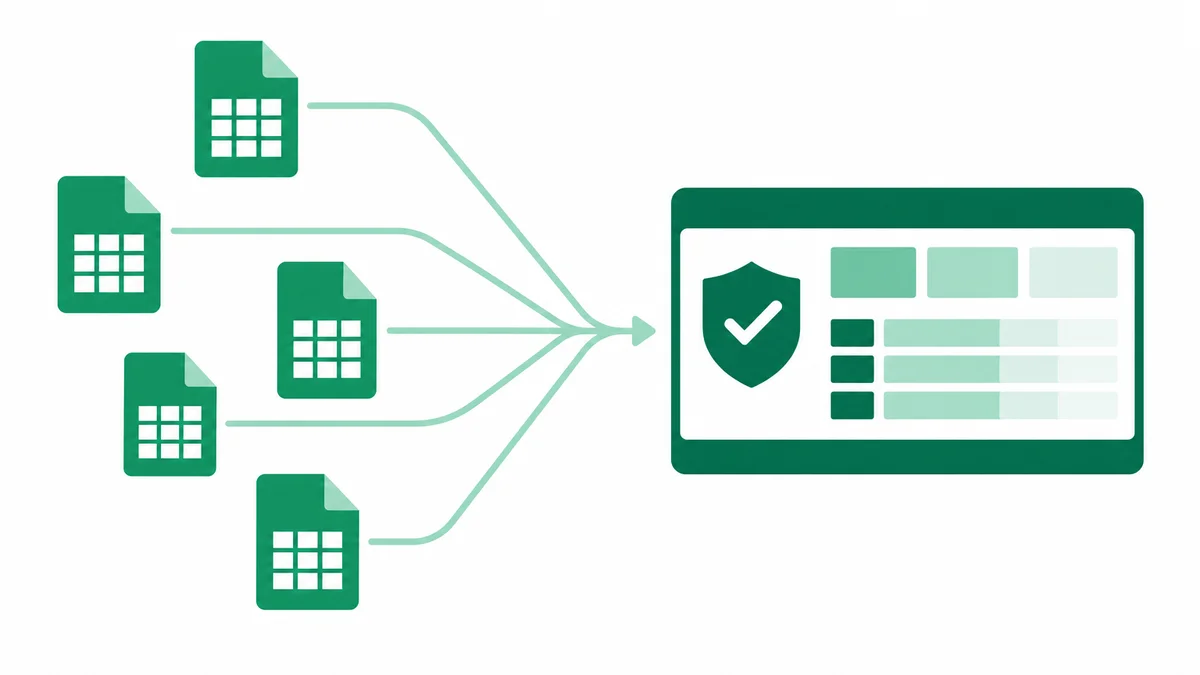
Flat vector of regional spreadsheet files funnelling into one live compliance dashboard
The failure is not that audits are not happening. Audit teams visit sites, complete checklists, and write up findings. The failure is in what happens next.
The Spreadsheet Consolidation Trap
"Every time a spreadsheet is emailed, copied, or resaved under a slightly different name, your evidential trail degrades further." (Panintelligence editorial team, 2025)
In a network with 50 or more dealer sites, that degradation compounds with every audit cycle. A regional manager consolidates scores from ten dealers into one file. A head-office manager consolidates five regional files into a second. By the time data reaches leadership, it has passed through three to four manual reconciliation steps. Each step introduces version mismatches, formula errors, or missing entries.
The result: leadership can only answer "where are we failing?" at the quarterly review. Even then, the answer reflects conditions from four to eight weeks before the meeting. Dealers who failed then may have already corrected the issue. Dealers who were borderline compliant may have since slipped further. Neither fact is visible until the next cycle.
What the Manual Consolidation Step Costs in Time
AutoSmart's operational data shows management teams spend several hours per reporting cycle consolidating data across dealers, regions, and audit frequencies. For networks running 17 to 18 concurrent audit programmes at daily, weekly, monthly, quarterly, and yearly frequencies, that consolidation is not a single task. It is a recurring overhead that grows as the network expands.
The dealer audit system breakdown that precedes a platform purchase is rarely one moment of failure. It is the accumulation of small time costs that eventually consume the hours available for analysing trends and taking action.
What Automated Compliance Reporting Software Actually Changes
Automated compliance reporting software is a platform that captures audit findings, calculates weighted scores, and assembles a live network-wide compliance view without any manual consolidation step. Leadership sees updated scores the moment an auditor submits. Almajdouie Motors cut its audit cycle from 10 days to 3 days after digitising this process (AutoSmart Audit case study, 2025).
The enterprise compliance management software market is growing at 15.5% CAGR through 2033, driven by demand for automated processes, real-time monitoring, and centralised risk management (Grand View Research, 2025). That growth reflects a shift automotive dealer networks are already living through.
Luai Felemban, Network and Dealer Development Manager, described the before-and-after in a video testimonial: evaluation previously required five days of field work plus five more days to prepare and share reports; the full process including the action plan now takes three days (video testimonial, 2024).
The specific changes to the compliance cadence are:
Score availability: A compliance score is available immediately at audit submission, not after a manual consolidation run.
Aggregate view: Network, regional, and dealer-level scores update in real time rather than at a scheduled review.
Finding status: Each finding's current status (open, in progress, closed) is visible at any point, not only when someone manually checks a follow-up email chain.
Trend data: Performance over multiple audit cycles is automatically available, not reconstructed from archived spreadsheet versions.
Corrective action age: Overdue action items surface automatically rather than being discovered at the next audit visit.
Our data: AutoSmart's customer accounts show audit cycle compression from 10 days to 3 days at Almajdouie Motors, with field preparation and report consolidation both contributing to that reduction.
The Infrastructure Requirements for a 25-500 Site Network
A 25-500 site dealer network requires automated compliance reporting software with four infrastructure layers: offline-first mobile capture; a multi-tier hierarchy mapping country, region, distributor, and dealer; weighted auto-scoring identical across every auditor and site; and a drill-down dashboard from network to individual finding. Automation cuts manual audit preparation time by 41%, and 95% of organisations report gains from automation (Vanta State of Trust Report, cited by Bright Defense, 2026).
Flat vector of a mobile audit app in offline mode with a sync indicator activating on connectivity return
Missing any one layer forces a manual consolidation step back into the workflow.
Layer 1: Offline-First Mobile Capture
Dealer workshops frequently have poor or no internet connectivity. A platform that requires a live connection to record findings will produce incomplete data. Offline-first is a design requirement: the platform records all entries locally on the device and syncs automatically when connectivity is restored.
Evidence capture also requires tamper-resistance. Live photo capture is enforced at each question. Date and time stamp and geotagging confirm the photo was taken at the relevant facility during the audit. Platforms that allow upload of pre-existing images introduce an evidence integrity gap.
Layer 2: Multi-Tier Hierarchy Support
A 200-site network is not a flat list. It is organised as countries, regions, distributors, sub-distributors, and individual sites. Different auditors are responsible for different tiers.
Role-based access control for dealer networks means access is scopeable by dealership, location, and geography. Distinct roles include administrators, auditors, external auditors (with restricted permissions), viewers (management-level read-only), and Person-In-Charge (PIC) users who manage and close assigned corrective actions.
Without this hierarchy, a consolidated network view is impossible. Regional scores cannot be cleanly separated from each other, and a head-office manager sees everything or nothing.
Layer 3: Weighted Auto-Scoring
Weighted auto-scoring is the mechanism that makes cross-site comparisons defensible. When an auditor submits, the platform calculates the score immediately using the weights configured during programme setup. Every auditor at every site uses the same weighting. There are no manual calculations, no version discrepancies, and no disputed result that rests on arithmetic rather than performance.
For networks where audit scores feed into OEM dealer excellence programmes or franchise renewal decisions, this consistency matters commercially. A score that cannot be reproduced is a score that cannot be relied upon.
Layer 4: Drill-Down Dashboard
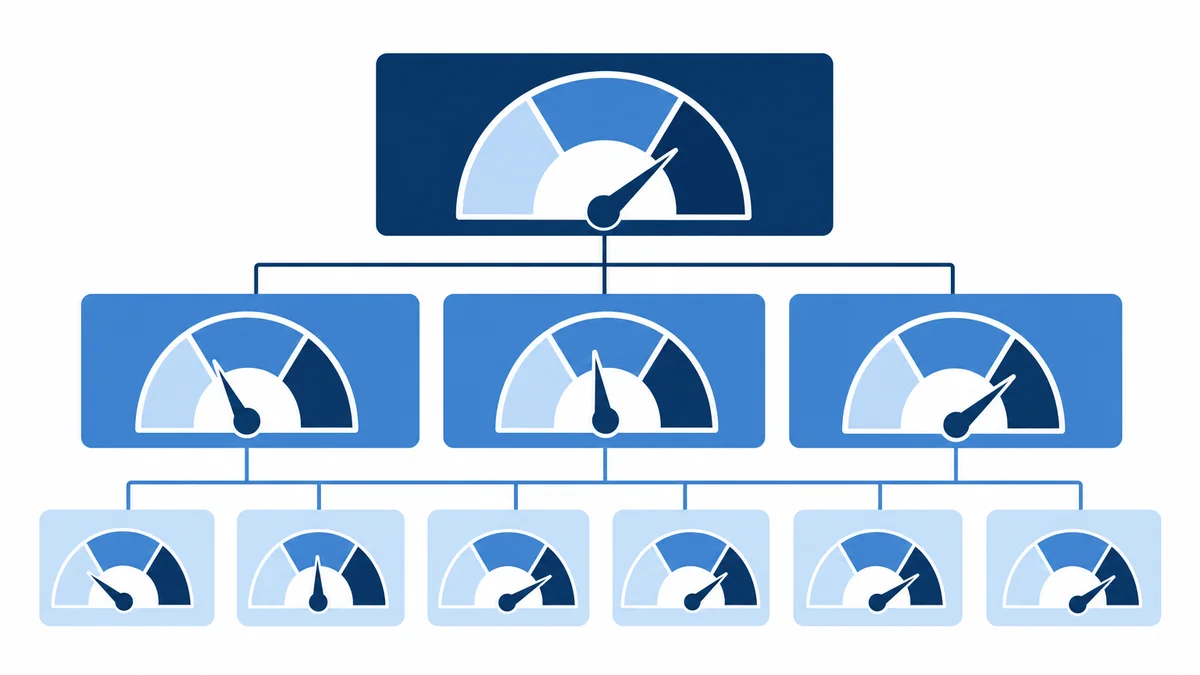
The management view of a multi-site network's compliance cannot stop at a single aggregate number. A drill-down dashboard lets leadership navigate from the overall network score to regional performance, to individual dealer scores, to individual findings, all without switching systems or requesting a report from a regional manager.
Dashboard Level
What It Shows
Who Uses It
Network
Overall compliance score, trend across audit cycles
Regional MD, Head of Network Development
Region / Country
Regional score vs. network average, outlier sites
Regional Field Manager, Area Manager
Dealer / Site
Site score, breakdown by audit programme pillar
Dealer Standards Manager, Field Auditor
Finding
Individual non-compliance, PIC, due date, status
Field Auditor, Compliance Champion
This four-level view replaces the quarterly slide deck with a permanent, always-current picture that any authorised user can access.
How Compliance Scores Connect to OEM Incentive and Bonus Programs
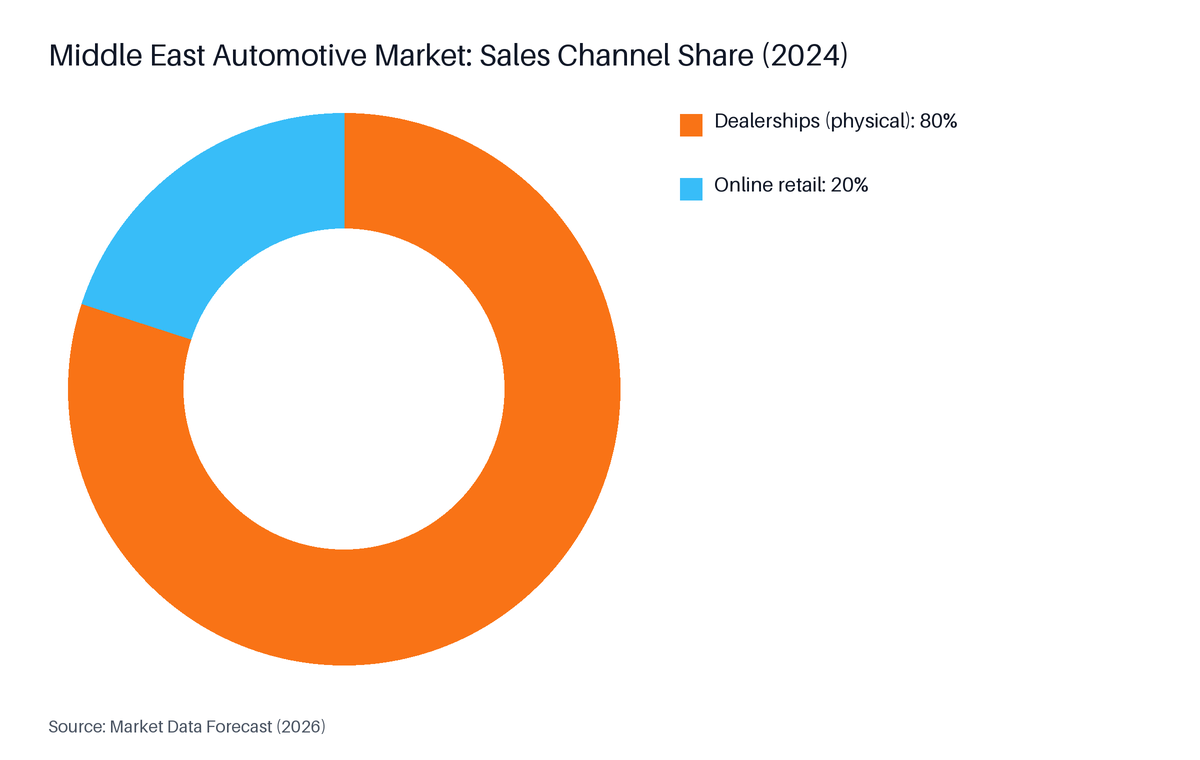
OEM dealer excellence programmes in the UAE, Saudi Arabia, and India tie a portion of dealer bonus eligibility to audit scores. Automated compliance reporting gives those scores a timestamp and consistent weighting at audit cycle close. The Middle East automotive market was valued at USD 116.12 billion in 2025 (Market Data Forecast, 2026), with over 80% of GCC buyers preferring dealerships - the networks where incentive programmes are most active.
Donut chart: Middle East Automotive Market: Sales Channel Share (2024). Highest: Dealerships (physical) at 80%.
MENA vehicle markets sold 2.91 million units in 2025, up 4.7% year on year (focus2move, 2025). Saudi Arabia held 29.4% of that volume. Ford MENA posted 10% sales growth in 2025, its strongest year in a decade (AMENA Auto, 2026). Network expansion at that pace increases the number of dealer sites where incentive thresholds apply.
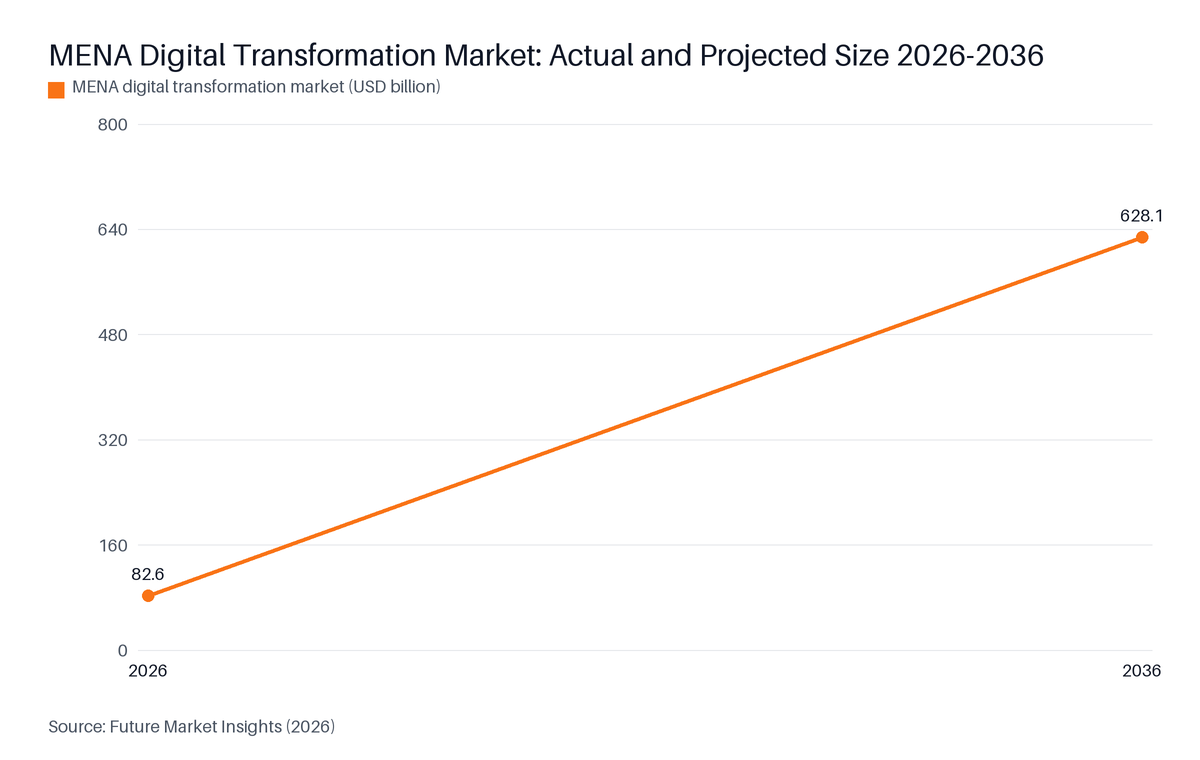
MENA digital transformation spending reached USD 82.6 billion in 2026 and is projected to reach USD 628.1 billion by 2036 at a 22.5% CAGR (Future Market Insights, 2026). Technology implementation holds the leading 31% share of that spending. That trajectory creates budget conditions where compliance platform investment becomes a near-term line item.
Line chart: MENA Digital Transformation Market: Actual and Projected Size 2026–2036. Highest: 2036 at 628.1.
The cost of the quarterly cadence in an OEM incentive context is direct. If a dealer fails a brand standards audit in month one and the failure is not visible until the quarterly review, the corrective action window shrinks from three months to six weeks or less.
In incentive programmes with a compliance-score threshold for bonus eligibility, a dealer who corrected the issue in week five may lose a payment they earned - because the score was not recorded as compliant until the quarterly report. Automated compliance reporting removes that gap. The score reflects the current state of the audit cycle, not the state at the last manual consolidation.
For the compliance manager or Head of Network Development presenting to a regional or global board, the difference is between a live compliance trend and a static anecdote.
Corrective Action Tracking: The Step Most Tools Skip
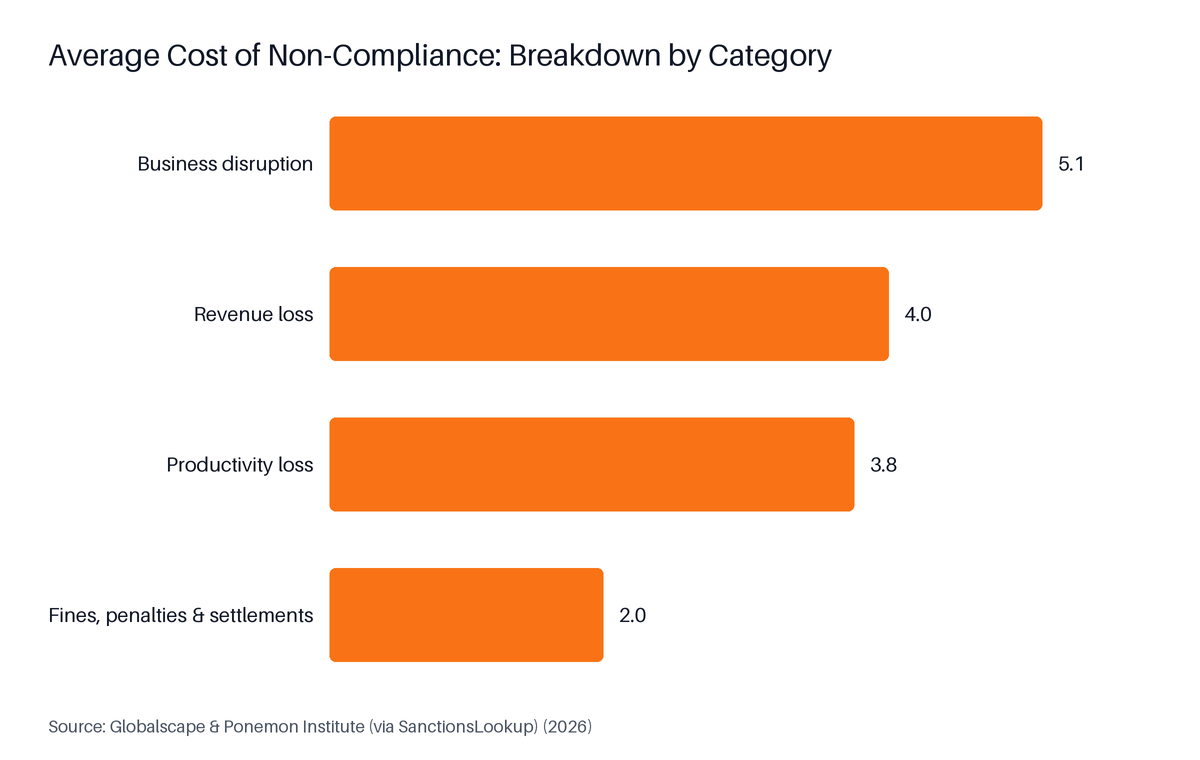
A Corrective Action Plan (CAP) converts a compliance report from a document into a management tool. AutoSmart data shows each audit generates 8 to 20 findings, each requiring 4 to 5 manual follow-ups before closure. Non-compliance costs average $14.82 million per incident (Globalscape and Ponemon Institute via SanctionsLookup, 2026), with business disruption alone accounting for USD 5.11 million of that total.
Horizontal Bar chart: Average Cost of Non-Compliance: Breakdown by Category. Highest: Business disruption at 5.1.
Flat vector of a corrective action tracker with PIC tags, due dates, and closure status chips
Without a closed-loop corrective action workflow, each audit produces findings that sit in a PDF until the next visit. Some items are missed entirely. Others cross their deadlines before anyone notices.
How the Closed Loop Works in Practice
When an auditor marks a question as failed and submits the audit, AutoSmart Audit's Action Plan Tracker handles the follow-up automatically:
The platform creates a corrective action item for that finding.
The relevant Person-In-Charge (PIC) is assigned based on preconfigured rules - by site, by pillar, or by finding type.
A due date is set according to the programme's escalation rules.
Automated reminder notifications begin on a configurable schedule. They start before the due date and repeat at set intervals until closure.
The PIC uploads closure evidence - a photo, a document, or a confirmation - directly through the platform.
The finding moves to closed status only when closure evidence is reviewed and approved.
The full audit trail is preserved: ownership, deadline, evidence submitted, and approval date.
This replaces the email-and-spreadsheet chain. The audit team stops being the follow-up function and returns to the audit function.
Multi-Brand and Multi-Market Dealer Groups: One Platform, Multiple Standards
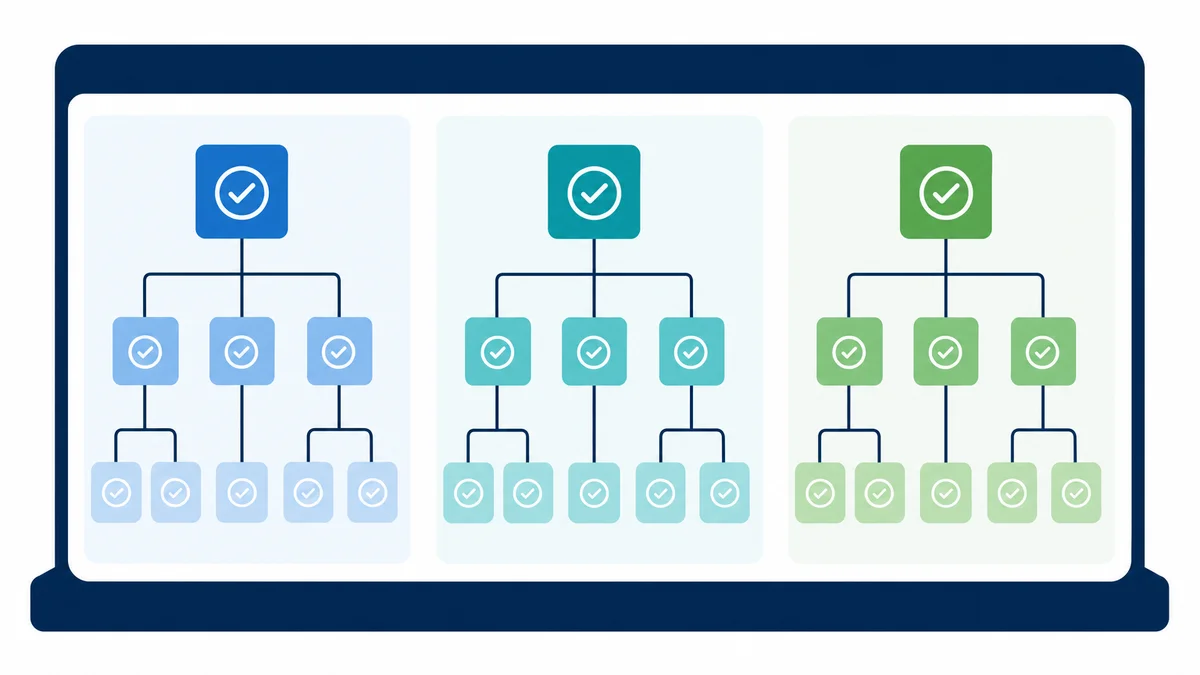
Multi-franchise dealer groups in GCC and India commonly hold three to eight OEM franchises under one holding company. Automated compliance reporting software handles this by running brand-specific audit programmes inside a single platform with role-based access per brand and geography. MENA digital transformation spending reached USD 82.6 billion in 2026, projected to reach USD 628.1 billion by 2036 (Future Market Insights, 2026), signalling budget conditions that make platform consolidation a realistic near-term investment.
Flat vector of multi-brand compliance architecture with three OEM checklist trees under one platform roof
Asia Pacific's dealer management system market is projected to grow at 9.8% CAGR (Persistence Market Research, 2025). Government-mandated digital documentation for emissions and safety compliance is a key driver. Networks operating across both MENA and APAC carry parallel compliance reporting obligations as a result.
What Multi-Brand Configuration Requires
Requirement
Multi-Brand Capability Needed
Separate checklist per OEM brand
Programme-level isolation within one platform instance
Different scoring weights per brand
Per-programme scoring configuration, not global
Brand-specific access for auditors
Geography and brand scoping at user level
Consolidated group view for ownership
Cross-brand aggregate dashboard for holding company leadership
Separate reports per brand
Automated report generation per programme or brand filter
One system for all brands
Single login, single admin interface, one data environment
A distributor group managing multiple OEM brands with separate spreadsheet files per brand is running the same consolidation problem at brand level that a single-brand network runs at regional level. The fix is the same: one platform with brand-level isolation and group-level visibility.
For more on running multiple audit programme types in one platform, the auto audit software guide covers Dealer Operating Standards (DOS), 5S, and mystery audits in parallel.
Who This Is Not For
Automated compliance reporting software is not the right fit for networks with fewer than roughly 10 sites. At that scale, a spreadsheet remains workable because there is nothing to aggregate across. It is also not a vehicle inspection tool, a Dealer Management System (DMS) module, or a financial audit platform. AutoSmart Audit measures qualitative standards judged on-site, not data pulled from a transactional system.
Networks mid-contract with a generic checklist tool are a better fit than they may assume. Generic tools handle single-site checklist execution well. They handle network-level aggregation, dealer hierarchy structures, and closed-loop corrective action workflows poorly. The distinction is whether the unit of value is a clean single-site inspection report or a live view of 200 dealers against one standard. These are different products solving different problems.
For a structured look at when spreadsheets break and what to evaluate next, the dealer audit system guide covers the transition criteria in detail.
Frequently Asked Questions
What is automated compliance reporting software, and how does it differ from a standard audit app?
Automated compliance reporting software is a platform that captures audit findings, calculates scores, and assembles network-wide compliance views in real time without manual consolidation. A standard audit app records a single site visit. Automated compliance reporting software aggregates results across every site, region, and audit cycle simultaneously, making performance visible to leadership at any point rather than only at scheduled reviews.
What data does an automated compliance dashboard show that a quarterly Excel report doesn't?
An automated compliance dashboard shows live scores at network, region, and individual dealer level; corrective action closure rates and overdue items; recurring failures across multiple audit cycles; and trend lines updated after every completed audit. A quarterly Excel report shows a static snapshot assembled manually, with no view of what changed between reviews or which findings were actually closed.
Can one platform manage multiple OEM brand standards simultaneously for a multi-franchise dealer group?
Yes. Automated compliance reporting software built for dealer networks allows multiple Original Equipment Manufacturer (OEM) checklists, scoring weights, and audit programmes to run under a single system with distinct configurations per brand. A distributor group managing Toyota, Hyundai, and Ford standards can run all three in parallel, with role-based access ensuring each auditor sees only the programmes relevant to their brand or geography.
What is a Corrective Action Plan and how does software automate its tracking and closure?
A Corrective Action Plan (CAP) is a structured record assigning each audit finding an owner, a due date, and a required closure action. Automated compliance reporting software converts every failed audit item into a CAP entry automatically, sends reminders to the Person-In-Charge (PIC) on a configurable schedule, and requires documented evidence before closure. This replaces the manual email-and-spreadsheet chain that typically needs four to five contacts per finding before resolution.
How long does it take to implement automated compliance reporting across a 50-200 site network?
Implementation of automated compliance reporting software across a 50-200 site dealer network typically takes 5-10 working days to reach go-live once configuration inputs are received. The timeline depends on receiving checklist structures, scoring weights, user lists, and access hierarchies. A no-cost pilot on one existing audit programme is available to validate the configuration before full rollout.
Is AutoSmart Audit secure enough for OEM and distributor procurement requirements?
AutoSmart Audit displays ISO 27001, SOC 2 Type II, and GDPR compliance badges on its website, issued via TÜV SÜD. Infrastructure runs on AWS with data residency options including local or region-specific hosting. The platform supports Single Sign-On (SSO), role-based access controls, and ongoing vulnerability assessment and penetration testing. The CTO and CISO are available for direct technical review by customer IT or security teams.
What are the integration requirements between an audit platform and an existing DMS or ERP?
Automated compliance reporting software for dealer networks operates as a standalone network compliance layer. It does not require Dealer Management System (DMS) or ERP integration to function. Audit execution, scoring, corrective action tracking, and management reporting all run independently. API connectivity is available for organisations that want to feed compliance data into an existing business intelligence environment, but it is not a prerequisite for deployment.
Are there compliance reporting requirements specific to dealer networks in the UAE, Saudi Arabia, and India?
Yes. Dealer networks in the UAE and Saudi Arabia commonly face OEM-mandated audit standards tied to franchise renewal and dealer excellence bonus programmes, with Arabic-language audit outputs required in many tenders. India's expanding formal dealer networks face government-mandated digital documentation requirements for emissions and safety compliance. AutoSmart Audit supports multi-language checklists including Arabic, and data residency options meet regional hosting requirements in MENA and APAC markets.
Conclusion
The core problem with quarterly compliance reports is not the format. It is the lag between when a dealer fails a standard and when anyone with authority to act on it sees that failure.
Automated compliance reporting software removes the lag. Scores are available at audit submission. Corrective action status is visible continuously. The closed loop, from finding to assigned owner to documented closure, determines whether the compliance programme produces change on the ground or just reports about it.
For a 25 to 500 site network, the four infrastructure requirements are concrete: offline-first mobile capture, multi-tier hierarchy support, weighted auto-scoring consistent across every auditor and site, and a drill-down dashboard from network to finding level. Without those four layers, some version of the manual consolidation step remains.
Networks managing multiple OEM brand standards, operating across MENA and APAC, or preparing for an OEM-mandated certification cycle have a low-risk entry point available: validate the configuration against one existing audit programme before committing to a full rollout. AutoSmart Audit holds a 4.8 out of 5 rating from 17 verified reviews on G2 (March 2025 to September 2026), reflecting that field team adoption, typically the highest-stakes objection in a committee purchase, has been cleared by networks already running at scale.
Schedule a Free Demo to see how AutoSmart Audit handles your network's audit programmes, scoring structure, and reporting requirements in a live walkthrough.
Written by
Naseef Umar
Founder | CEO
Naseef Umar is an automotive industry expert and the Founder & CEO of AutoSmart, with over a decade of experience working across automotive operations, dealer standards, network performance, audits, and digital transformation.
Company
KERALA Full Address - Pulikillam W Rd, Kakkanad West, Chembumukku, Edappally, Kochi, Kerala 682030; DUBAI Full Address - Dubai Silicon Oasis, UAE

 Naseef Umar