Blog
Dealer Audit Software: A Buyer's Checklist for OEMs and Dealer Groups
Dealer audit software explained: what it replaces, how it differs from generic inspection apps, and eight tests to run in a demo before you buy.

Networks hit the spreadsheet wall at 50-100 sites. Five functional tests separate genuine dealer audit software from a checklist builder dressed up as one.
 Naseef UmarOct 11, 2026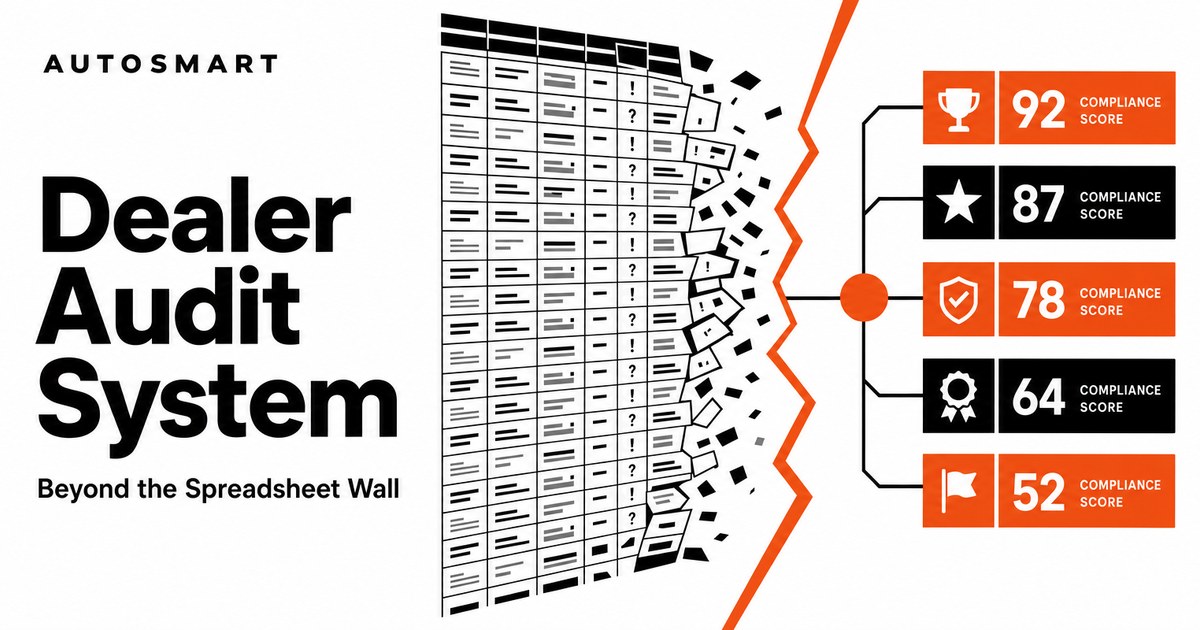
Dealer audit software explained: what it replaces, how it differs from generic inspection apps, and eight tests to run in a demo before you buy.
Score a 3-bay workshop and a flagship showroom fairly on one retail audit checklist: format profiles, N/A arithmetic, weighting and guardrails.
A brand standards audit scores a dealer against OEM facility, process and customer experience rules. See who sets standards, what they cost and how audits run.
Request a quote and our experts will contact you within 24 hours with tailored solutions and pricing.
You can also send us a quick email at info@autosmarts.co.
AutoSmart Technology
Last updated: Oct 1, 2026
A dealer audit system is the process, workflow, and software a branded retail network uses to measure outlet compliance against its operating standards - and spreadsheet-based versions reliably start failing between 50 and 100 sites.
At that scale, findings multiply faster than email can track them. The audit team stops auditing and starts chasing. The audit management software market reflects how acutely buyers feel this pressure: it is forecast to reach $3.89 billion by 2030 at a CAGR of 15.5% (The Business Research Company via GII Research, 2026). This post identifies the five functional tests that separate a genuine dealer audit system from a checklist builder with a better logo, and answers the questions buyers ask when they start evaluating.
Key Takeaways
- Spreadsheet-based dealer audit systems typically break down at the 50-100 site mark, when findings volume and email-based follow-up exceed what manual processes can manage.
- Closed-loop corrective action tracking - converting every failed finding into an owned, dated task tracked to evidenced closure - is the single most important test for genuine dealer audit software.
- A timestamped, geo-tagged evidence trail is the only tool that resolves a disputed dealer score without a meeting or a negotiation.
- A management dashboard is not the same as a report export: one shows live compliance across every outlet, the other is a static file already out of date when opened.
- Offline-first mobile capability is not optional for MENA and APAC networks, where dealer workshops regularly operate without reliable connectivity.
A spreadsheet-based dealer audit system typically breaks down at the 50-100 site mark, when findings volume and manual follow-up exceed what email can manage. Each audit generates 8-20 findings; each finding requires 4-5 follow-ups before closure; post-audit consolidation consumes 3-4 hours per dealership. At that scale, the audit team stops auditing and starts chasing - with no system record of who owns what, when it is due, or whether it was ever fixed.
Franchises that deployed automated compliance monitoring reported average operational cost reductions of 28% and compliance improvement rates of 41% within the first 18 months (OSforyour.business citing industry research, 2026). That is the upside of leaving the coordination wall behind.
The symptoms are specific. Email threads replace a closed-loop workflow, so no one holds a system record of who owns a finding, when it is due, or whether it has been fixed. Roughly 17-18 audit programmes may run in parallel - daily, weekly, monthly, quarterly, annual - each producing its own file. A director asking "which dealers are underperforming this quarter?" cannot get an answer without commissioning a consolidation exercise.
"Without clear workflows, reminders, audit trails, and evidence management, small gaps can turn into major compliance risks." (VComply Editorial Team, 2025).
The wall is not a technology wall. It is a coordination wall. A spreadsheet produces a checklist. It cannot coordinate ownership, deadlines, and closure evidence across dozens of sites and hundreds of open items at the same time. That is what a purpose-built dealer audit system replaces.
For networks building the case for a switch, the field audit software for dealer networks overview covers the full workflow in more detail.
Closed-loop corrective action tracking is the process that turns a failed audit line into an assigned task with a named owner, a due date, and evidenced closure - without any email. As Xenia Team's practitioner guide notes, "Most platforms collect audit data. Few drive it to closure" (Xenia Team, 2026). Audit closure rate benchmarks set above 90% as exemplary, 70-89% as acceptable, and below 70% as a critical gap (KPI Depot via Xenia Team, 2025).
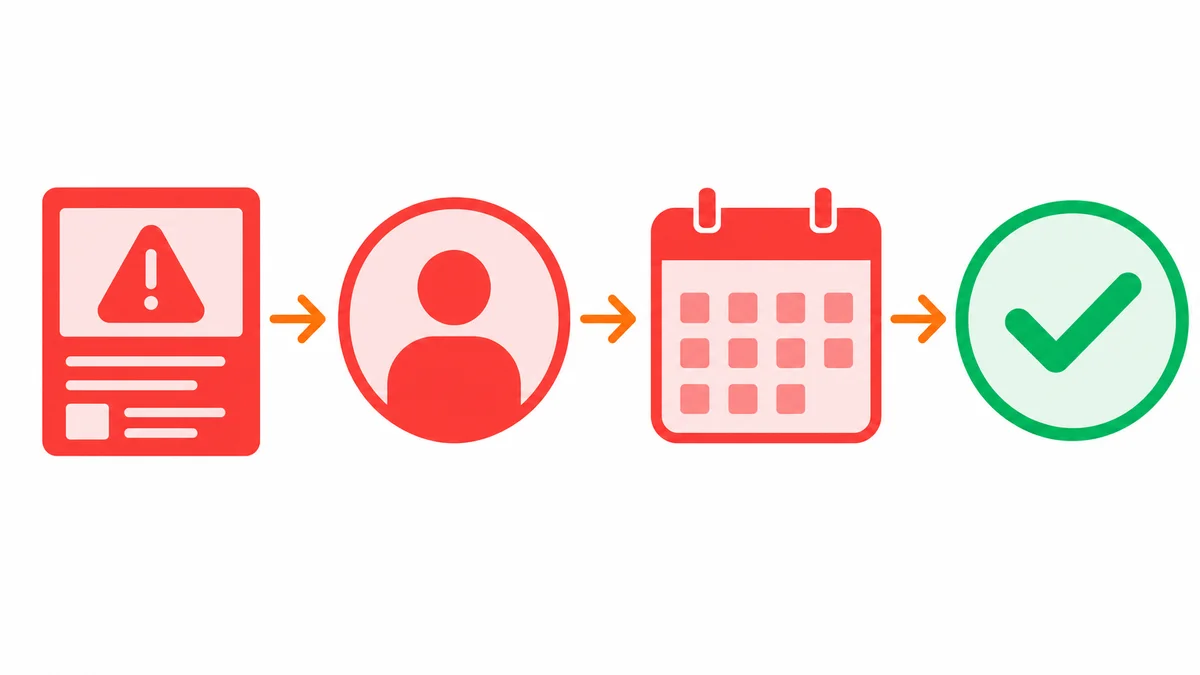
Ask any dealer auditing software vendor to demonstrate this exact sequence before you buy:
Our data: Almajdouie Motors cut a 10-day audit cycle to 3 days after switching to AutoSmart Audit - the field team completed full audit reports, including action plans, without adding headcount (AutoSmart Audit).
A system that sends a PDF report and relies on the auditor to email the relevant dealer contact fails this test. That is not a dealer audit system. It is a checklist builder with a delivery mechanism.
Genuine dealer audit software resolves a disputed score immediately by surfacing timestamped, geo-tagged photo evidence linked to the specific finding at the moment it was captured. Non-compliance costs organisations 2.71 times more than maintaining compliance, with the average cost of non-compliance reaching $14.82 million versus $5.47 million for compliance (Thomson Reuters citing Ponemon Institute, 2025). An unresolved disputed score is not a clerical problem - it is a liability.

A dealer disputing an audit score is among the fastest-moving buying triggers in this category. The pain is immediate and political. Resolution depends on one thing: whether the evidence trail exists and whether it is immutable.
| Evidence Element | Why It Matters |
|---|---|
| Live-capture enforcement | Blocks upload of a photo taken before or after the audit visit |
| Date and time stamp | Proves when the photo was taken, not when it was uploaded |
| Geotag | Confirms the auditor was physically on site |
| Link to specific finding | Ties the photo to the exact question, not a general folder |
| Auditor identity | Records who conducted the assessment |
| Digital sign-off by auditor and dealer | Creates a shared, acknowledged record at close-out |
When a dispute is raised, the process is: open the finding, open the attached evidence, share the record. Minutes, not meetings.
Dealerships that maintain robust compliance programmes report 34% higher customer retention and avoid an average of $180,000 in annual compliance-related costs (Strolid citing industry data, 2024). The evidence trail is not only a dispute-resolution tool - it is the foundation of a credible compliance record.
"Our distributors were initially using Excel sheet-based audits, making it a tiresome job to compile and analyse." (AutoSmart Audit customer testimonial, 2025). When the audit lives in Excel, the evidence lives in a folder. The two are never connected.
A management dashboard in a dealer audit system shows live compliance scores across every outlet, with drill-down from network average to region to individual site to specific finding - without exporting a file. An enterprise franchise digital transformation programme in 2026 improved outlet compliance by 27% and reduced onboarding time by 21% through automated audit workflows (Congruence Market Insights, 2026). That result depends on real-time visibility, not a scheduled PDF.
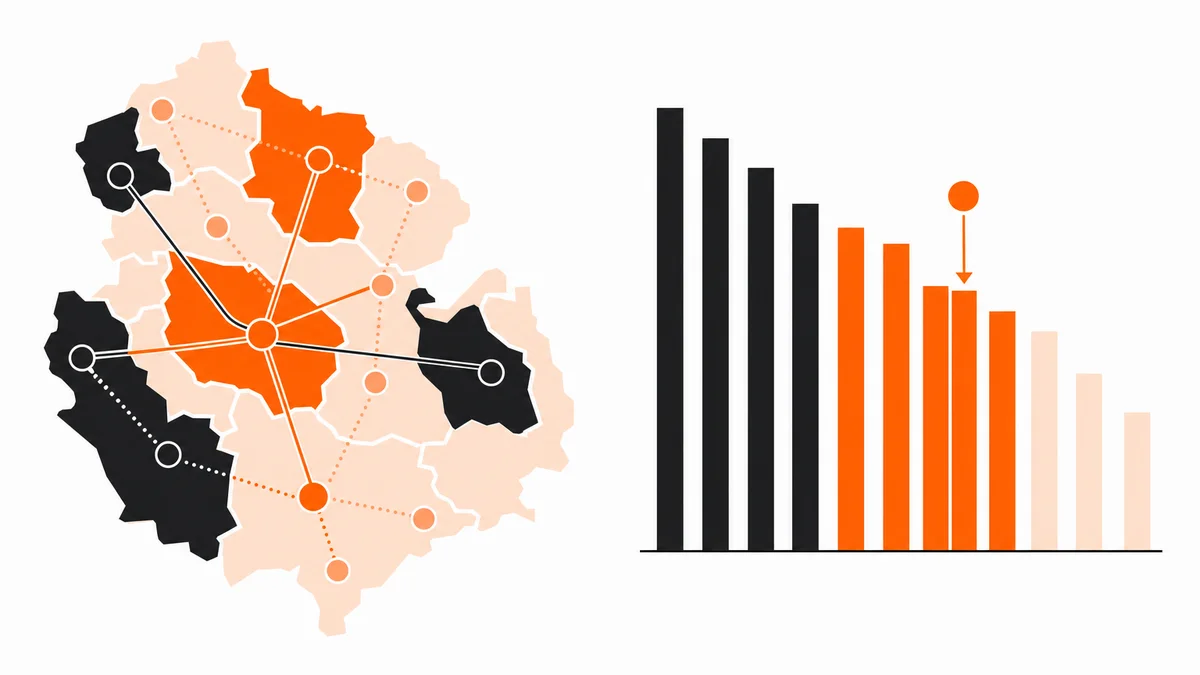
"Traditional compliance processes built around spreadsheets, shared drives, paper checklists, and email approvals often create visibility gaps, inconsistent documentation, delayed responses." (VComply Editorial Team, 2026). The distinction between a dashboard and a report export is not cosmetic. It determines whether leadership can act on current data or is always working from the past.
| Capability | Report Export | Management Dashboard |
|---|---|---|
| Data freshness | Snapshot at time of export | Live, updates as audits complete |
| Multi-site view | Requires manual consolidation | Built in; filter by region, brand, cycle |
| Drill-down | Not available | Network → region → outlet → finding |
| Trend visibility | Requires comparing files across cycles | Automatic trend lines and comparisons |
| Leadership access | Dependent on the report author | Self-serve, role-based access |
| Action plan status | Not visible | Embedded alongside scores |
A network director who cannot answer "which three dealers need attention this week?" without requesting a new report is not using a dealer audit system. They are using an audit storage system.
The paperless audit software for dealer networks guide explains how the move from file-based reporting to live dashboards changes day-to-day operations for both the audit team and for management.
Schedule a Free Demo to see the drill-down dashboard in a live environment with your network structure.
A dealer audit system built for multi-region networks applies a centrally authored, locked checklist with identical weighted scoring across every outlet regardless of country, language, or distributor tier. Multi-language support lets auditors work in Arabic, English, or French while scores roll up to a common benchmark. Role-based access control (RBAC) defines what each user level can see and edit - an Area Sales Manager (ASM) sees their territory, a Director sees the full network.

When evaluating a dealer audit system for cross-region use, confirm each of the following:
57% of enterprise franchise brands have introduced digital audit workflows, reducing documentation effort by approximately 29% (Congruence Market Insights, 2025). For Dealer Operating Standards (DOS) programmes running across MENA and APAC simultaneously, a locally modified checklist producing non-comparable scores is the most common failure mode in multi-market audit programmes. That is not a theoretical risk.
The 5S audits in a dealer network overview addresses how a single platform runs 5S, Dealer Operating Standards, and Customer Experience audits without reconfiguring the scoring engine for each programme type.
A dealer audit system used in MENA or APAC markets must be offline-first - able to complete a full audit, capture photo and video evidence, and auto-sync when connectivity is restored. The Middle East automotive market is projected to reach USD 154.31 billion by 2034 (MarketDataForecast, 2026), and dealer networks are expanding into sites where LTE coverage cannot be assumed. An app that requires signal is not a field audit tool.
Ford Middle East and North Africa posted 10% year-on-year sales growth in 2025-its strongest year in a decade - with Saudi Arabia up 11.7% and UAE up 11.1% (Zawya, Ford MENA press release, 2026). That growth rate means new sites in new locations. Not all of them sit in urban connectivity zones.
Over 80% of GCC buyers prefer dealerships as their primary sales channel (MarketDataForecast, 2026). Consistent brand standards at each physical touchpoint depend on auditors completing assessments accurately - whether they have signal or not.
| Requirement | What to Confirm |
|---|---|
| Offline capability | Full audit completion without internet; not only viewing cached data |
| Auto-sync | All responses, photos, and scores upload automatically on reconnect |
| Mobile platforms | Native iOS and Android apps, not only mobile web |
| Evidence integrity | Live-capture enforcement active even offline |
| Security | AWS-hosted; ISO 27001, SOC 2 Type II and GDPR compliant* |
| Data residency | Customer can choose hosting region or local hosting per requirement |
| SSO | SAML/OAuth supported |
| Implementation time | Go-live in 5-10 working days once configuration inputs are received |
*Compliance status as displayed on the vendor's site via TÜV SÜD; confirm against the issuer's certification directory before citing in a procurement document.
The dealer audit system evaluation framework in this article applies to qualitative field audit programmes where an auditor makes a judgement on site and justifies it with evidence. It does not apply to vehicle inspection, inventory audit, warranty claims adjudication, or networks with fewer than roughly 10 outlets - below that threshold, spreadsheets remain workable. AutoSmart Audit's onboarding documentation records a typical go-live of 5-10 working days once configuration inputs are received, which is a concrete comparison point for teams told to wait for an in-house build.
Two further situations call for a different approach. If an Original Equipment Manufacturer (OEM) global IT function has mandated a specific platform and the regional team must wait, the practical counter-argument is speed: a 5-10 working day go-live on one existing programme against an in-house build timeline is a measurable difference. If an external consultancy currently supplies both the audit team and the tool, the evaluation question is not "replace the consultancy." It is "does management want direct visibility into scores, trends, and action plan status, or does it want to receive a report?"
Dealer auditing software with a built-in Action Plan Tracker auto-generates a corrective action for every failed checklist item, assigns a Person-In-Charge (PIC), sets a due date, and moves the item through Kanban stages (Pending, In Progress, Completed, Approved) with escalation alerts - replacing email chains entirely. Audit closure rate benchmarks from KPI Depot set above 90% as exemplary, 70-89% as acceptable, and below 70% as a critical gap to close (Xenia Team, 2025).
A dealer auditing tool built for networks rather than single sites provides a drill-down dashboard showing compliance scores at the network, region, and outlet level in one view. Look for weighted scoring with role-based access control so an Area Sales Manager (ASM) sees their territory and a Director sees the full network - without exports, without manual consolidation, and without waiting for a scheduled report.
A report export produces a static document already out of date by the time it is opened. A management dashboard shows live compliance scores across your entire dealer network, flags which sites are trending down, and lets leadership drill from the network average to an individual finding without requesting a new report. When evaluating a replacement dealer auditing system, confirm it separates real-time visibility from the periodic report export - they are not the same capability.
A genuine dealer audit reporting system captures each finding with live-capture photo or video evidence, an automatic date and time stamp, and a geotag confirming the auditor was on site. That combination creates an immutable record tied to the specific checklist question. When a dispute is raised, you retrieve the finding, open the attached evidence, and share the timestamped record - the dispute is resolved in minutes, not days.
A dealer audit tool should have captured, at minimum: a date and time stamp for every response, a geo-tagged photo or video linked to the specific failed question, the auditor's identity, the score applied, and any comments entered at the time of the audit. Live-capture enforcement - which blocks upload of images taken before or after the audit - prevents a disputed photo from being substituted after the fact. See the evidence trail table in Functional Test 2 above for the complete list of required elements.
Evaluate closed-loop corrective action tracking first, because it is the function Excel cannot replicate and the one that breaks down fastest as findings volume grows. At 50-plus sites with 8-20 findings per audit, manual follow-up by email generates hundreds of open items with no system record of owner, deadline, or closure status. After that, check for a management dashboard, timestamped evidence capture, weighted multi-site scoring, and offline mobile capability.
A digital dealer auditing tool that standardises across regions needs: a single checklist authored centrally and locked against local modification; weighted scoring applied identically regardless of country; a multi-language interface so auditors work in their own language while scores roll up to a common scale; role-based access that lets regional managers see their territory; and a network-level dashboard that ranks all sites against the same benchmark.
Use this five-point checklist before any vendor demonstration. Ask each vendor to confirm these capabilities in writing - not in a slide deck - before committing to a trial or a contract.
A vendor that passes all five is a genuine dealer audit system. A vendor that passes three or fewer is a checklist builder. The distinction matters most when a dealer disputes a score, a finding sits unresolved for six weeks, or a Director asks a network performance question nobody can answer without building a new spreadsheet.
Schedule a Free Demo to run AutoSmart Audit against these five tests with your own audit programme and network structure.
Spreadsheet-based dealer audit systems stop working when coordination - not data entry - becomes the bottleneck. The five tests in this article are not feature preferences. They are the functional minimum for a system that closes findings, resolves disputes, gives management a live view, enforces one standard across regions, and works in the field.
The audit management software market is on track to reach $3.89 billion by 2030 (GII Research, 2026). The vendors that survive that consolidation will be the ones that pass all five tests above - and the networks that select them will have a compliance record that holds up under scrutiny, including a disputed score on a Monday morning.
Run each test against any vendor you evaluate. Ask for a working demonstration, not a slide. Request written confirmation of offline behaviour, evidence integrity controls, and closure rate visibility.
For networks that have outgrown their current tool, the paperless audit software for dealer networks guide covers what changes day to day once a live system replaces the file-and-email cycle.
Written by Naseef Umar, Founder and CEO of AutoSmart Solutions. Naseef has over a decade of experience in automotive operations, dealer standards, network performance, and digital transformation.
© 2026 AutoSmart Technology All rights reserved.