Demo Scenarios to Stress-Test Dealer Compliance Audit Software Before You Decide
Run these 5 live demo scenarios to surface platform limits in dealer compliance audit software before you sign - hierarchy, evidence disputes, CAPA closure, offline mode.
Demo Scenarios to Stress-Test Dealer Compliance Audit Software Before You Decide
Dealer compliance audit software is a digital platform that replaces manual audit workflows - spreadsheets, email chains, photo folders, and PowerPoint decks - with a single system covering field execution, weighted scoring, evidence capture, corrective-action tracking, and network-wide reporting across a branded dealer network.
If you are shortlisting platforms and every demo looks identical, the problem is not the demos. It is the questions you are asking. Every vendor leads with a polished checklist builder and dashboard walkthrough. The scenarios that surface real limits never come up voluntarily: multi-tier role hierarchy depth, verified corrective-action closure, timestamped evidence disputes, offline sync behaviour, and admin self-service. This post gives you five concrete scenarios to run in the room before you sign anything.
Key Takeaways
Every shortlisted dealer compliance audit software demo should include at least five live stress-test scenarios, not a vendor-led walkthrough of pre-loaded data.
The corrective-action closure test is the single highest-leverage scenario: 70% of corrective actions go incomplete when no assigned owner exists (AutoSmart Audit, 2025).
A platform that allows a Person-In-Charge (PIC) to self-approve a finding without attaching evidence will not enforce closure in production.
Offline-mode behaviour, hierarchy depth, and admin self-service are the three features most likely to be misrepresented in a curated demo environment.
AutoSmart's data from Al Majdouie Motors shows an audit cycle cut from 10 days to 3 days after digitization - the benchmark to hold shortlisted vendors against.
Why Every Dealer Compliance Audit Software Demo Looks the Same
Dealer compliance audit software demos look identical because every vendor leads with a polished checklist builder and dashboard tour - the features that photograph well. The scenarios that expose real limits (multi-tier hierarchy depth, verified corrective-action closure, timestamped evidence disputes, offline sync conflicts) are never volunteered. The inspection management software market reached $8.66 billion in 2026 at a CAGR of 12.3% from $7.72 billion in 2025 (The Business Research Company, 2026), compressing differentiation for buyers as feature sets converge.
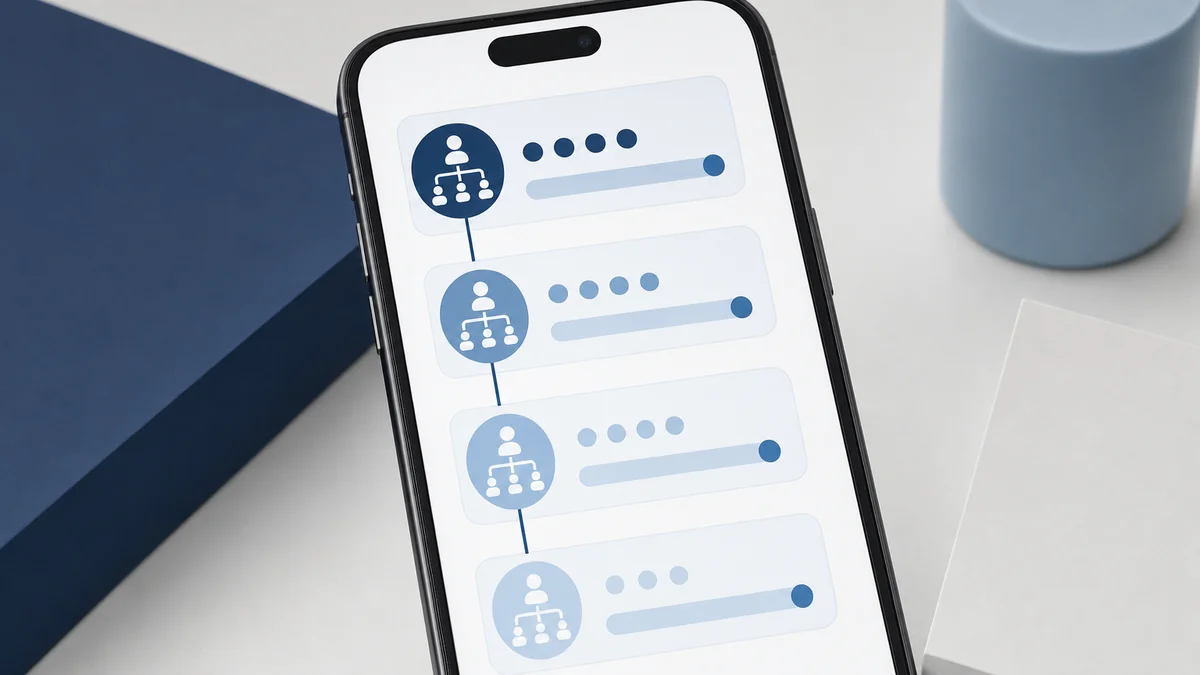
Four-level OEM-to-dealer hierarchy expanding on a mobile audit app screen
The result is a shortlist stall. Three platforms, three identical-looking demos, a buying committee that cannot agree on which one to trust. The answer is not a longer RFP. It is a set of live tests that expose where each platform's architecture stops.
"Many dealer audits fail to create long-term improvement because audit findings are recorded but not properly monitored afterward" (AutoSmart Audit, 2025). The same failure applies to software selection: most buyers evaluate the report the platform produces, not what it does when something goes wrong.
The five scenarios below are structured around the most common post-go-live discoveries in automotive network deployments. Run each one in the demo environment, not a pre-loaded sandbox, and record what happens. Any platform that declines to demonstrate a scenario live has answered the question for you.
Scenario 1: Build a Four-Level OEM-to-Dealer Hierarchy Live
The multi-tier hierarchy scenario tests whether dealer compliance audit software natively supports the full Original Equipment Manufacturer (OEM) to dealer structure - OEM headquarters, national sales company or regional distributor, importer or sub-distributor, and dealer principal - or simulates it through workarounds. Ask the vendor to build this in the live demo environment, not a pre-loaded one, and assign a distinct role to each level. The GCC automotive aftermarket was valued at USD 10.69 billion in 2025, with approximately 26,000 small operators accounting for 42.1% of market value (Ken Research, 2025), making hierarchy fidelity non-negotiable for any network operating across that region.
Our data: Daimler Trucks and Buses MENA ran approximately 17-18 audit programmes in parallel across daily, weekly, monthly, quarterly, and yearly frequencies before moving to AutoSmart Audit. Coordinating that many programmes across a multi-tier distributor structure on Excel-based audits is precisely the failure mode this scenario is designed to surface.
This is the defining complexity for automotive network buyers. A four-level hierarchy is standard for any distributor managing markets across the Gulf Cooperation Council (GCC) or APAC. The OEM HQ needs network-wide visibility. The regional distributor needs a country-level view. The importer needs dealer-level data. The dealer principal sees only their own site.
What to ask and observe
Ask the vendor to:
Create four distinct role levels in the live environment during the demo session - not a pre-configured account.
Log in as each role and confirm which data is visible and which is restricted.
Assign a specific auditor to a defined subset of dealers within one market, so role scoping is real rather than theoretical.
Show what happens when a regional distributor attempts to view a dealer outside their assigned scope.
"A custom setup is not the same as a native structure" (ClientTether, 2025). A platform that achieves four levels through custom field workarounds will break when you add a fifth market or a second brand. A platform with native hierarchy support will demonstrate this in under ten minutes.
Pass or fail criteria
Test
Pass
Fail
Four-level hierarchy built live
Completed without vendor back-end access
Requires vendor to pre-configure
Role scoping enforced
Each role sees only permitted data
Any role sees data outside their scope
Second brand added to same account
Distinct checklist and hierarchy, same platform
Requires a duplicate account
Market added without vendor ticket
Administrator completes it independently
Vendor must intervene
Scenario 2: Attempt a Corrective-Action Closure Without Evidence
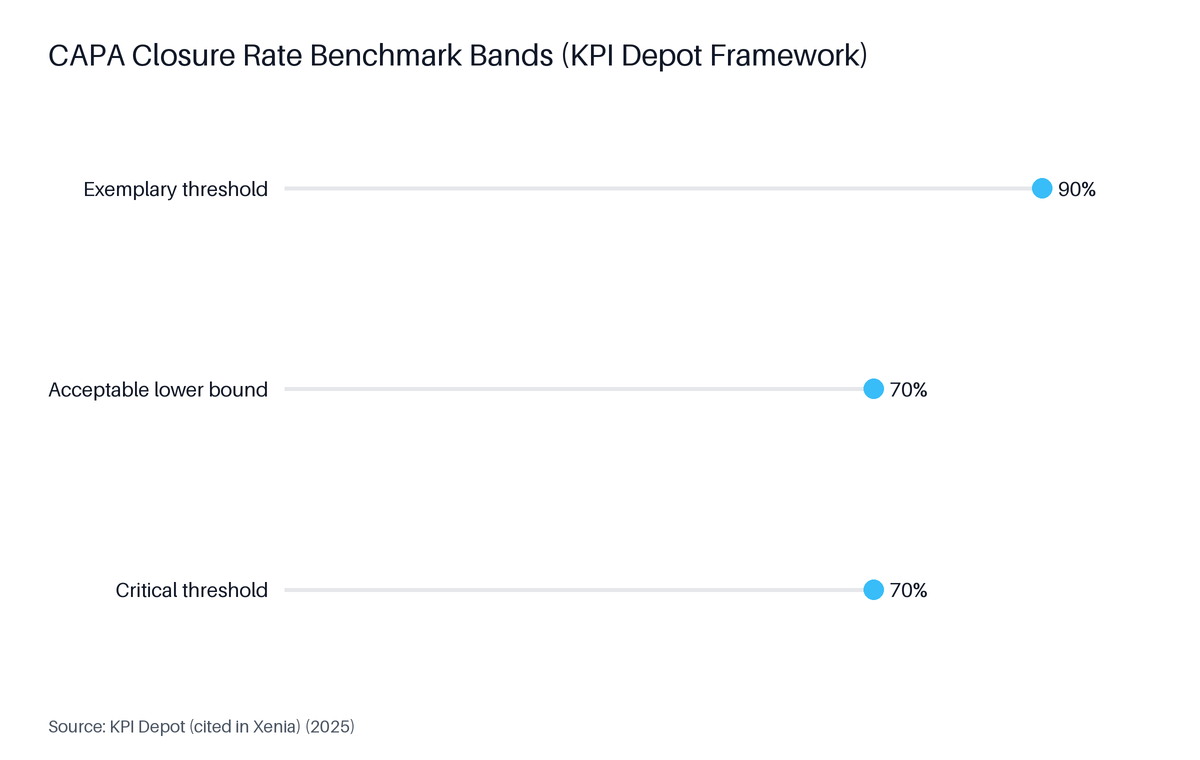
The corrective-action closure scenario tests whether the platform enforces verified closure or simply records whatever the Person-In-Charge (PIC) submits. Corrective Action and Preventive Action (CAPA) is a documented process requiring a responsible owner, a due date, attached closure evidence, and independent approval before a finding is marked resolved. Corrective actions go incomplete 70% of the time when they have no assigned owners (AutoSmart Audit, 2025). The KPI Depot framework classifies programs above 90% CAPA closure as exemplary and below 70% as critical (KPI Depot, cited in Xenia, 2025).
The specific test: log in as the PIC and attempt to mark a finding complete without uploading any closure evidence. Record what the platform does. A platform that allows it has failed. Then attempt to approve your own finding as the same user. If that closes the item, there is no independent verification layer.
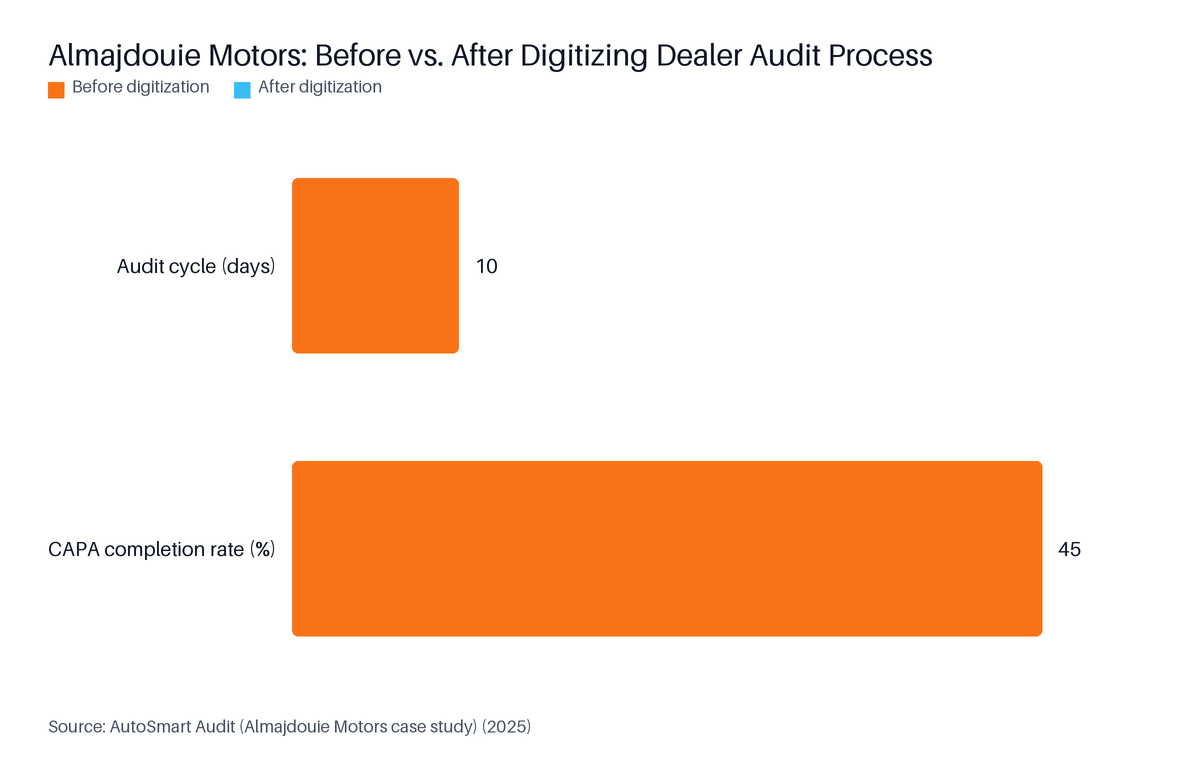
Before and after digitization at Al Majdouie Motors, CAPA completion rate moved from 45% to 89% (AutoSmart Audit, Al Majdouie Motors case study, 2025). That gap - between 45% and 89% - is the gap between a platform that logs closure and one that enforces it.
Our data: AutoSmart's deployment at Al Majdouie Motors cut the audit cycle from 10 days to 3 days and lifted CAPA completion from 45% to 89% after implementing closed-loop corrective-action tracking (Al Majdouie Motors case study, AutoSmart Audit, 2025).
Horizontal Bar chart: Almajdouie Motors: Before vs. After Digitizing Dealer Audit Process. Highest: CAPA completion rate (%) at 45.
Source: AutoSmart Audit (Almajdouie Motors case study), 2025
"Deliberately attempt to close a CAPA without attaching evidence and record what happens" (Certainty Software, 2025). This single test distinguishes platforms that enforce closure from platforms that merely log it.
Each audit typically generates 8 to 20 findings. Under a manual process, each finding requires 4 to 5 follow-ups including escalations before closure. The platform must eliminate that chasing cycle, not digitize it.
What verified closure looks like in a passing platform
Verified closure is the state in which a corrective action has been reviewed and approved by a party other than the assignee, with evidence attached, before the finding leaves the open queue. A passing platform shows:
PIC cannot mark a finding complete without attaching evidence.
A separate approver - auditor or manager - must review and approve before the item closes.
Automated reminders trigger before the due date and repeat until closure.
The closed record shows who approved, when, and what evidence was attached.
Scenario 3: Dispute a Timestamped Photo - How Does the Platform Respond?
The timestamped evidence dispute scenario tests how dealer compliance audit software handles a dealer who contests a photo finding - a real, fast-moving trigger in MENA and APAC networks where a single disputed score can stall a franchise renewal. The Middle East automotive market was valued at USD 116.12 billion in 2025 (Market Data Forecast, 2025). The commercial stakes of a disputed audit score are significant in this context. "Audit scores affect dealer incentives, franchise renewals, and in some networks, marketing fund distribution" (AutoSmart Audit, 2025).
Geotagged timestamped photo attached to a disputed audit finding on a tablet
The test sequence
Ask the auditor account to submit a geotagged, timestamped photo attached to a finding.
Log in as the dealer and attempt to replace that photo with an alternative image.
Observe whether the platform allows overwriting, adds the new photo as a counter-submission, or blocks the action.
Ask the vendor to show the full evidence trail - both submissions, timestamps, and upload identity.
A platform that allows the dealer to overwrite the auditor's original photo has no defensible evidence record. A platform that adds the dealer's counter-photo as a separate submission with its own timestamp - while preserving the original - gives both parties a traceable record. It takes the dispute out of WhatsApp.
What else to verify in this scenario
Can the platform restrict auditors from uploading pre-existing images from the camera roll, requiring a live capture only?
Does the captured image include both a date-time stamp and GPS coordinates?
Is the geotagging verifiable against the dealer's registered address?
These controls separate evidence from a photo library.
Scenario 4: Go Offline Mid-Audit and Sync
The offline-mode scenario tests whether field audit software genuinely operates without connectivity or merely delays a crash. OEM-authorized dealerships handled 89.73% of India automobile market transactions in 2025 (Mordor Intelligence, 2025), yet workshop environments across APAC and MENA routinely have poor or intermittent connectivity. Offline-first is a design approach where the full audit workflow runs locally on the device and syncs automatically when connectivity returns, with no data loss and no manual reconciliation step required.
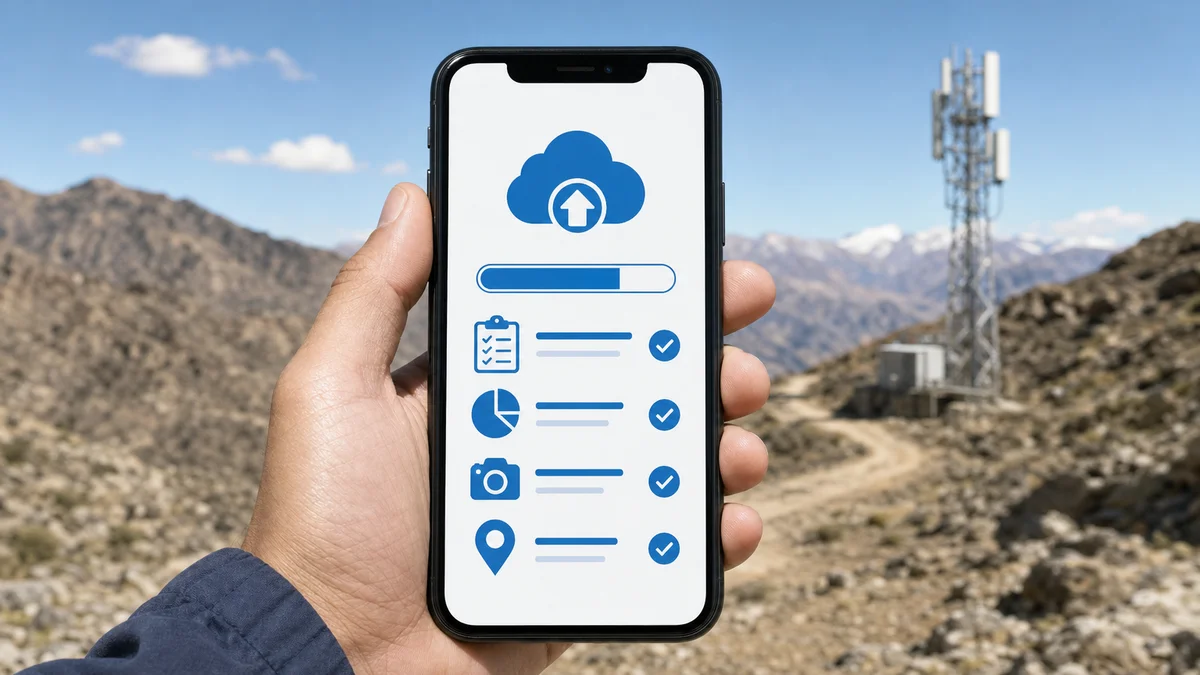
Smartphone showing offline audit sync progress bar after connectivity is restored
Ask the vendor to demonstrate this live. Put the device into airplane mode. Complete five questions, including a photo capture and a scored finding. Reconnect. Observe the sync.
The harder version of this test
Have two auditors go offline simultaneously in the same dealership - simulating two team members conducting different sections of the same audit - then sync both devices. Ask the vendor what happens if their scores conflict. A platform with no conflict-resolution logic will silently overwrite one auditor's data or require manual reconciliation.
Scenario 5: Add a New Checklist Section Without Vendor Help
The administrator self-service scenario tests whether your team can update audit programmes independently or whether every checklist change requires a vendor ticket. Dealer Operating Standards (DOS) is the OEM-defined framework of operational, brand, and service requirements that each franchised dealer must meet and demonstrate at audit. Standards revisions are a primary buying trigger: a revised DOS programme must be measured from day one, and a platform that requires vendor involvement for each update creates a bottleneck exactly when speed matters most.
Admin self-service is the ability of an authorised customer administrator to create, edit, publish, and retire checklist sections, questions, and scoring weights without raising a support ticket or waiting for a vendor configuration update. AutoSmart Audit goes live in 5 to 10 working days once configuration inputs are received - admin self-service is what sustains that speed after go-live.
The test
Hand over admin credentials during the demo. Ask one person from your team - not the vendor's sales engineer - to:
Add a new weighted section to an existing audit programme.
Set the section weight as a percentage of the total score.
Add three questions with different response types (pass/fail, scored scale, text comment).
Publish the updated checklist.
Run a test audit using the new version.
Time the whole exercise. If it takes more than 15 minutes and requires the vendor to intervene at any point, note it. When your standards team revises a DOS programme mid-cycle, they will not have a vendor on call.
This scenario also reveals whether the platform supports multiple audit programme versions simultaneously - critical when a new standard is being phased in across markets at different timelines.
A dealer compliance audit software evaluation scorecard gives each shortlisted platform a concrete pass or fail against the five scenarios, making the shortlist decision defensible to the board rather than based on which demo felt better. The inspection management software market reached $8.66 billion in 2026 (The Business Research Company, 2026) - a crowded field where demos converge. Each scenario maps to a real production failure: hierarchy gaps cause reporting blind spots, evidence weaknesses create disputed scores, and admin dependency slows standards enforcement.
Kanban corrective action board showing PIC assignments, due dates, and closure evidence
Use this table as a starting point. Adjust weights to match your network's specific risk profile.
Scenario
What it tests
Suggested weight
Platform A
Platform B
Platform C
Four-level hierarchy built live
Network architecture
25%
Pass/Fail
Pass/Fail
Pass/Fail
CAPA closure without evidence
Corrective-action integrity
25%
Pass/Fail
Pass/Fail
Pass/Fail
Timestamped evidence dispute
Evidence defensibility
20%
Pass/Fail
Pass/Fail
Pass/Fail
Offline mid-audit sync
Field reliability
20%
Pass/Fail
Pass/Fail
Pass/Fail
Checklist update without vendor
Admin independence
10%
Pass/Fail
Pass/Fail
Pass/Fail
A platform with one fail in the 25% categories costs more in production than a platform with two fails in the 10% category. Weight accordingly.
"Without centralised reporting systems, OEMs struggle to benchmark dealer performance or identify recurring operational issues across regions" (AutoSmart Audit, 2025). The scorecard makes that gap visible before contract, not after go-live.
The dealer compliance audit software demo scenario framework described in this post is not suited to networks with fewer than roughly 10 sites, where the complexity of multi-tier hierarchy, weighted scoring, and closed-loop corrective-action tracking does not yet create enough operational pain to justify a platform decision at this depth. Single-site operators and teams running one audit programme annually will find the scenario set over-specified for their actual requirement.
The framework is also not a substitute for a security review. If your procurement process requires data residency controls, Single Sign-On (SSO) integration, or a technical review of ISO 27001 and SOC 2 Type II certification, those conversations should run in parallel with the demo sessions - not after shortlist selection. Request the vendor's CTO and CISO for that review separately.
Finally, if your shortlist includes a platform whose vendor declines to run any of the five scenarios live during the demo, treat that refusal as a finding in itself.
Frequently Asked Questions
We are finalising shortlisted platforms for dealer audit management - what live scenarios should we run in the demo to stress-test them?
Run five scenarios in every dealer audit management software demo: (1) build a four-level OEM-to-dealer hierarchy live and check role scoping, (2) attempt to close a corrective action without attaching evidence, (3) submit a geotagged photo and have the dealer attempt to overwrite it, (4) go offline mid-audit on a mobile device and sync after reconnecting, (5) add a new checklist section without vendor help. A platform that fails any of these will surface the same failure in production.
What is a verified closure in dealer compliance audit software, and how do we confirm a vendor supports it in the demo?
Verified closure in dealer compliance audit software means a corrective action cannot be marked complete by the Person-In-Charge alone - it requires attached closure evidence and an independent approval step from a manager or auditor before the finding leaves the open queue. To confirm in the demo, ask the vendor to log in as the assignee and attempt to self-approve a finding. If it closes, the platform does not enforce verified closure.
How long does a typical dealer audit cycle take before and after digitization?
AutoSmart's data from the Al Majdouie Motors deployment shows an audit cycle cut from 10 days to 3 days - a 70% reduction - after digitizing the process. The 10 days comprised 5 days of field work and 5 days of reporting; the 3-day figure includes field execution, scoring, and action planning. Luai Felemban, Network and Dealer Development Manager, reported the same pattern: evaluation plus report preparation previously took 10 days and now takes 3, including the action plan.
Can one dealer compliance audit platform manage multiple OEM brand checklists in a single account?
Yes, provided the platform was built for networks rather than single-site operators. A purpose-built dealer compliance audit platform holds distinct checklists, weightings, and compliance requirements for each brand within one account, so a distributor managing three OEM franchises does not need three separate systems. Ask the vendor to demonstrate creating a second brand checklist during the demo without duplicating the entire account structure.
What is the minimum network size where dealer compliance audit software pays for itself?
The practical floor is roughly 10 sites. Below that, spreadsheets remain workable and the platform's aggregation value does not activate. The sweet spot is 25 to 500 sites under one brand or group. Above 500 sites across multiple countries and brands, the requirement shifts to enterprise-grade multi-tier hierarchy and data residency controls - both of which should be stress-tested specifically in the demo.
Run the Scenarios, Then Decide
Three shortlisted platforms look the same in a curated demo because the curated demo was designed that way. The five scenarios in this post change the dynamic. They give you a live test, a concrete pass-or-fail result, and a weighted scorecard that makes the decision defensible.
The corrective-action closure test is the one to prioritise. A platform that lets a PIC self-approve a finding without evidence will not lift your CAPA completion rate - it will digitize your current failure at higher cost. The hierarchy test is second. A platform that cannot build your real network structure in 15 minutes of live configuration will not serve your real network in production.
Our data: Luai Felemban, Network and Dealer Development Manager, reported that evaluation plus report preparation and sharing previously took 10 days total and now takes 3 days including the action plan (AutoSmart Audit video testimonial, 2025). That compression is what a passing platform should be able to demonstrate a credible path toward in the demo.
70% of corrective actions go incomplete when they have no assigned owners (AutoSmart Audit, 2025). The scenario framework exists to make sure you do not discover that fact six months after go-live.
Start with the scenario that matches your most pressing buying trigger. If a dealer recently disputed a score, run the timestamped evidence test first. If you are expanding into a new market, run the hierarchy test first. If your field team works in low-connectivity workshops, run offline mode first.
The right platform passes all five. The second-best platform tells you honestly which one it fails.
Schedule a Free Demo to run these scenarios against AutoSmart Audit with your actual network structure and checklist requirements - not a pre-loaded sandbox.
Written by Naseef Umar, Founder and CEO, AutoSmart Solutions. Naseef has over a decade of experience across automotive operations, dealer standards, network performance, and digital transformation.
Written by
Naseef Umar
Founder | CEO
Naseef Umar is an automotive industry expert and the Founder & CEO of AutoSmart, with over a decade of experience working across automotive operations, dealer standards, network performance, audits, and digital transformation.
Company
KERALA Full Address - Pulikillam W Rd, Kakkanad West, Chembumukku, Edappally, Kochi, Kerala 682030; DUBAI Full Address - Dubai Silicon Oasis, UAE

 Naseef Umar