Blog
Field Audit App: What to Test Before You Commit
Test a field audit app on offline-first behaviour, evidence capture and report-before-you-leave-site, with a timed bake-off and weighted scorecard.

What dealer network management is, what breaks past 50 to 100 sites, how dealer network audits work and how to keep standards consistent as you expand.
 Naseef UmarNov 4, 2026

Test a field audit app on offline-first behaviour, evidence capture and report-before-you-leave-site, with a timed bake-off and weighted scorecard.
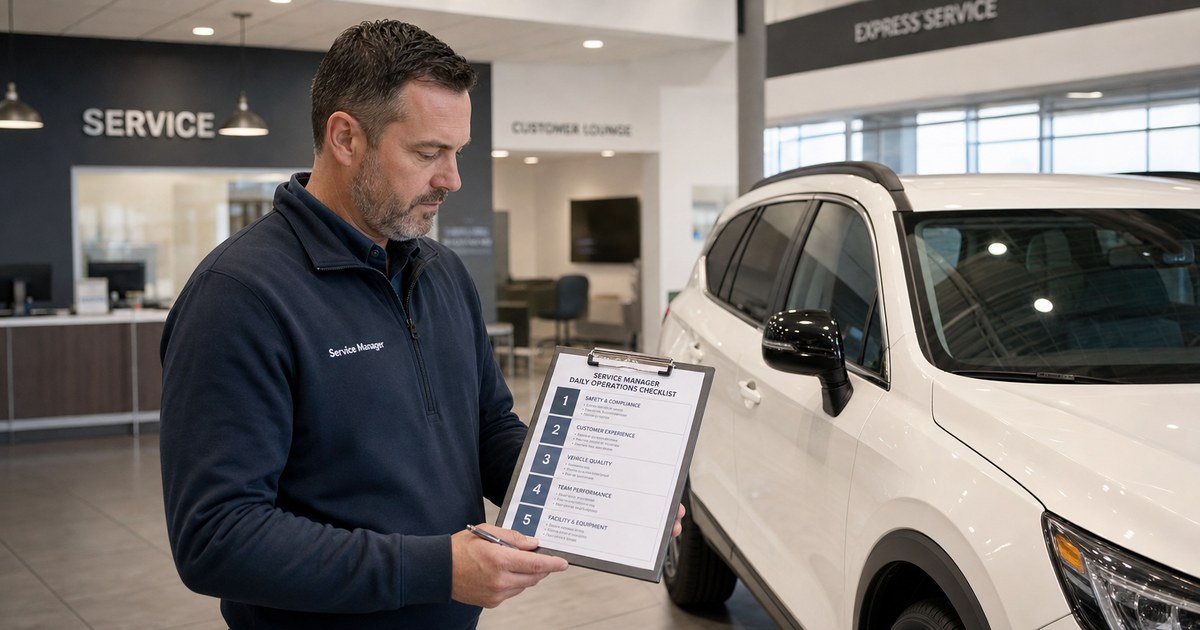
Define SOPs for automobile dealers, clear up what SOP means in the auto industry, and follow six steps that make SOPs stick, with or without SOP software.

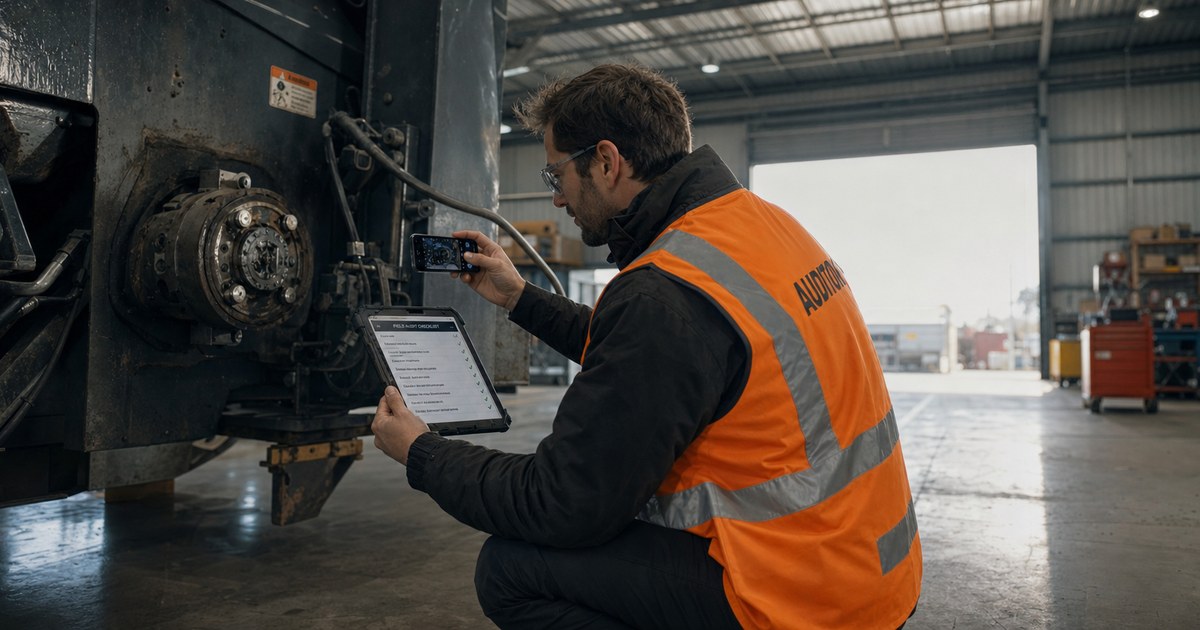
A field audit is an on-site inspection against a standard. Learn the meaning, how it differs from a desk audit, and how often field audits are performed.
Request a quote and our experts will contact you within 24 hours with tailored solutions and pricing.
You can also send us a quick email at info@autosmarts.co.
Last updated: Nov 4, 2026
Dealer network management is the discipline of keeping every franchised site in a brand's network meeting the same standards for facilities, brand identity, sales process and aftersales, and of proving it with consistent, comparable evidence. It's easy at 20 sites. At 100, the cracks show. The US franchised network alone counts 16,991 dealers (NADA, 2026), and every one of them is an independent business with its own priorities. This guide explains what breaks as a dealer network grows, why spreadsheets give out somewhere between 50 and 100 sites, what a dealer network audit covers, and who should own what. For a deeper look at the tooling side, see our guide to when spreadsheets break down.
Key Takeaways
- Dealer network management means holding franchised dealers to one brand standard and proving compliance with comparable evidence, not just inspecting sites one at a time.
- Manual dealer audit coordination typically starts failing at roughly 50 to 100 sites, through version drift, inconsistent scoring, untracked findings and late reporting.
- A dealer network audit scores every site on the same weighted checklist, on a set cadence, with photo evidence and corrective actions that are tracked to closure.
- Expansion is the trigger: every acquired or new site should get the same checklist and a baseline audit in its opening weeks.
- Head office should govern the standard, scoring and escalation path, while dealers own closing their own findings.
By Naseef Umar, Founder & CEO of AutoSmart, with over a decade in automotive operations, dealer standards, network performance and audits. Reviewed October 16, 2026.
Dealer network management is the work an Original Equipment Manufacturer (OEM), importer or distributor does to hold franchised dealers to one brand standard across facilities, identity, sales process, warranty and aftersales. It covers setting the standard, auditing against it, scoring consistently, closing corrective actions and reporting performance to leadership. In the US alone, that means about 17,000 dealerships (NADA, 2026).
The phrase also gets used for IT networking, dealership software and marketing programs. This guide uses the operations meaning: the people, process and evidence that keep a branded retail network consistent. A dealer network is the set of independently owned sites that trade under one manufacturer or distributor brand.
Most networks do the first two reasonably well. The third and fourth are where scale hurts, and the rest of this guide spends most of its time there.
Managing a large dealer network is difficult because one standard must be applied by many auditors across many independent businesses with their own profit pressure. Dealers push back on cost: 42% of dealers surveyed expect OEM-required property investments to hurt future profits, and only 13% project an improvement in earnings (Kerrigan Advisors, 2025).
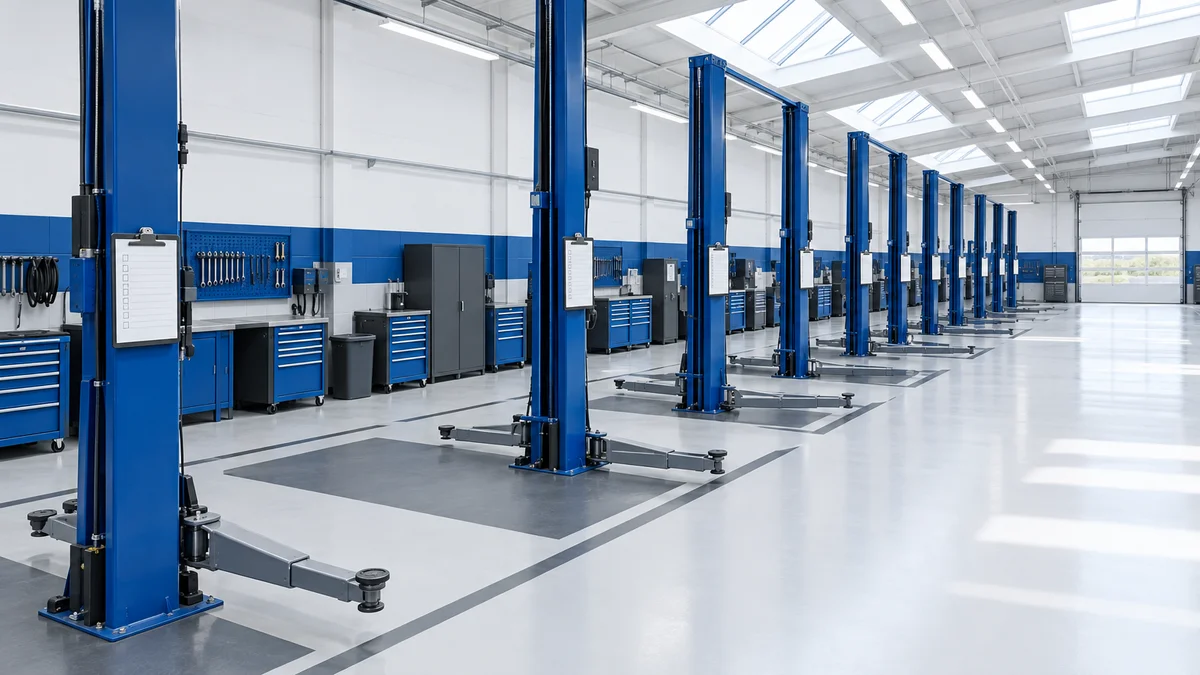
The US franchised network wrote more than 136 million repair orders and generated nearly $83 billion in service and parts sales in the first half of 2026 (NADA, 2026). For the full year 2025, the figures were more than 276 million repair orders and service and parts sales above $164 billion (NADA, 2025). When service standards drift between sites, that revenue pool is the exposure.
Customer satisfaction ties back to it. J.D. Power's 2026 study reported dealer service satisfaction up 3 points to 868 and linked higher satisfaction to paid-service retention (J.D. Power, 2026). Inconsistent aftersales standards put that retention at risk site by site.
Facility standards are expensive. Manufacturers typically refresh image programs every seven to 10 years, and new-construction estimates of $250 to $600 per square foot imply $10 million to $24 million for a 40,000-square-foot dealership (CBT News, October 2026). Each refresh creates a network-wide compliance workload, and dealers who doubt the return will contest scores and timelines.
Flexibility exists if both sides ask for it. As one design practitioner put it: "There's flexibility in most of the brand image programs if you know what to ask for." (Walters, Truist, 2025) That only works when head office can show which findings are firm and which are negotiable.
A 2025 Harris Poll study found a 24-point gap between dealers and auto buyers on how well the traditional dealership model is optimized for the future (Urban Science, 2025). The poll covered 3,026 US auto buyers and 254 US OEM dealers. The practical lesson: self-reported compliance cannot replace independent, network-level measurement.
| What breaks | How it shows up | Who feels it |
|---|---|---|
| Checklist versions | Different sites audited against different revisions | Dealer Standards Manager |
| Scoring | Two auditors score the same condition differently | Dealers, who dispute results |
| Corrective actions | Findings sit in email with no owner or deadline | Field audit team, who chase |
| Evidence | Photos live in chat threads and slide decks | Auditors, at report time |
| Reporting | Consolidation takes days after each cycle | Head of Network Development |
Spreadsheets stop working for dealer standards at roughly 50 to 100 sites, because informal coordination fails before the file does. Versions drift, auditors score the same condition differently, findings lose their owner and reports arrive late. Manufacturers typically refresh image programs every seven to 10 years (CBT News, 2026), so each refresh multiplies that load. The 50 to 100 range is an operating observation, not a published study.

Below that range, one or two people can hold the whole network in their heads. Past it, four things go wrong together:
Our data: AutoSmart reports an audit cycle compressed from 10 days to 3 days. AutoSmart's observations of manual processes: each audit typically generates 8 to 20 findings, and a single finding can need 4 to 5 follow-ups, including escalations, before closure.
The effort compounds. Auditors and head teams often spend several hours per audit compiling photos and building presentations, and some teams spend 3 to 4 hours after each audit consolidating Excel calculations, sign-off sheets and photo evidence. That time comes straight out of auditing and dealer support.
| Task | Spreadsheet, email and slides | Shared audit platform |
|---|---|---|
| Scoring | Formulas edited per file | Weighted logic set once, applied to every auditor and site |
| Evidence | Photos pasted into decks later | Live photo capture with date, time and geotag |
| Corrective actions | Emailed, chased manually | Non-compliances become owned actions with reminders |
| Reporting | Consolidated by hand each cycle | Drill-down dashboard updated as audits are submitted |
None of this requires a particular vendor to understand. The four mechanisms are structural, so effort alone doesn't fix them. For the full picture, read the guide to replacing the manual PowerPoint reporting cycle.
A dealer network audit is a structured, evidence-backed inspection of a dealership against the manufacturer's standards, repeated on a set cadence so results can be compared across sites and over time. Typical scopes are corporate identity (CI), brand retail identity (BRI), facilities, sales process, warranty and aftersales, each scored on the same weighted checklist and re-run as manufacturers refresh image programs every seven to 10 years (CBT News, 2026).

| Audit scope | What it checks | Typical evidence |
|---|---|---|
| Corporate identity (CI) | Brand identity elements as the OEM defines them | Dated photos of signage and showroom |
| Brand retail identity (BRI) | Retail environment against the brand's retail guidelines | Photos, checklist scores |
| Facility | Condition and layout of buildings and workshops | Photos, measurements |
| Sales process | How enquiries and sales are handled | Observation, mystery audit scores |
| Warranty and aftersales | Service and warranty procedures | Records, workshop observation |
Dealer Operating Standards (DOS) is the set of operating requirements an OEM defines for its dealers, and the same platform can carry it alongside 5S, safety and environmental checks. Our guide to dealer performance audits goes deeper on how OEMs structure them.
An evaluation cycle is a recurring audit period, such as weekly, monthly, quarterly or yearly, that groups audits so performance can be compared as a trend rather than a snapshot. Three design choices decide whether an audit program holds up at scale:
A non-compliance is any audited item that fails the standard. The audit isn't finished when it's found. It's finished when the corrective action is closed with evidence.
Keeping dealer standards consistent during expansion means baselining every new site early: assign it the same checklist, run a first audit in its opening weeks and log each finding with an owner. Growth is mostly incremental, since 32% of dealers plan to add one dealership in 12 months and 14% plan two or more (Kerrigan Advisors, 2025).

Each added site brings a new owner, a new team and new habits. The 14% planning two or more additions is down from 31% in 2021 (Kerrigan Advisors, 2025), so growth is slower per dealer but steady across the network. Acquisitions are active too: Q1 2026 transactions were up 21% year over year, with about 500 deals expected for 2026 (CBT News, 2026).
Acquired sites also arrive with obligations. CBT News reported in October 2026 that manufacturers can press buyers to meet facility requirements on ownership transfer (CBT News, 2026). Every acquired site therefore needs a documented starting position against the standard.
If you run several programs at once, franchise compliance software can keep 50-plus sites visible without constant travel.
Dealer standards ownership works best when head office governs the standard, the scoring rules and the escalation path, while field teams run audits and each dealer's Person-In-Charge (PIC) owns closing findings. Splitting those roles keeps scoring defensible and stops the audit team from becoming the follow-up team.

| Decision or task | Owner | Why it sits there |
|---|---|---|
| Checklist content and weightings | Dealer Standards Manager or Brand Standards Manager | One version, one definition of good |
| Audit scheduling and field execution | Field Audit Manager and regional teams | Closest to the sites |
| Closing a finding | Dealer's PIC | The dealer fixes its own site |
| Escalation of overdue actions | Regional manager, then network head | Clear path, no personal chasing |
| Network performance reporting | Head of Network Development | Accountable to the regional or global board |
A Person-In-Charge (PIC) is the named person at the dealership responsible for an assigned finding. When ownership is recorded against each finding, the system holds the record of who owns it and when it is due, rather than the auditor's memory.
Self-assessment is a structured check in which dealers evaluate themselves against the standard remotely, and management compares the result with independent audits to spot gaps. AutoSmart assumes a field visit costs about $500 on average, so every 100 visits is roughly $50,000 in direct travel costs. Moving suitable checks to self-assessment could cut physical visits by 30 to 40%, saving approximately $15,000 to $20,000 per 100 visits. These are AutoSmart's estimates, not independent research, and results vary with network geography and travel distances.
Honesty matters here. Dealers and buyers differ by 24 points on how well the model is optimized (Urban Science, 2025), so self-assessments should always be spot-checked against independent audits.
Dealers want audits to be fair. Common complaints include audit fatigue, duplicate audits from several manufacturers and unclear scoring. Publish the checklist, apply weightings identically and let dealers see their own history. Contested scores often start the push for a better system, so defensible scoring is cheaper than arguing. Our guide to field audit software shows how scoring, evidence and visit reports fit one mobile workflow.
A dealer network management platform is not for networks under about 50 sites with one auditor and a stable standard, where a well-kept spreadsheet still works. It will also not fix an unclear standard, unwilling dealers or auditors who keep a parallel paper record. Software records and routes the work; it cannot decide what good looks like.
Before committing, pressure-test any option with the demo scenarios for dealer compliance audit software.
Getting started with dealer network management at scale takes five moves: write down the standard, baseline the current network, fix the scoring rules, assign an owner to every finding, and report one network view on a fixed cadence. With 32% of dealers planning to add a dealership within 12 months (Kerrigan Advisors, 2025), settle those five before choosing any tool.
Administrators should be able to update checklists themselves, without raising IT tickets. Pilot with one existing audit program before scaling, and check offline use and evidence capture on real sites. For a clear picture of the day-to-day change, see how a paper-based to paperless move works for a multi-site network.
Next step: If your network is approaching 50 sites or has passed 100, Schedule a Free Demo of AutoSmart Audit. Go-live is typically 5 to 10 working days once your configuration inputs are shared, and a no-cost pilot can run on one of your existing audit programs.
A dealer network audit is a structured, evidence-backed inspection of a dealership against the manufacturer's standards, repeated on a set cadence so results can be compared across sites and over time. Scopes typically include brand identity, facilities, sales process, warranty and aftersales, scored on one weighted checklist and followed by corrective actions with owners and deadlines.
There is no single published audit frequency for dealers, so cadence should follow risk and the type of standard. Fast-changing checks such as safety or service processes suit weekly or monthly evaluation cycles, while facility and brand identity checks suit quarterly, half-yearly or yearly cycles. Whatever the cadence, every site in the same program should follow the same schedule.
Spreadsheets for dealer standards typically stop working at roughly 50 to 100 sites. That range is an operating observation, not a published study. Past it, version drift, inconsistent scoring between auditors, untracked findings and slow consolidation make the data unreliable, and the audit team spends more time assembling reports than auditing.
Corrective actions after a dealer audit are tracked by turning every non-compliance into an action with a named owner, a due date, reminders and a status, and by requiring closure evidence before it can be marked complete. Tracking this in email and spreadsheets means chasing each finding several times, so most networks move it into one shared workflow.
Dealer network management comes down to one idea: a standard only exists if every site is measured against it the same way, and every gap is closed on the record. The takeaways:
If your network is nearing that breakpoint, Schedule a Free Demo to see it on your own audit program. To keep going, read about the automotive network audit software that dealer networks need.
© 2026 AutoSmart Technology All rights reserved.