Blog
Field Audit App: What to Test Before You Commit
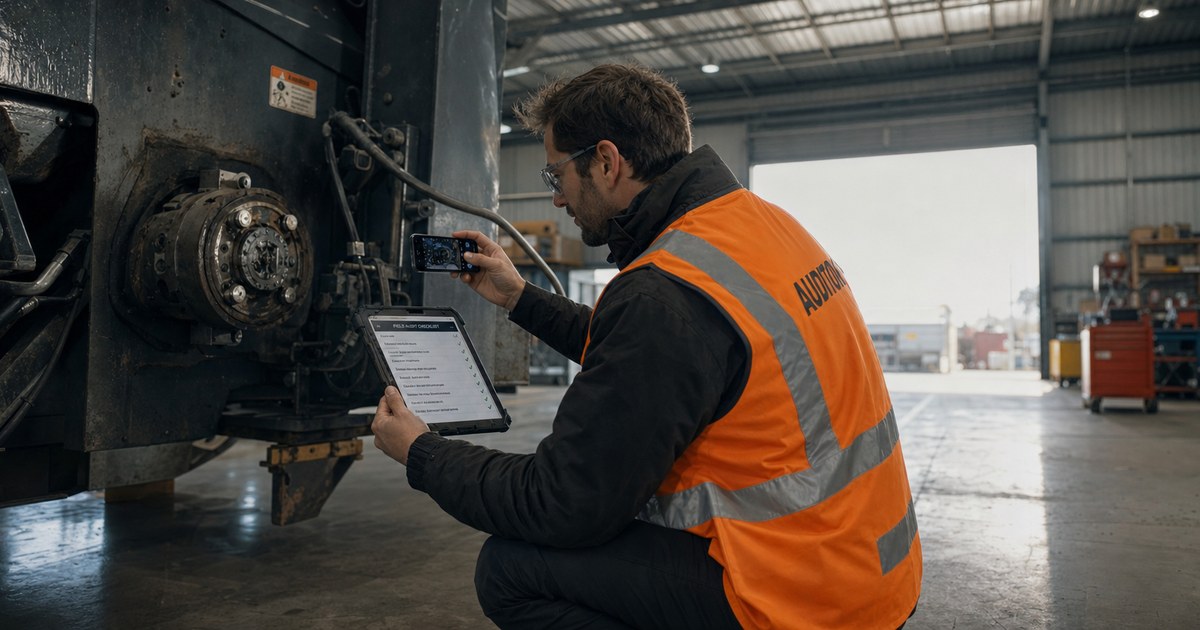
Test a field audit app on offline-first behaviour, evidence capture and report-before-you-leave-site, with a timed bake-off and weighted scorecard.

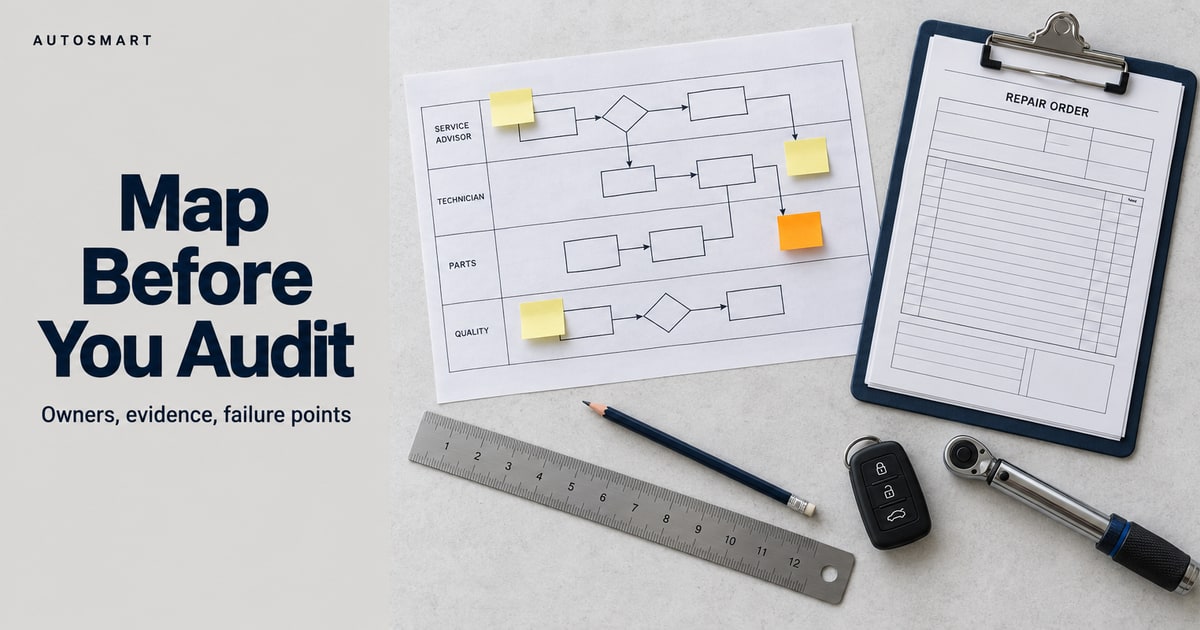
Map your dealership service department process before an audit: how detailed to go, who owns each step, and the service points that fail every cycle.
 Naseef UmarOct 30, 2026
Test a field audit app on offline-first behaviour, evidence capture and report-before-you-leave-site, with a timed bake-off and weighted scorecard.
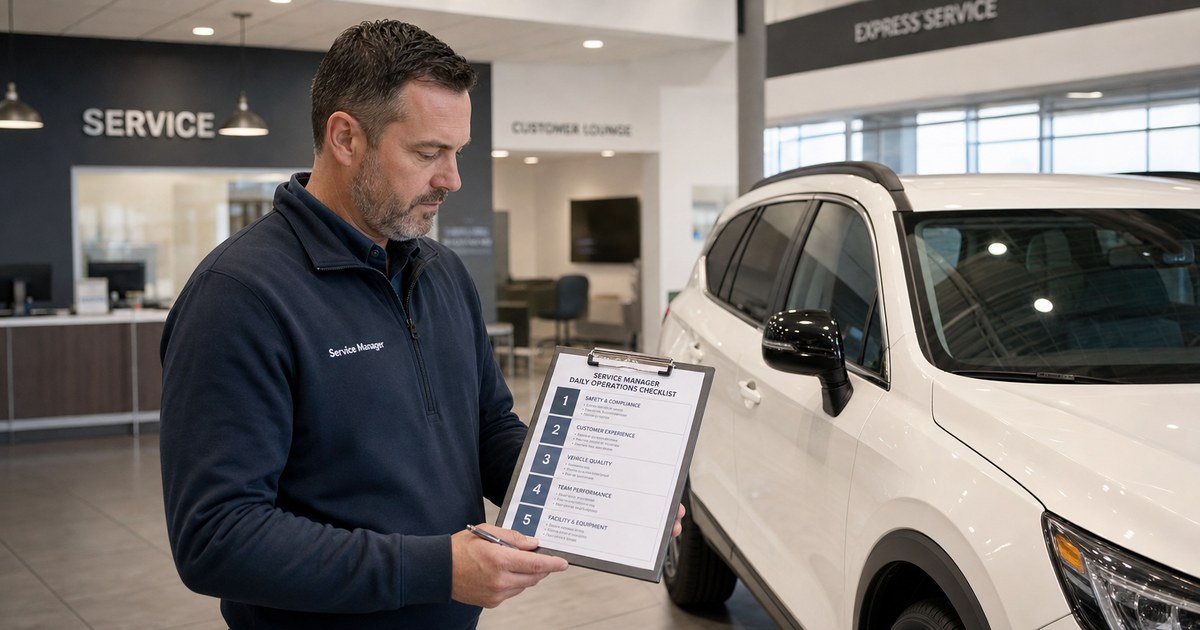
Define SOPs for automobile dealers, clear up what SOP means in the auto industry, and follow six steps that make SOPs stick, with or without SOP software.
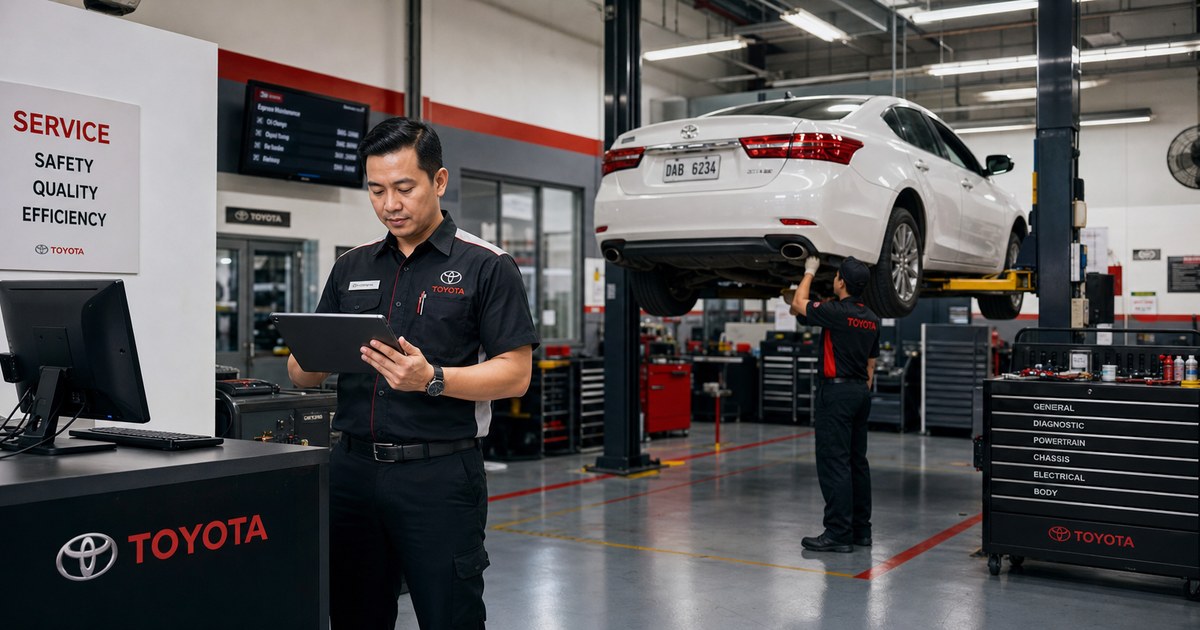
Toyota's digital service evaluation has no public program name. See how TSM, Kodawari and Image USA II differ and how a Toyota dealer audit works.
Request a quote and our experts will contact you within 24 hours with tailored solutions and pricing.
You can also send us a quick email at info@autosmarts.co.
Last updated: Oct 30, 2026
By Naseef Umar, Founder and CEO of AutoSmart, with over a decade of experience across automotive operations, dealer standards, network performance and audits
A dealership service department process is the sequence of steps, owners and records that carries a customer from appointment to delivery and follow-up, and mapping it in three layers of detail is enough to audit it. Most teams go wrong in one of two ways. They skip the map, or they document every task.
The stakes are real. Dealer share of service visits fell from 33% to 29% in the 2025 study, released in 2026, even as average service and parts revenue reached about $9.23M (Cox Automotive, 2026). If your lane fails the same points every cycle, the map is where the fix starts. This guide shows how deep to go, who owns each step, and which points to test first.
Key Takeaways
- A service process map needs three layers: SIPOC for scope, swimlane for ownership, task detail only at control points.
- Every step in the dealership service lane should name one owner and one record an auditor can request.
- Repeat failures cluster at the sales-to-service handoff, inspection presentation, KPI completion and warranty repair order documentation.
- Mapping the service process as performed, not as written in the SOP, is what exposes the real audit gaps.
- A process map documents the flow but cannot prove compliance; sampling repair orders does.
A service department process map should go three layers deep: a SIPOC for scope, a swimlane for ownership, and task-level detail only at control points where audit evidence is created. Stopping there is practical, because franchised dealers handled more than 276 million repair orders in 2025 (NADA, 2026), and no team can document every task behind each one.
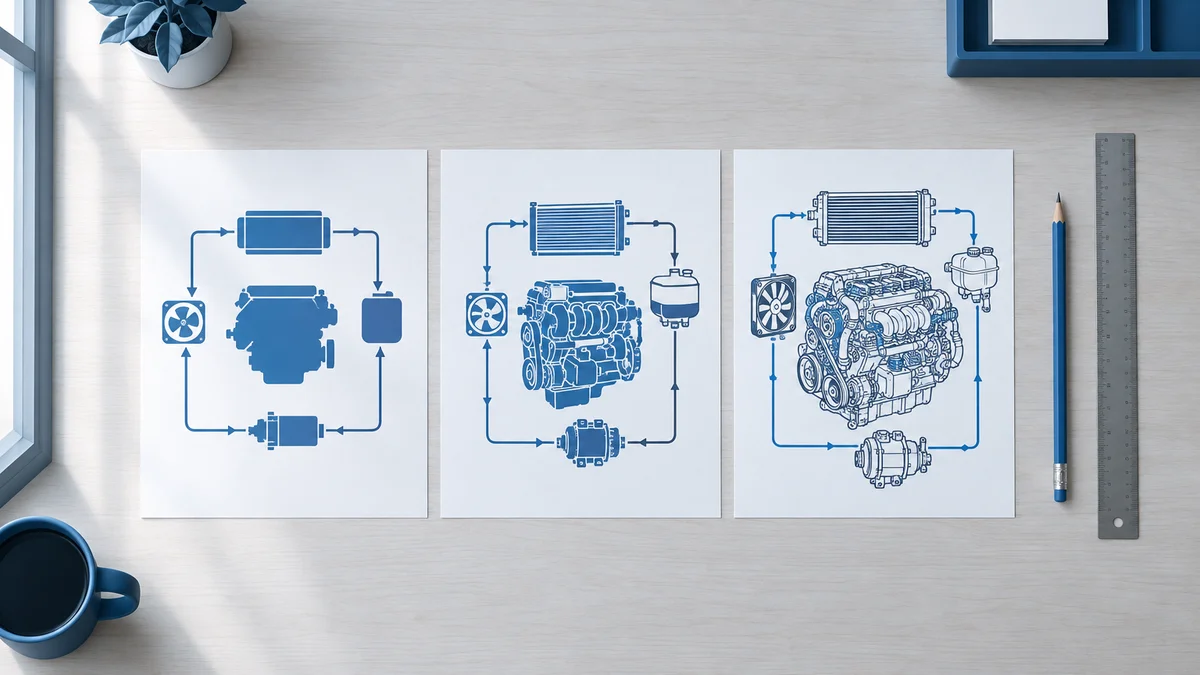
SIPOC is a one-page table of Suppliers, Inputs, Process, Outputs and Customers that fixes the scope of a process before anyone draws a box. A swimlane map is a process diagram with one lane per role, showing who performs each step and where work changes hands. A control point is a step where a record is created that an auditor can later inspect, such as a signature, a timestamp or a photo.
| Layer | What it shows | Use it for | Stop when |
|---|---|---|---|
| SIPOC | Scope, inputs, outputs, customers | Agreeing where the process starts and ends | Start and end points are signed off |
| Swimlane | Roles, handoffs, order of steps | Assigning an owner to every step | Each step has exactly one owner |
| Task-level detail | Individual actions and records | Control points only | The record an auditor will request is named |
Start earlier than the repair order. The appointment and the sales-to-service handoff belong inside the scope, because a large leak happens before the first repair order (RO) opens. A repair order (RO) is the document that records the customer's concern, authorization, work performed, parts and times for one service visit.
End after follow-up, not at invoicing. Delivery delays and missed follow-up calls fail audits too. If a step creates no record and has no owner, it does not need task-level detail. It needs an owner.
A documented service process matters because service feeds both revenue and repeat vehicle sales. Cox Automotive's 2025 Fixed Ops and Ownership Study, released in 2026, found 74% of buyers who returned for service are likely to repurchase from the dealership, versus 44% of those who did not (Cox Automotive, 2026).
Service is also revenue an Original Equipment Manufacturer (OEM) can examine. Trade coverage in September 2026 argued that documentation risk is rising as fixed ops carries more than half of dealership gross profit, and noted that repair orders can be tested in OEM audits, lemon-law cases and regulatory matters (SE-FI, 2026). The repair order is where a claim is proved or lost.
Legal commentary on OEM warranty chargebacks makes the point plainly: "The strongest chargeback responses are built with records, not outrage." (Chicago Business Litigation Lawyer Blog, 2026). The same March 2026 analysis notes that under the Illinois statute, manufacturers can audit warranty claims within one year of payment.
That window is state-specific, so check your own market. The principle is not. A map shows you which record each step should have produced.
The dealership service department process runs in eight steps: appointment booking, write-up, dispatch, diagnosis and inspection, customer authorization, repair and parts, quality control and invoicing, then delivery and follow-up. Each step has one owner and leaves one record an auditor can request. The first step leaks most: only 23% of new buyers have a first service appointment scheduled (Cox Automotive, 2026).

This matrix pairs every step with the evidence an auditor will typically request and the way that step usually breaks. The evidence items and failure modes reflect practitioner experience, not a surveyed ranking. Requirements differ by manufacturer, so confirm them in your OEM warranty policy manual.
| # | Step | Owner | Evidence an auditor requests | Typical failure mode |
|---|---|---|---|---|
| 1 | Appointment booking | Service advisor or BDC agent | Appointment record, source of booking | First appointment never scheduled at vehicle purchase |
| 2 | Write-up | Service advisor | Signed RO, concern, VIN inquiry or prior approval where required | Vague concern, missing signature, mileage or date errors |
| 3 | Dispatch | Dispatcher | Assignment time, technician clock-on | Work starts with no timestamp |
| 4 | Diagnosis and inspection | Technician | Punch times, concern, cause, correction (the 3 C's), MPI | Diagnostic time not punched, MPI skipped or without photos |
| 5 | Customer authorization | Service advisor | Recorded approval for added work | Work done before approval is documented |
| 6 | Repair and parts | Technician and parts | Parts ticket, repair punch times | Parts ticket control gaps, long waits for parts |
Mark four wait states between steps: waiting to be diagnosed, awaiting approval, awaiting parts, and ready-not-delivered. Throughput and timestamps get lost in these gaps, and none of them has an owner unless the map gives one. Put the owner's name in the lane, not just the role title.
Four service points tend to fail repeatedly: the sales-to-service handoff, multi-point inspection presentation, service KPI completion in the lane, and warranty repair order documentation. J.D. Power's 2026 U.S. Customer Service Index (CSI) study found only 26% of customers got 9-10 top KPIs (J.D. Power, 2026).
Cox Automotive's 2025 Fixed Ops and Ownership Study surveyed 500 dealership fixed-ops decision makers and 2,500 consumers. Beyond the 23% with a first appointment scheduled, only 25% of new buyers are introduced to the service department at purchase. Yet 80% say they would likely service at the selling dealer (Cox Automotive, 2026). The demand exists. The handoff loses it.
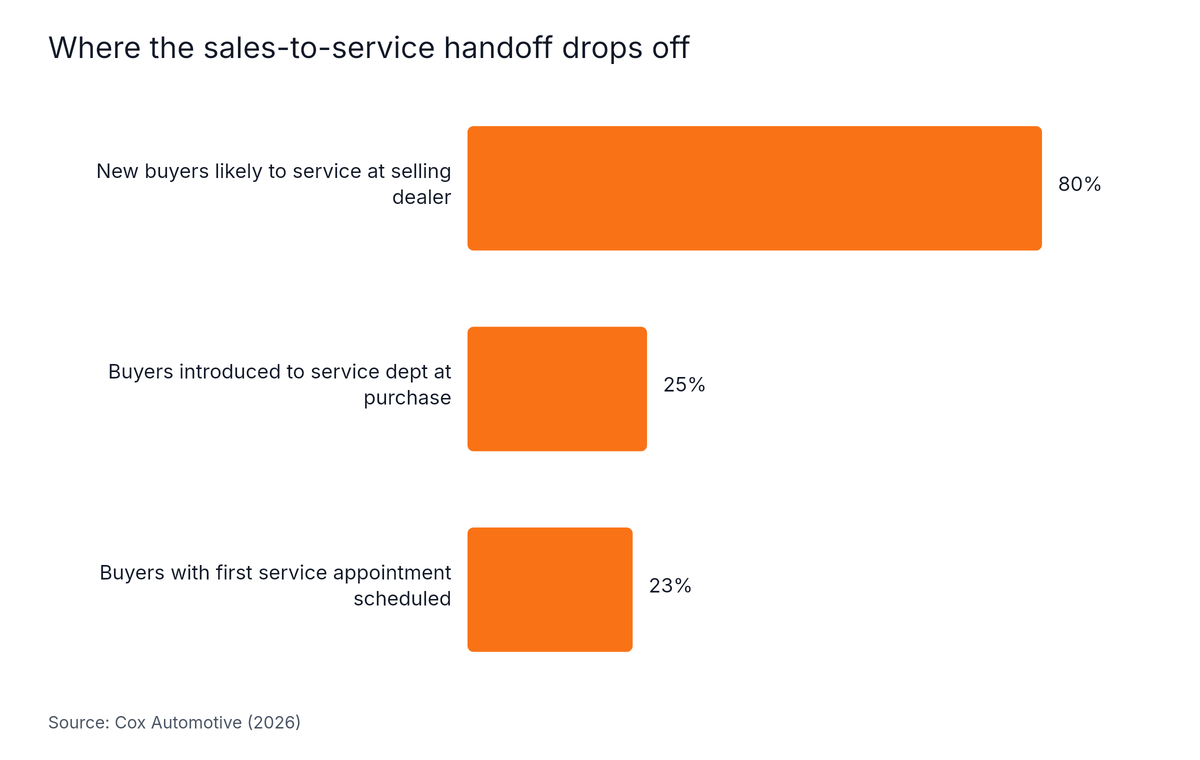
Source: Cox Automotive, 2026
A multi-point inspection (MPI) is a structured vehicle inspection whose findings are presented to the customer to support recommended work. Customers who received photos or videos during a visit reported about $230 more in average repair order spend, and 49% say visuals make them more likely to approve recommended services (Cox Automotive, 2026). The $230 is self-reported spend.
The same J.D. Power study found 64% of customers want photo or video MPI evidence (J.D. Power, 2026). Its 2026 Mexico study adds a market-specific signal that basics slip: walk-around, preferred appointment availability and on-schedule delivery, the three KPIs with the greatest impact on satisfaction, all declined year over year (J.D. Power, 2026).
Warranty documentation is where a weak record has a direct dollar cost. Warranty labor and parts were roughly 19.5% of franchised dealerships' service and parts sales in 2025, about $1.9M per dealership (SE-FI, citing NADA data, 2026). That is a trade-source figure, not one taken from NADA's own page. Pull paid warranty ROs and test each one for the records in steps 2, 4 and 7.
| Repeat failure point | Map step | Evidence to test | Sample to pull |
|---|---|---|---|
| First appointment handoff | 1 | Appointment record linked to the vehicle sale | New-vehicle deliveries vs. booked first services |
| MPI presentation | 4 | MPI photos or video attached to the RO | Closed ROs with and without MPI photos |
| KPI completion | 8 | Delivery checklist with each KPI ticked | Delivery checklists from one month |
| Warranty RO documentation | 2, 4, 7 | Signature, 3 C's, punch times, invoice match | Paid warranty ROs |
Map the as-is service process by walking the service lane with a blank swimlane, then pulling a sample of closed repair orders and tracing each against the Standard Operating Procedure (SOP) as written. The gap between the two is what an auditor will find, and J.D. Power's 2026 Mexico CSI shows basics slipping: walk-around, appointment availability and on-schedule delivery all declined year over year (J.D. Power, 2026).

Verify it worked: a second person should be able to trace any sampled order through your map without asking you a question.
Mapping finds the failures. It does not close them. Chasing findings by email and spreadsheet is slow.
Our data: AutoSmart's data shows each audit under a manual process generates 8 to 20 findings, and each finding can need 4 to 5 follow-ups including escalations before closure. AutoSmart reports audit cycle compression from 10 days to 3 days.
Running these checks on a phone with photo evidence is covered in our piece on mobile audit software for dealer networks.
A dealership service process map is a documented view of how work should flow, and it cannot prove people follow it. The Cox Automotive study behind several figures here surveyed 500 fixed-ops decision makers and 2,500 consumers (Cox Automotive, 2026), so those numbers are perceptions, and the $230 spend figure is self-reported.
Four caveats apply:
This guide is also not for a single-person workshop with no OEM audit exposure, where a one-page SIPOC is probably enough. For the workshop-floor side of standards, see our guide to 5S audits in a dealer network.
A service process has eight steps: appointment booking, write-up, dispatch, diagnosis and inspection, customer authorization, repair and parts, quality control and invoicing, then delivery and follow-up. Each step needs one named owner and one record, such as a signed repair order or a punch time, that an auditor can request later.
A process map before an audit should have three layers: a SIPOC for scope, a swimlane for role ownership, and task-level detail only at control points where audit evidence is created. Documenting every task in the service lane adds effort without adding anything an auditor can test.
A SIPOC lists suppliers, inputs, process, outputs and customers on one page to set scope. A swimlane map shows who does each step, one lane per role. A detailed process map breaks single steps into tasks. For a service department audit, use the first two everywhere and the third only at control points.
Requirements differ by manufacturer, so confirm them in your warranty policy manual. As practitioner guidance, auditors test whether the repair order supports the claim: a signed customer authorization, a clear concern, cause and correction, consistent dates and mileage, and technician punch times that match the work billed.
Map the service process in three layers, and spend your effort where records are created. Key takeaways:
Next step: take the swimlane you drew and run it as a live audit programme with owned, dated actions. Schedule a Free Demo to see how AutoSmart Audit does that for dealer networks.
© 2026 AutoSmart Technology All rights reserved.


| 7 | Quality control and invoicing | Foreman and cashier | QC sign-off, invoice matching RO | Invoice does not match the RO as written |
| 8 | Delivery and follow-up | Advisor and cashier | Delivery time, follow-up contact record | Vehicle ready but not delivered, no follow-up logged |