OEM Compliance Inspection Software: Baseline Scoring Across a Dealer Network from Day One
OEM compliance inspection software is a dedicated digital platform that enables an Original Equipment Manufacturer (OEM) or distributor group to configure their published standards as a scored checklist, deploy it across a tiered dealer network, and capture comparable baseline scores from every site in the first audit cycle.
When a new OEM standards programme launches, the first audit cycle sets the baseline every subsequent performance conversation will reference. Collect that baseline on paper or in per-region Excel files and scores are not comparable across markets. Management cannot see the network in one view. The programme starts with a credibility problem it rarely recovers from.
The global compliance software market was valued at USD 35.8 billion in 2025 (Grand View Research, 2026). This article covers what inspection software for dealer networks must have ready before the first auditor walks through a dealer's door, and how centralised quality data replaces per-region Excel files for a 120-dealer network.
Key Takeaways
OEM compliance inspection software must have the full programme checklist, network hierarchy, and auto-scoring logic configured before the first audit cycle runs - not after.
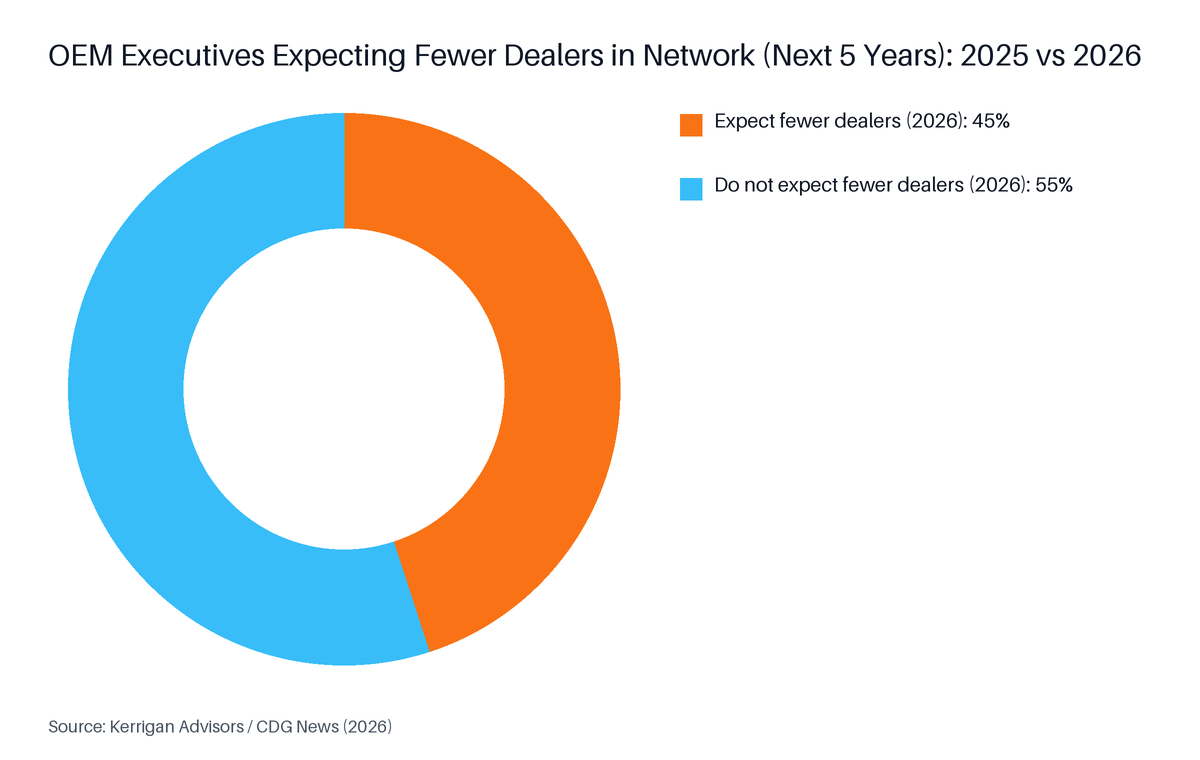
45% of OEM executives now expect fewer dealers in their networks within five years, up from 33% in 2025 (Kerrigan Advisors / CDG News, 2026) - making defensible baseline scoring more important, not less.
43% of OEM executives say their organisation will require a new image facility of dealers within five years (Kerrigan Advisors / CDG News, 2026), creating recurring inspection cycles that demand scalable software.
AutoSmart Audit goes live in 5 to 10 working days once configuration inputs are received - viable for a programme launching next quarter.
What OEM Compliance Inspection Software Must Handle on Day One
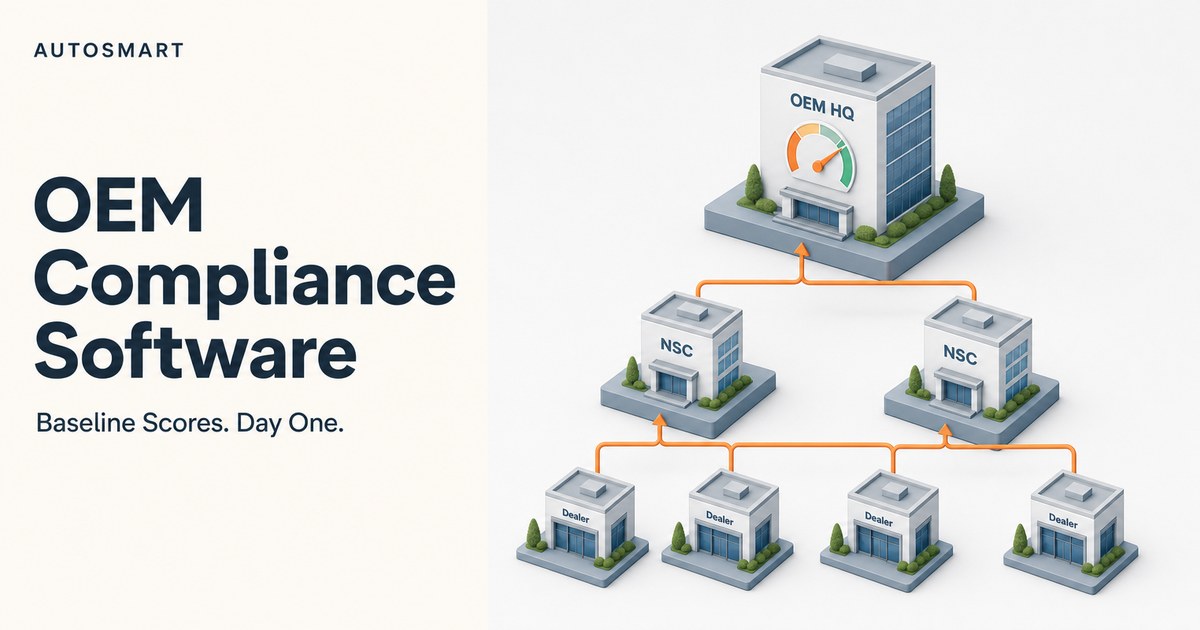
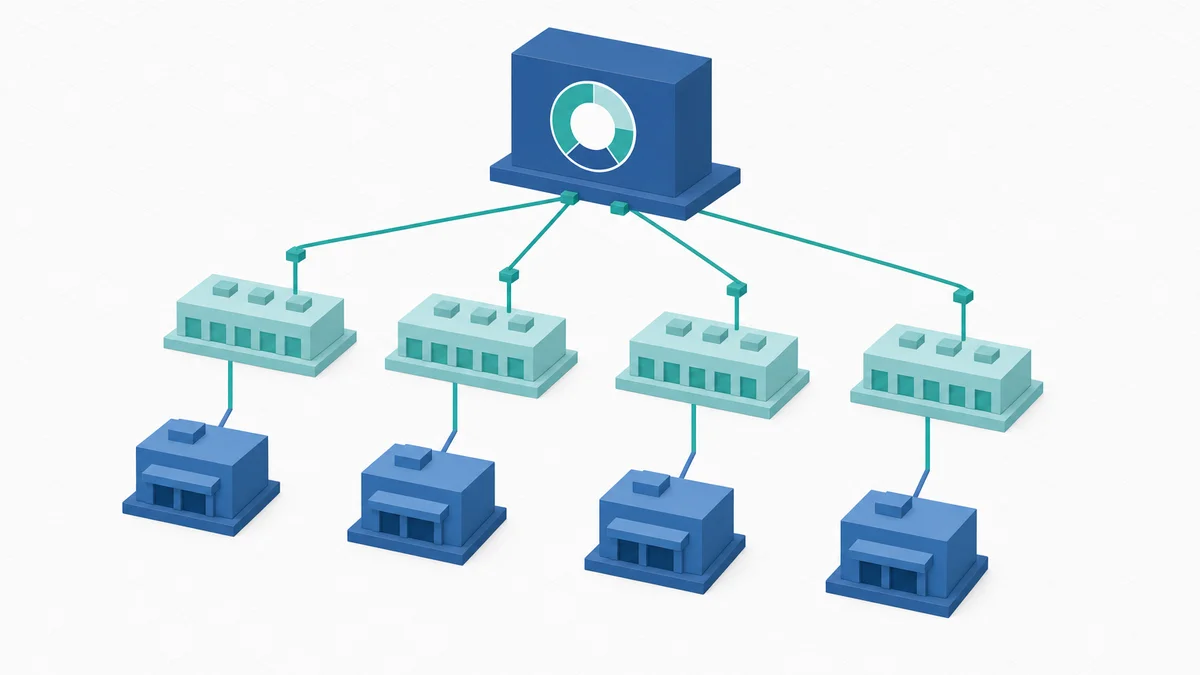
OEM compliance inspection software must arrive pre-configured for a new standards programme: the full checklist loaded with section structure and weightings matching the published standard, the dealer network hierarchy built from OEM headquarters through National Sales Companies, distributors, and individual sites, and auto-scoring calibrated before the first audit cycle runs. Without those three elements in place from the start, baseline scores across a dealer network are not comparable and not defensible.
Isometric 3D four-tier dealer network hierarchy flowing up to an OEM HQ compliance score dial
The pressure to get this right is growing. As of mid-2026, 45% of OEM executives expect fewer dealers in their networks within five years - up 12 percentage points from 33% in 2025 (Kerrigan Advisors / CDG News, 2026). Separately, 43% say their organisation will require a new image facility of dealers within five years (Kerrigan Advisors / CDG News, 2026). Both trends sharpen the need for auditable baseline scoring. If dealer count shrinks, every remaining site carries more weight. Facility upgrades require inspection cycles to verify completion.
Donut chart: OEM Executives Expecting Fewer Dealers in Network (Next 5 Years): 2025 vs 2026. Highest: Do not expect fewer dealers (2026) at 55%.
Before the first audit cycle, the software must have:
Checklist pre-load: Every section, question, mandatory evidence type, and scoring weight from the published OEM standard entered and locked - not left for auditors to interpret.
Network hierarchy ingestion: The full entity map from OEM headquarters through the National Sales Company (NSC), distributor clusters, and individual dealer sites, so scores roll up automatically rather than requiring manual aggregation.
Auto-scoring calibration: Weighted scoring logic applied identically across every auditor and every site, so a score in one market means the same as the same score in another.
If any of these is missing on day one, the programme collects data it cannot use for comparison.
How Network Hierarchy Configuration Makes Scores Roll Up Correctly
Network hierarchy configuration in dealer audit software is the structural mapping of every entity in the chain - from OEM headquarters through National Sales Company (NSC) tiers, distributor clusters, and individual dealer sites - so individual site scores aggregate into regional and network-level figures automatically. Without this hierarchy ingested before the first audit cycle, scores from 120 dealers across five markets cannot roll up into a single management view.
Isometric 3D tablet showing a structured OEM checklist with weighted scoring cubes beside it
Franchise dealerships account for approximately 44% of automotive dealer technology platform deployments (Congruence Market Insights, 2025) - confirming this as the dominant buyer profile for OEM compliance software. As Congruence Market Insights notes: "Multi-location dealer groups now represent more than half of enterprise-level software deployments, accelerating demand for scalable SaaS-based platforms." (Congruence Market Insights, 2025)
The practical structure for a 120-dealer, 5-market network:
Tier
Entity Type
Role in the Hierarchy
Tier 1
OEM / Global HQ
Sets the standard; sees the full network
Tier 2
National Sales Company (NSC)
Country-level performance view
Tier 3
Distributor
Regional cluster of dealers
Tier 4
Dealer / Site
Individual compliance score
Role-based access control determines what each tier sees. An auditor scoped to one distributor region cannot view another region's data. A country manager sees their NSC's full dealer cluster. HQ sees everything. This is not an optional feature - it is a baseline requirement for any multi-market programme.
"Incomplete documentation is one of the most frequent reasons dealerships lose points in areas they regard as operationally strong." (AutoSmart Audit editorial team, 2025) That problem disappears when evidence requirements are built into the checklist. Auditors cannot submit a section without the required photo or sign-off.
Pre-Configured OEM Checklists vs. Paper or Excel Templates: Why the Difference Matters
A pre-configured OEM checklist is a digital version of the published standard with section weightings, mandatory evidence requirements, and scoring logic already built in before the first auditor walks onto a site. Paper or Excel templates require each auditor to apply weightings manually. That produces scoring inconsistencies across a 120-dealer network. Digital platforms increase operational accuracy by 42% and reduce audit preparation time by 38% (OXMaint, 2025).
A time-and-motion study of 2,847 inspections found mobile digital inspection cut average inspection time from 18.8 minutes to 6.2 minutes - a 67% reduction - while errors dropped 94% and labour savings reached $142,000 annually per 100 daily inspections (Xenia, 2026).
What a Pre-Configured Checklist Includes That Excel Cannot Replicate
Element
Excel Template
Pre-Configured Digital Checklist
Section weightings
Entered manually per auditor
Locked centrally, applied uniformly
Scoring logic
Formula in cell, editable by anyone
Server-side calculation, tamper-proof
Mandatory evidence
Advisory note only
Hard gate - cannot submit without photo
Historical context
Prior file retrieved manually
Displayed on same screen during audit
Multi-market access
One file per region, no standard format
Single platform, role-scoped access
Report generation
Manual compilation, hours of work
Automatic at audit submission
The practical difference on day one: with Excel, auditors interpret the standard. With pre-configured software, the standard interprets itself.
Schedule a Free Demo to see how AutoSmart Audit handles checklist configuration and auto-scoring for a new standards programme.
Multi-Market Scoring: Making Dealer Scores Comparable Across UAE, India and Saudi Arabia
Multi-market scoring in OEM compliance inspection software means applying identical weighted scoring logic across every dealer in every country from a single central configuration. A score of 72% in the UAE and 72% in India reflect the same standard - not two auditors interpreting an Excel formula differently. The platform holds the standard. Individual markets do not maintain their own version of it.
Three Multi-Market Scoring Problems the Software Must Solve
Language: Checklists must render in the auditor's language without changing the question's meaning or its weight. AutoSmart Audit supports Arabic, English, French, German, Italian, and Spanish checklists on the same platform.
Regulatory context: Local safety or environmental regulations may require mandatory checklist sections in one market. The software must allow market-specific additions without changing the cross-market comparable score.
Auditor variance: Two auditors in two countries marking the same question as non-compliant must produce the same score contribution. Auto-scoring enforces this. Human calculation does not.
For a dealer audit system running across five markets, these three problems are exactly what spreadsheets never solve. The fix requires a central configuration layer that Excel does not have.
What a 120-Dealer, 5-Market Network Should Consolidate Away from Excel
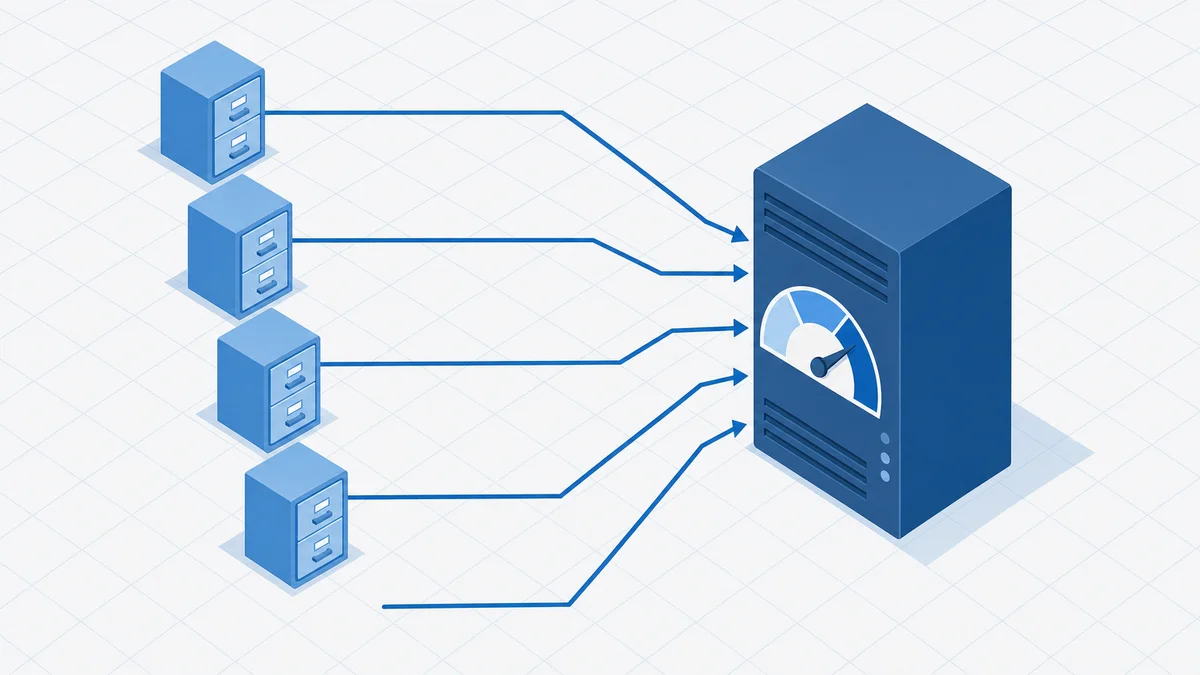
Dealer network quality control software should consolidate audit scores per dealer and audit cycle, weighted scoring by section and pillar, photo evidence attached to individual findings, corrective action status with owner and due date, auditor assignments by geography, and historical trend data - in one drill-down dashboard accessible to regional and HQ managers without manual assembly. Digital platforms reduce audit preparation time by 38% (OXMaint, 2025). Per-region Excel files fragment all of these data types and make cross-market comparison impossible.
Isometric 3D scene of five regional filing cabinets consolidating into one central server with a score gauge
The consolidation requirement, in concrete terms for a 120-dealer network:
Data Type
Per-Region Excel State
Centralised Platform State
Audit scores
One file per region, no standard format
Single dashboard, filter by region, dealer, cycle
Photo evidence
Attached to email or PowerPoint separately
Linked to the specific finding, timestamped, geotagged
Corrective action status
Tracked in a separate spreadsheet or inbox
Live Kanban status per finding per dealer
Historical trends
Requires opening prior-cycle files manually
Visible on dealer profile during current audit
Cross-market comparison
Manual copy-paste consolidation
Real-time aggregate, no preparation step
A Kanban board is a visual display showing each action item's status - Pending, In Progress, Completed, or Approved - so managers see the state of every finding across every dealer at a glance.
AutoSmart's customer data shows that management teams spend several hours per reporting cycle consolidating data across dealers, regions, and audit frequencies under manual processes. For some dealerships, teams spend 3 to 4 hours after each audit preparing Excel calculations, sign-off sheets, and photo evidence alone - AutoSmart's operational data indicates. As audit programmes grow, consolidation time grows while time for action shrinks.
Our data: AutoSmart's customer data shows audit cycles compressed from 10 days to 3 days at Al Majdouie Motors after replacing the manual Excel-based process (AutoSmart Audit case study).
Closed-Loop Corrective Actions: How Automated CAPA Drives Score Improvement
A closed-loop corrective action (CAPA) workflow automatically converts every failed checklist item into an assigned action: a named Person-In-Charge (PIC), a due date, automated reminders, and a closure evidence requirement. AutoSmart's customer data shows each audit typically generates 8 to 20 findings. Under manual process, each finding requires 4 to 5 follow-ups before closure. Resolving those findings before the next audit cycle directly improves the dealer's next baseline score.
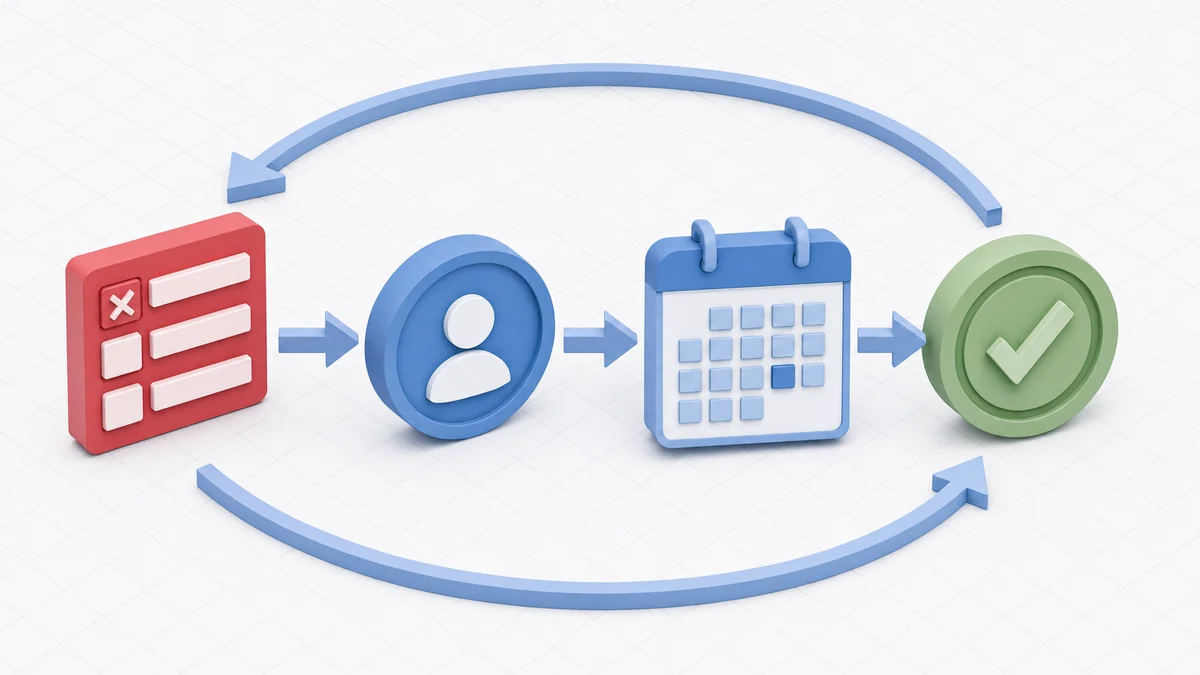
Isometric 3D closed-loop corrective action flow from a failed checklist item to a verified closure badge
Without an automated CAPA workflow, the audit team becomes the chasing team. There is no system record of who owns a finding, what the deadline is, or whether it was resolved before the next visit. At the next audit, the same finding either recurs or closure is claimed without evidence. Neither outcome improves the compliance score.
What an Automated CAPA Workflow Includes
Automatic assignment: A failed item converts to an action with the relevant Person-In-Charge (PIC) named at audit submission. A PIC is the named individual responsible for resolving a finding by a defined due date.
Due date and escalation: Reminders configurable relative to the due date - starting 10 days before, for example, and repeating every two days until closure.
Closure evidence gate: The PIC cannot mark an item complete without uploading verification: a photo, document, or sign-off.
Audit trail: Every action item carries a full record of who owned it, when it was due, and when it was verified closed.
Historical visibility: During the next audit, the auditor can see whether a previously failed question was resolved - from the same screen, without switching between reports.
A Corporate Identity (CI) audit is an OEM-mandated audit type assessing whether a dealership's physical environment and brand presentation conform to the manufacturer's visual identity standards. A Brand Retail Identity (BRI) audit assesses whether a dealership meets requirements for retail environment, customer journey, and brand experience. Both audit types generate findings that feed directly into this CAPA workflow.
Moving from manual to digital inspection saves $142,000 annually per 100 daily inspections (Xenia, 2026). A significant share of that saving comes from eliminating the manual chasing cycle.
Offline-First Capability: A Day-One Deployment Requirement in MENA and APAC Dealer Facilities
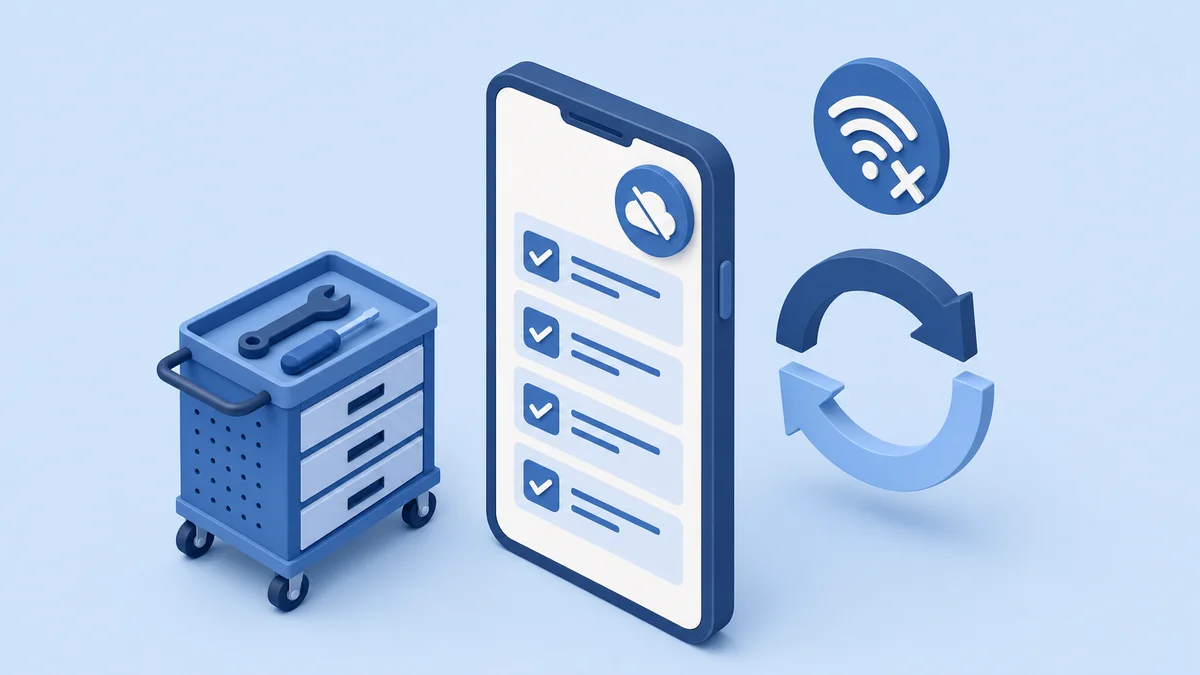
Offline-first capability means an auditor completes an entire site visit, captures geotagged evidence, and scores every checklist item with no internet connection - data syncs automatically when connectivity returns. Dealer workshops across MENA and APAC frequently have poor or no Wi-Fi in service bays. The Middle East automotive market was valued at USD 116.12 billion in 2025, with dealerships the preferred channel for over 80% of GCC buyers (MarketDataForecast, 2026).
Isometric 3D smartphone with offline indicator badge and sync arrows in a workshop setting
If the app requires connectivity to save data, auditors keep a parallel paper or WhatsApp record. Once that happens, the platform's data is worthless.
Evidence Integrity in Offline-First Capture
Offline capture without integrity controls creates a separate problem: auditors upload photos taken before the visit. AutoSmart Audit addresses this with three controls:
Live photo capture enforcement: Existing image uploads can be restricted. The app requires a photo taken during the session.
Geotagging: Captured images carry GPS coordinates confirming the photo was taken at the relevant facility.
Timestamp: Date and time are embedded in each image, creating an auditable evidence record.
These controls matter most in a new standards programme. Dealers have the strongest incentive to present the best possible baseline score. Evidence integrity removes that variable from the equation.
For more on how 5S and safety checks run alongside compliance audits in the same dealer visit, see 5S audits in a dealer network.
Who This Is Not For
OEM compliance inspection software for network-wide baseline scoring is not the right fit for single-site or small independent operators with fewer than roughly 10 sites under one brand. At that scale, spreadsheets remain workable and network-aggregation value does not apply. This software category also does not cover:
Vehicle inspection tools: AutoSmart Audit inspects sites and standards - whether a process happened and was done correctly. It does not scan vehicles.
Dealer management systems (DMS): DMS platforms handle transactional dealer operations. That is a different job.
Warranty claims processing: Claims adjudication is a separate product category.
Financial or enterprise EHS audit platforms: Those tools address quantitative and regulatory requirements. OEM dealer standards are qualitative.
If the output of an inspection is a number pulled automatically from a system rather than a judgement made on site with evidence, this is not the right product.
Frequently Asked Questions
We manage 120 dealers across five markets and quality data lives in separate Excel files per region - what should dealer network quality control software consolidate?
Dealer network quality control software should consolidate audit scores per dealer and audit cycle, weighted scoring by section and pillar, photo evidence attached to individual findings, corrective action status with assigned owner and due date, auditor assignments by geography, and historical trend data - all in a single drill-down dashboard that regional and HQ managers access without manual assembly. Per-region Excel files fragment each of these data types and make cross-market comparison impossible.
What does OEM compliance inspection software need to handle on day one of a new standards programme?
On day one, OEM compliance inspection software must have the full programme checklist pre-loaded with section structure and weightings matching the published standard, the dealer network hierarchy ingested from OEM headquarters through national sales companies, distributors, and individual sites, and auto-scoring calibrated so results are comparable across every auditor and every market from the first audit cycle. Without these three elements in place before the first audit runs, baseline scores are not defensible.
How long does it take to go live on AutoSmart Audit?
AutoSmart Audit typically goes live within 5 to 10 working days once configuration inputs are received from the customer. The timeline depends on how quickly the required checklist structure, network hierarchy, and user access details are shared. A no-cost pilot using one of the prospect's existing audit programmes is available as a low-commitment starting point.
Can one platform support multiple OEM brand standards simultaneously?
Yes. AutoSmart Audit consolidates multiple brands into a single system, with distinct checklists, weightings, and compliance requirements configured per brand. A Corporate Identity (CI) audit for one brand and a Brand Retail Identity (BRI) audit for another run on the same platform without cross-contaminating scores or access permissions - useful for distributor groups managing more than one OEM franchise.
What is the difference between a CI audit and a BRI audit - and does the software handle both?
A Corporate Identity (CI) audit evaluates whether a dealership's physical environment and brand presentation conform to the manufacturer's visual identity standards. A Brand Retail Identity (BRI) audit assesses the retail environment, customer journey, and brand experience requirements. AutoSmart Audit handles both audit types on the same platform. Failed items from either audit type feed directly into the closed-loop corrective action workflow.
Does AutoSmart Audit work without an internet connection in a workshop?
Yes. The AutoSmart Audit mobile application is offline-first and runs on iOS and Android. Auditors complete a full site visit, capture geotagged photos, and score every checklist item with no connectivity. Data auto-syncs to the central platform once the device returns to a network, so the audit record is complete and timestamped regardless of workshop Wi-Fi quality.
Conclusion
When a new OEM standards programme launches, the first audit cycle is not a trial run. It sets the baseline that every performance conversation for the next two or three years will reference. The software infrastructure needs to be ready before that cycle starts: checklist pre-loaded, hierarchy built, scoring locked, offline capability confirmed.
"Everything is at their fingertips since adopting the audit system." - Ajeesh Alex, Regional After Sales Manager, MG MENA.
If a new standards programme launches next quarter, AutoSmart Audit goes live in 5 to 10 working days once configuration inputs are received. For a deeper look at how the paperless audit workflow changes day-to-day operations, that article covers the field-level shift in detail.
Schedule a Free Demo to see how AutoSmart Audit handles your checklist structure, network hierarchy, and multi-market scoring before the first audit cycle runs.
Written by Naseef Umar, Founder & CEO of AutoSmart Solutions. Naseef has over a decade of experience working across automotive operations, dealer standards, network performance, and digital transformation.
Written by
Naseef Umar
Founder | CEO
Naseef Umar is an automotive industry expert and the Founder & CEO of AutoSmart, with over a decade of experience working across automotive operations, dealer standards, network performance, audits, and digital transformation.
Company
KERALA Full Address - Pulikillam W Rd, Kakkanad West, Chembumukku, Edappally, Kochi, Kerala 682030; DUBAI Full Address - Dubai Silicon Oasis, UAE

 Naseef Umar