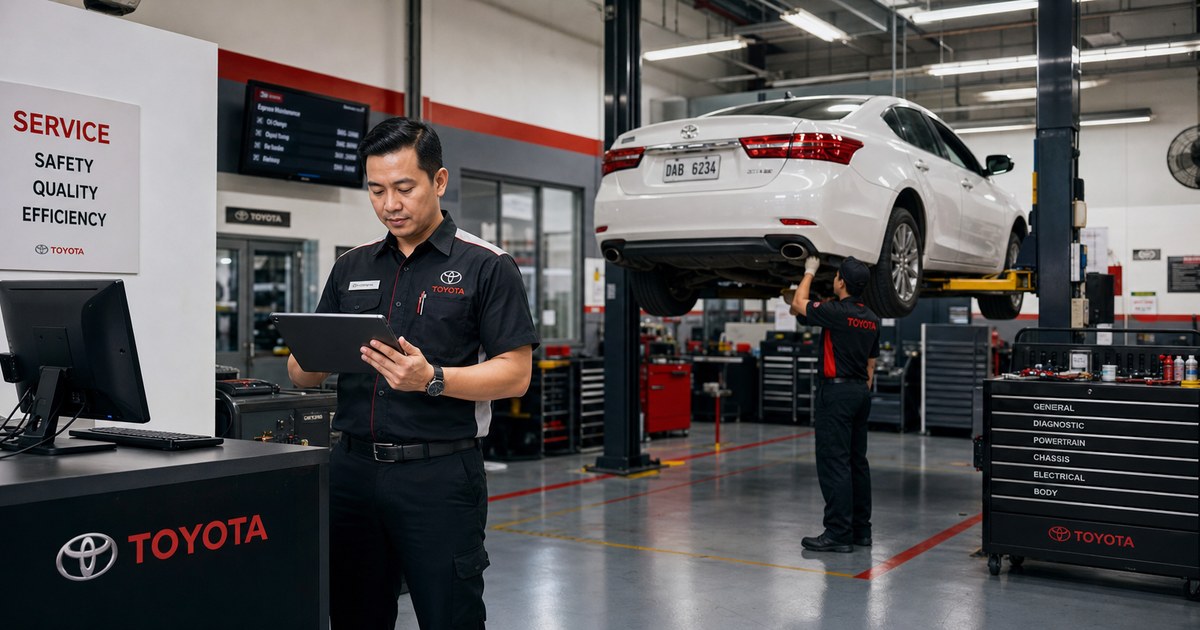
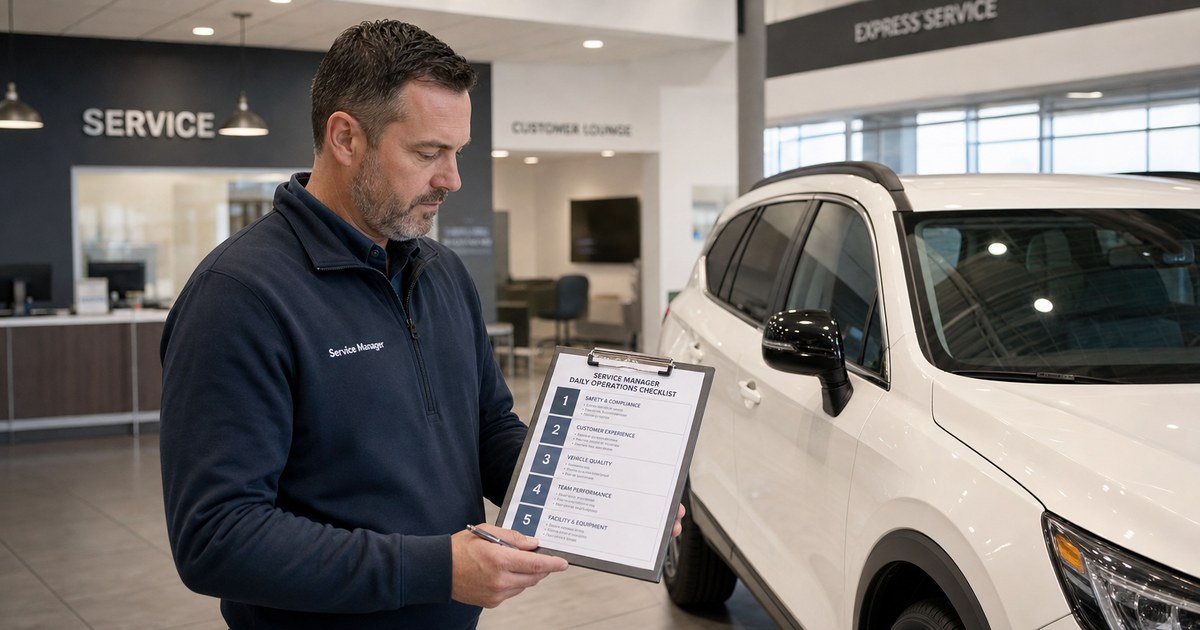
toyota automotive digital performer service evaluationtoyota audittoyota dealer audit
Toyota Automotive Digital Performer Service Evaluation Explained
Toyota's digital service evaluation has no public program name. See how TSM, Kodawari and Image USA II differ and how a Toyota dealer audit works.
Naseef UmarOct 25, 2026
Last updated: Oct 25, 2026
Toyota Automotive Digital Performer Service Evaluation Explained
By Naseef Umar, Founder and CEO of AutoSmart. Naseef has over a decade of experience across automotive operations, dealer standards, network performance, audits and digital transformation.
The Toyota automotive digital performer service evaluation is not a publicly documented Toyota program under that name, so the phrase most likely points to Toyota Service Management (TSM) standards and the digital tools used to measure them. That gap causes real confusion. Some sources call TSM a certification. Others call it workshop software. Few say which standard applies in which market. This guide separates the pieces: what a Toyota dealer audit checks, how TSM, Kodawari and Image USA II differ, what 2026 satisfaction data shows, and how to prepare. For the wider picture, see our guide to dealer performance audits and OEM standards.
Key Takeaways
The Toyota digital service performance evaluation has no publicly documented Toyota program under that exact name as of October 2026.
A Toyota dealer audit scores a dealership against brand standards, and every gap should become a corrective action with an owner and a deadline.
TSM and Kodawari appear mainly in international markets, while U.S. dealers work to Image USA II and are measured by independent customer surveys.
Toyota's scoring weights and pass marks are not public, so dealers should confirm them with Toyota or the regional distributor.
What is Toyota's digital service performance evaluation?
The toyota automotive digital performer service evaluation has no publicly documented Toyota program under that exact name as of October 2026. The phrase most likely points to how Toyota dealer service is measured digitally: Toyota Service Management (TSM) standards, customer satisfaction scores, and the photo and corrective-action records that prove a dealer meets them.
Three readings of the phrase
Searchers using this wording usually mean one of three things:
A Toyota standard evaluation.Toyota Service Management (TSM) is Toyota's after-sales service standard, generally described as a certification-style evaluation in several international markets.
Customer scores.Customer Service Index (CSI) is J.D. Power's measure of customer satisfaction with dealer service, published each year.
Digital tooling. Scored checklists, photo evidence and action tracking that a dealer or network team uses to prepare for either of the above.
Don't invent a Toyota program name to fit the phrase. If a distributor or Toyota representative uses "digital performer" language, ask them to confirm in writing what it covers.
What is a Toyota dealer audit?
A Toyota dealer audit, sometimes called a Toyota audit, is a structured check of whether a dealership meets the brand's standards for facilities, service process, people and customer handling. Toyota or its regional distributor runs or commissions it. Findings are scored, and each gap becomes a corrective action. U.S. franchised dealers handled more than 276 million repair orders and over $164 billion in service and parts sales in 2025 (NADA, 2026).
What auditors typically look at
The exact Toyota checklist is dealer-confidential. Treat this list as the general shape of an OEM service audit, not Toyota's rubric:
Service process, from appointment and reception to hand-over.
People, including technician training and certification records.
Customer feedback handling and how complaints are closed.
Under every item sits the same loop: a finding, an owner, a deadline and proof of closure. A corrective action is a tracked fix, with a named owner and due date, for a non-compliance found in an audit.
TSM, Kodawari or Image USA II: which Toyota standard applies where?
Toyota Service Management (TSM) and its Kodawari certification appear mainly in international markets. U.S. dealers work to the Image USA II facility standard and are measured by independent customer surveys. Toyota's Retail Market Development site, updated on 16 April 2026, says RMD policy and the design process control Vehicle Supplement Support eligibility (Toyota Dealership Image USA, 2026).
Name
What it is
Where it appears
Who sets it
TSM
After-sales service standard, generally described as a certification-style evaluation
Mainly international markets
Toyota and regional distributors
Kodawari
The certification-style evaluation name linked to TSM
Mainly international markets
Toyota and regional distributors
Image USA II
The current facility standard for U.S. dealers
United States
Toyota Motor North America
CSI
Independent customer survey of dealer service
United States, Canada and other markets
J.D. Power
Kodawari is the certification-style evaluation name linked to TSM in international markets. Image USA II is the current Toyota facility standard for U.S. dealers. They are different things, and a dealer in one market rarely deals with all of them.
Some pages also describe "TSM" as scheduling or work-order software. That is a different use of the same letters. The Toyota standard is a service-quality program, not a product you install. No official Toyota document on TSM or Kodawari scoring was available for this guide, so read online scoring claims with caution.
What do customer satisfaction scores say about Toyota's service standards?
Independent scores put Toyota service near the top of the market, though not ahead everywhere. The American Customer Satisfaction Index (ACSI) rated Toyota 83 in 2026, up 1%, while the automobile industry fell to 78 from 79 (CarPro, 2026). Toyota leads the 2026 ACSI overall, and the industry average slipped.
The American Customer Satisfaction Index (ACSI) is a consumer survey that scores brands on a 0 to 100 scale. The 2026 automobile study surveyed 6,699 randomly selected consumers by email between July 2025 and June 2026.
Two points stand out. In Korea, Toyota led after-sales by a single point. In the U.S. SUV and minivan segment, Toyota sat below the average, so there is headroom for dealers.
J.D. Power's Stewart Stropp links satisfaction to retention: "CSI results show those efforts yield higher satisfaction and, in turn, boost retention" (CarPro, quoting J.D. Power, 2026). That is why OEM evaluations and CSI are usually read together.
How does a Toyota-style evaluation cycle work, and can it be done digitally?
A Toyota-style service evaluation runs as a repeating cycle: self-assessment, independent field audit, scored findings, corrective action with a named owner, and a re-check. Parts of that cycle can run digitally, including live photo evidence, scored checklists and remote self-assessment. Toyota's TSM weights and pass marks are not public, so confirm the rubric and accepted evidence formats with your Toyota contact.
A preparation cycle you can run now
An evaluation cycle is a recurring, comparable round of audits that lets a network measure trends instead of snapshots. A practical cycle looks like this:
Get the current standard in writing. Ask Toyota or the distributor for the latest checklist version. Never prepare against last year's version.
Self-assess against it. Score every section yourself and attach photos to each answer.
Fix the gaps before the visit. Give each gap to a Person-In-Charge (PIC), the named owner responsible for closing a specific finding, with a due date.
Host the independent audit. Keep records for training, tools and customer feedback ready to show.
Close every finding with evidence. A fix without a photo or record is an open item.
Compare cycles. Check which questions failed last time and whether they stayed fixed.
Our guide to dealer audit systems covers when this process outgrows spreadsheets.
Where manual processes break
Manual audit workflows tend to fail in the same places. The table shows how a digital workflow changes each task.
Task
Manual process
Digital workflow
Scoring
Excel calculations, checked by hand
Automatic score on submission, same weighting for every auditor
Evidence
Photos pasted into PowerPoint
Live photo capture with date, time and geotag, attached to the question
Corrective actions
Emailed, then chased
Each failed item becomes an action with a PIC, due date and reminders
Reporting
Several hours of consolidation per cycle
Drill-down dashboard from network to individual finding
Self-assessment
Separate instructions and spreadsheets
Remote self-assessment compared against independent audits
Our data: AutoSmart's customer data shows audit cycles compressed from 10 days to 3 days. Each audit typically produces 8 to 20 findings, and under a manual process the same finding can need 4 to 5 follow-ups, including escalations, before it closes. AutoSmart estimates that moving suitable checks to self-assessment could reduce physical visits by 30 to 40%, saving roughly $15,000 to $20,000 per 100 visits at an average of $500 per visit.
Schedule a Free Demo: see how AutoSmart Audit handles scoring, evidence capture and corrective-action tracking at autosmarts.co.
Who is this Toyota service evaluation guide not for?
A guide to the Toyota service evaluation is not for dealers who need an official Toyota scoring rubric, because none is publicly documented as of October 2026. It also does not replace Toyota's own audit. Program names, weights and pass marks must be confirmed with Toyota or your regional distributor before you build a readiness plan around them.
Known limits:
Program name. The phrase "digital performer service evaluation" matched no Toyota program in the research behind this guide.
Scoring. Tiers, weights and pass standards for TSM and Kodawari are not in any official public document found.
Regional rules. Which standard applies depends on your market, so check with your distributor.
Dealer burden. Dealers often question the cost of factory image programs, but no dated source on Toyota specifically was available.
Third-party data. CSI shows customer outcomes. It does not show whether a dealer would pass a Toyota audit.
Frequently Asked Questions
What is a Toyota dealer audit?
A Toyota dealer audit is a structured check, run or commissioned by Toyota or its regional distributor, of whether a dealership meets the brand's standards for facilities, service process, people and customer handling. Findings are scored, and gaps become corrective actions that the dealer must close and evidence before the next evaluation.
What does TSM stand for at Toyota?
TSM stands for Toyota Service Management, the after-sales standard that several international markets run as a certification-style evaluation, often called Kodawari. Some web pages describe TSM as workshop software instead, so a dealer should confirm with its Toyota or distributor contact which meaning applies in its market.
Can a Toyota service evaluation be done digitally?
Parts of a Toyota service evaluation can be handled digitally, including scored checklists, live photo evidence with time stamps, remote self-assessments and tracked corrective actions. No public source confirms a Toyota-mandated audit tool, so a dealer should ask its Toyota field contact which formats and evidence Toyota accepts.
Does customer satisfaction data affect a Toyota dealer's standing?
Customer satisfaction data, such as J.D. Power's Customer Service Index (CSI), is an independent measure of dealer service quality and is widely used alongside OEM standards. How CSI affects incentives or certification for a specific Toyota dealer is set in dealer agreements that are not public, so confirm it with Toyota.
Conclusion
Toyota's digital service performance evaluation is best understood as a set of measures, not a single named program. Here is what to take away:
No Toyota program with that exact name is publicly documented.
TSM and Kodawari mainly apply internationally, while Image USA II and CSI shape the U.S. picture.
Independent 2026 scores, such as Toyota's ACSI 83, show strong but contested service performance.
Every audit finding needs an owner, a deadline and closure evidence.
Scoring and accepted evidence formats must be confirmed with Toyota or your distributor.
Your next step: pick one recent audit and count how many findings closed with evidence. If the answer is unclear, read about field audit software for dealer networks and see how one workflow can track it.
Written by
Naseef Umar
Founder | CEO
Naseef Umar is an automotive industry expert and the Founder & CEO of AutoSmart, with over a decade of experience working across automotive operations, dealer standards, network performance, audits, and digital transformation.
Company
KERALA Full Address - Pulikillam W Rd, Kakkanad West, Chembumukku, Edappally, Kochi, Kerala 682030; DUBAI Full Address - Dubai Silicon Oasis, UAE

 Naseef Umar