Two dealerships can score identically on a compliance audit and still deliver completely different customer experiences. That gap is the reason this question keeps coming up.
The mystery shopping vs dealer audits debate is not really about which method is better. Each measures something different. In this guide, AutoSmart Audit explains what each one does well, where each falls short, and how OEM field teams can use both to build a clearer picture of network performance.
What Mystery Shopping Actually Measures
A dealership mystery shop program sends a trained evaluator into the dealership posing as a genuine customer. They make an inquiry, move through the sales or service journey, and record what happened at each stage.
The value is authenticity. The dealership does not know it is being assessed, so the team behaves as it does on any ordinary day. This reveals what a scheduled visit rarely captures: how long the customer waits, whether the salesperson asks qualifying questions, how the handover is handled when nobody is watching.
Mystery shopping answers one question: what does the customer actually experience?
What a Digital Dealer Audit Measures
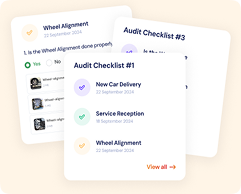
A digital audit is a structured evaluation carried out against a defined checklist. Each area is assessed and scored against a fixed standard:
- Facility standards, covering signage, layout, and presentation
- Staff certification records, confirming the right people hold the right qualifications
- Process documentation, verifying that agreed procedures are recorded and followed
- System usage, checking that required digital tools are used correctly
The value is consistency and coverage. Every location is measured against identical criteria, findings are recorded the same way, and results compare meaningfully across the network. Corrective actions can be assigned with owners and deadlines.
Digital audits answer a different question: is this dealership meeting the standards it agreed to meet?
The Limitations of Mystery Shopping and Digital Audits
Mystery shopping and digital audits each have real limitations, and OEM field teams relying on just one method risk an incomplete view of network performance.
What Mystery Shopping Misses
Mystery shopping is limited by sample size. A single visit captures one interaction, on one day, with one member of staff. It shows what happened that afternoon, not what happens consistently. It is also expensive to run at scale, which is why most programmes cover only a fraction of the network each cycle.
What Digital Audits Miss
Digital audits are limited by structure. A dealership can hold every certificate, display every sign correctly, and still leave customers waiting twenty minutes at the service desk. Scheduled visits also invite preparation, so teams may perform to standard on audit day and drift afterwards.
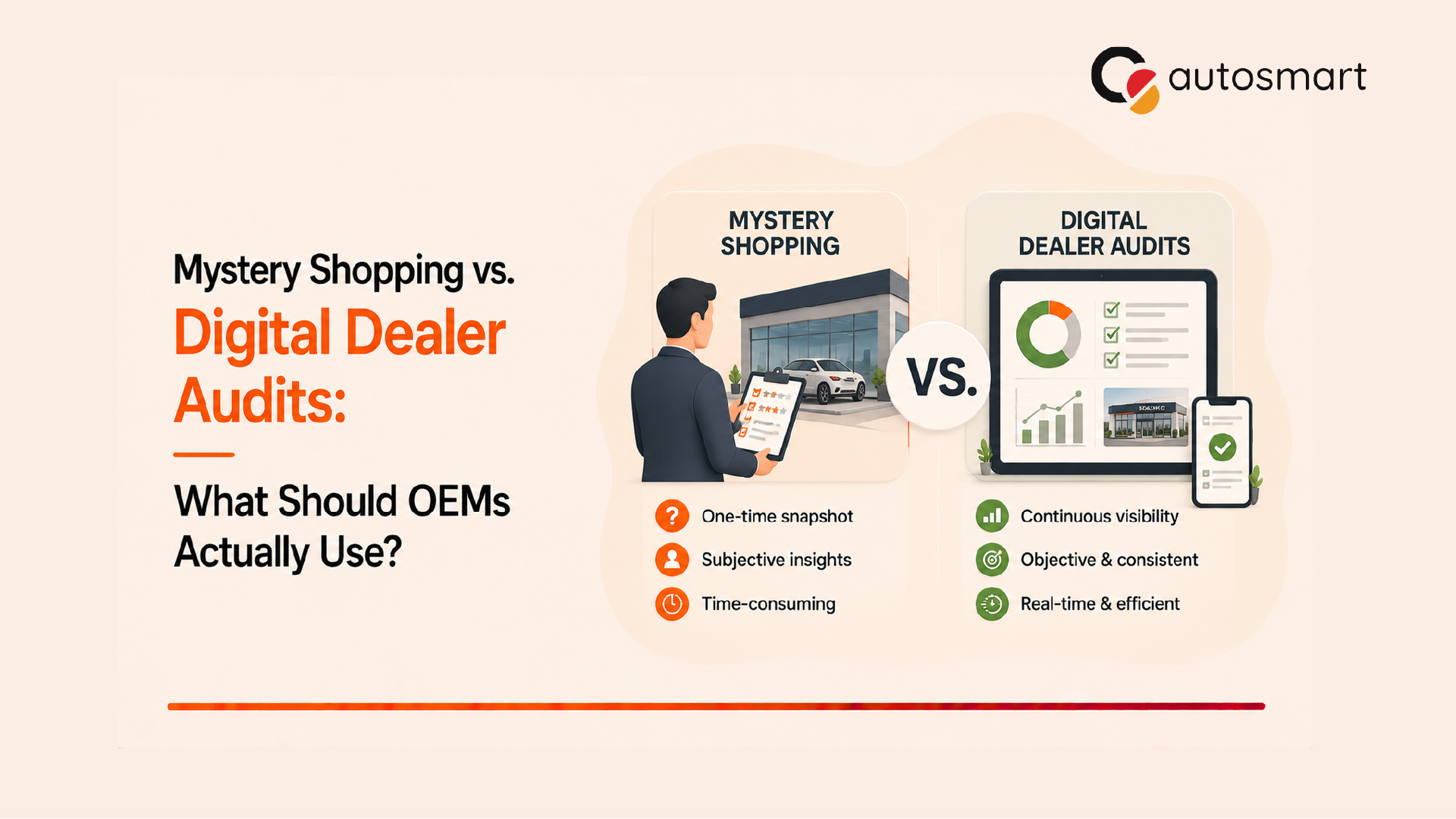
Put simply, one method shows the experience without the pattern. The other shows the pattern without the experience.
Mystery Shopping or Digital Audits: Which to Use When
When OEM field teams weigh up dealer CX evaluation methods, the useful question is not which is better but which fits the purpose.
Use mystery shopping when you need to know how the sales or service journey feels to a real customer, and whether trained behaviours hold up when nobody is watching. It is unannounced and experience-focused, though narrow in coverage.
Use digital audits when you need to verify compliance, track corrective actions, and compare performance across every location. They are scheduled and standards-focused, with the breadth to cover the full network.
An OEM measuring only compliance will miss experience problems. An OEM measuring only experience will miss the structural issues causing them.
How to Run Mystery Shopping and Audits Together
Digital audits work best as the network-wide baseline, carried out at regular intervals across every dealership. Mystery shopping then serves as a targeted layer, applied to a sample of locations or to those where audit scores indicate a problem.
The two become most valuable when read together. A dealership that passes its audit but scores poorly on mystery shops is meeting standards on paper rather than in practice. Where both scores decline at once, the cause is usually structural.
The tooling matters as well. Effective dealer compliance measurement tools record findings against fixed criteria, assign corrective actions to named owners with deadlines, and track scores across cycles so that decline becomes visible early. Automotive mystery shopper software and digital audit platforms increasingly share these functions. AutoSmart Audit is built around them, giving OEM field teams a consistent view of performance across every location.
Looking for a clearer view of dealer performance across your network? See how AutoSmart Audit helps OEM field teams track compliance and corrective actions at scale.
Measuring Dealer Performance with AutoSmart Audit
The practical answer to the mystery shopping vs dealer audits question depends on where your network stands. If compliance across locations is unclear, start with structured digital audits and build the baseline. If compliance is solid but customer satisfaction is not improving, mystery shopping will show you why. If resources are limited, audit broadly and mystery shop selectively.
What matters most is that findings from either method do not sit in a report. Measurement without corrective action changes nothing. AutoSmart Audit gives OEM field teams a single view of network compliance, with findings recorded consistently and corrective actions tracked to completion across every location.
Book a demo of AutoSmart Audit to see how it works for your network.

Siddharth works in the Founders’ Office at AutoSmart, where he covers strategy, research, and revenue operations. He writes about warranty audits, compliance frameworks, and what the data across audit programmes actually shows.