A dealership can pass every showroom standard and still be losing money in the parts department. Stock that does not match the system, counterfeit components on the shelf, and warranty claims rejected months later all trace back to the same place.
A dealership parts audit checklist exists to find those problems before they compound. In this guide, AutoSmart Audit explains what such an audit should cover, how often it should run, and what separates an audit that finds problems from one that fixes them.
Why the Parts Department Needs Its Own Audit
The parts department holds more individual items than any other part of the dealership, each carrying a value, a location, and a supply chain behind it. Sales and service audits assess process and presentation. Parts audits assess physical stock against recorded stock, which is a different exercise entirely.
The financial exposure is higher than most distributors expect. Parts inventory ties up working capital, and discrepancies between system and shelf are absorbed quietly until someone counts.
What a Parts Department Audit Covers
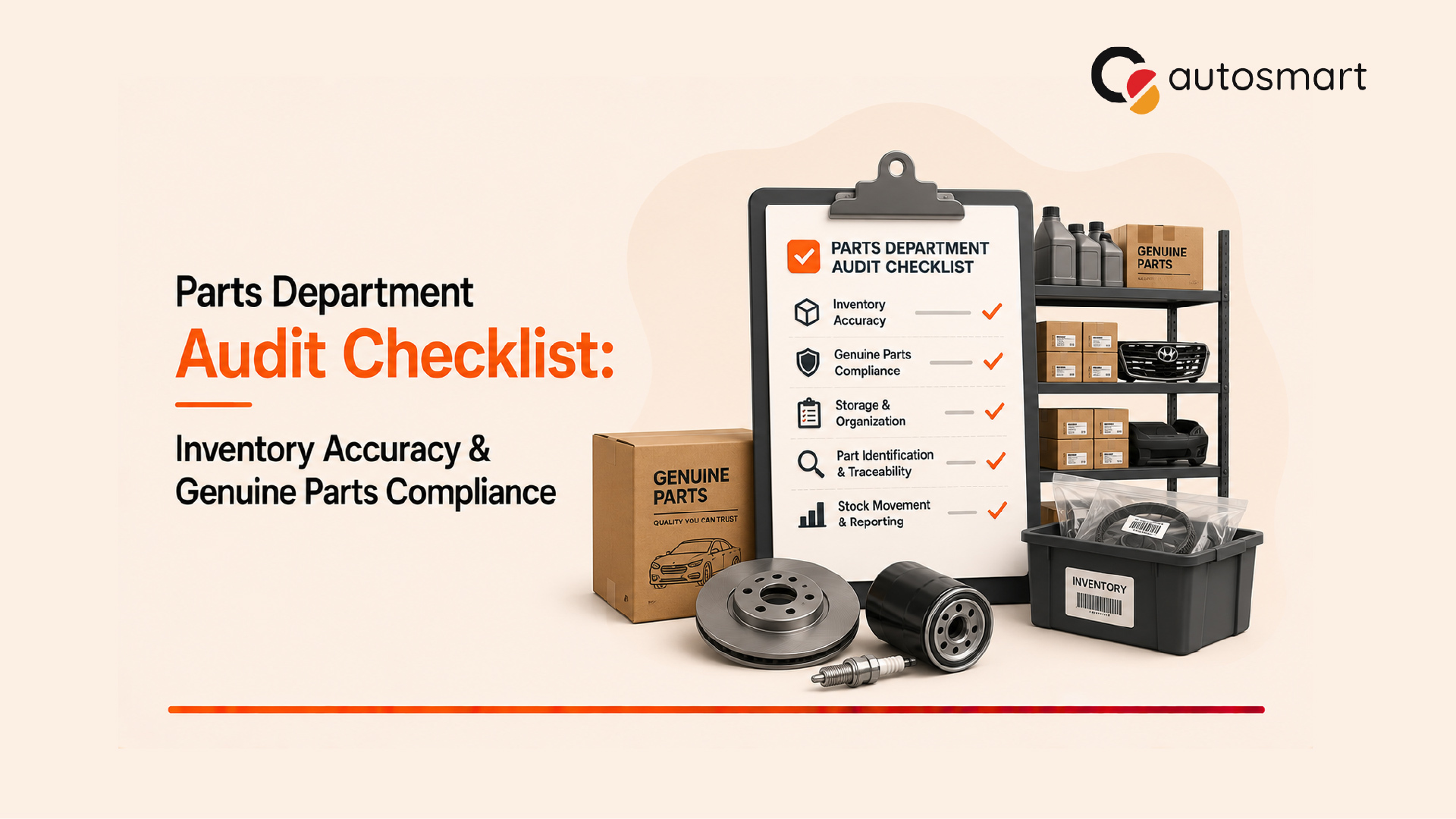
A spare parts inventory audit automotive teams can rely on assesses four areas:
- Stock accuracy: physical count against system records, by part number and location
- Genuine parts compliance: verifying that stock held and fitted is OEM-approved, with traceable sourcing
- Storage and handling: correct bin locations, labelling, protection of sensitive components
- Documentation: goods receipt notes, returns, warranty part retention, and disposal records
Each area fails differently. Stock accuracy fails gradually through miscounts and unrecorded movements. Compliance fails suddenly, usually when a warranty claim is rejected.
Frequency matters as much as scope. A dealership parts audit checklist needs running more often than a facility audit, since parts inventory moves faster. Most networks run a full physical count annually, with rolling cycle counts monthly or quarterly on high-value and fast-moving lines. DPOK parts audit cycles, where a distributor operates one, sit alongside these rather than replacing them.
Why Genuine Parts Compliance Affects Warranty, Liability and Brand
A genuine parts compliance audit verifies that the parts a dealership holds and fits are what the manufacturer approved. Three things depend on it:
- Warranty claims. Manufacturers reimburse warranty work only where genuine parts were used. A claim supported by a non-genuine part will be rejected, often long after the money was spent.
- Liability. A safety-critical component that fails carries consequences beyond the repair bill, and the dealership’s records are examined first.
- Brand standing. A customer who finds a counterfeit part fitted at an authorised dealership does not distinguish between the dealership and the brand.
Looking for a better way to run parts audits across a dealer network? See how AutoSmart Audit helps OEM field teams track compliance and corrective actions at scale.
What Causes Parts Inventory Discrepancies
A parts department shrinkage audit measures the difference between recorded stock and physical stock. Most of that difference comes from process failures rather than theft.
The common causes are:
- Parts issued to a job but never recorded against it
- Returns accepted without a system entry
- Deliveries shelved before the goods receipt is processed
- Damaged stock written off informally
- Miscounts at bin level that build up over time
Theft happens, but in most networks it explains less of the loss than poor process discipline. An audit that assumes theft first will miss the process failures causing most of it. What matters is not the variance figure itself, but knowing which cause produced it, because each one needs a different fix.
Tools That Support Parts Audit Accuracy
Manual counting on paper is where most parts audit accuracy is lost. The count itself may be sound, but the transcription and follow-up are not.
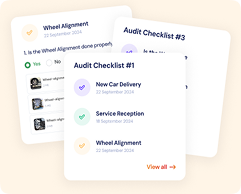
Dealer parts stock accuracy software captures the count at the point it happens. Barcode and VIN scanning removes transcription error, discrepancies are flagged against the system immediately, and corrective actions carry named owners and deadlines rather than sitting in a spreadsheet.
For a distributor overseeing multiple dealerships, the benefit compounds. Variance can be compared across locations, and the dealerships with genuine process problems separated from those having a bad month.
Making Parts Audits Count with AutoSmart Audit
A dealership parts audit checklist is only as useful as what follows it. The count identifies the variance. The value comes from correcting the process that produced it.
Most parts programmes stop at the count, which is why the same discrepancies reappear cycle after cycle. AutoSmart Audit closes that loop for OEM field teams, so every finding carries an owner, a deadline, and a verification step.
Book a demo of AutoSmart Audit to see how OEM teams manage parts department compliance.

ناصيف عمر هو المؤسس والرئيس التنفيذي لشركة أوتوسمارت تكنولوجي، وهي منصة برمجية كخدمة (SaaS) تقوم برقمنة عمليات التدقيق لشركات تصنيع السيارات والموزعين وشبكات الوكلاء. ومن خلال خبرته السابقة في شركة تويوتا (عبد اللطيف جميل) وخلفيته في تقنية المعلومات والإدارة الصناعية، يكتب عن عمليات التدقيق، والانضباط التشغيلي، وبناء المنتجات البرمجية لعملاء المؤسسات عبر مختلف الأسواق.