The notification of an upcoming OEM audit is far from a standard check and can feel like a frequent, intrusive, and overbearing experience. For many dealerships, the notice of a forthcoming manufacturer OEM audit seems more like a disaster warning than simply another stop on the shop floor. This regulatory inspection for automotive dealerships is a high-stakes event that requires immediate attention.
No matter the audit type, be it about sales incentives, warranty claims, or facility standards, it’s a game-changing moment when your operational transparency and bottom-line profit potential are on the line for examination. But a pass is not luck; it’s thorough documentation and proactive compliance.
But before studying how to prepare your dealership for an inspection, we must know how OEM audits work and how they’re performed. In this blog, we’ll shed light on the audit process and explain why and how manufacturers monitor your data so closely. We’ve also included everything you need to prepare for an audit at your dealership to keep it compliant and audit-ready.
What is an OEM Audit?
In a car dealership context, an OEM (Original Equipment Manufacturer) Audit is a structured review of a dealership’s operating procedures, compliance, brand consistency, customer experience, and physical premises. It’s conducted by manufacturers such as Ford, Toyota, and BMW to ensure dealers strictly adhere to the terms of their Franchise Agreements.
While the word audit can make pulses race, it isn’t meant to be a surprise inspection so much as a verification of facts. The manufacturer is looking for both physical and digital proof that the money paid to the dealership and the vehicles reported as sold accurately reflect what’s happening in the real world.
An OEM audit isn’t just about finding errors; it’s a safeguard designed to protect the manufacturer’s multi-million-dollar investments in incentive programs and warranty payouts.
Why do OEMs conduct Audits on Automotive Dealerships?
Although an audit can feel adversarial, it is fundamentally a risk-management tool manufacturers use to protect both their financial interests and their brand reputation.
Dealerships are independent businesses that represent global brands, so OEMs have a responsibility to ensure the partnership is operating within the legal and financial boundaries of the franchise agreement. This regulatory inspection for automotive dealerships ensures the partnership remains sound. OEMs also conduct audits to protect their financial investments and ensure every dealership in their network upholds a consistent brand standard.
- Brand Image Compliance: OEMs require strict facility and operational standards.
- Proactive Risk Management: Audits uncover safety and legal risks.
- Operational Transparency: Manufacturers rely on accurate data for production planning.
Dealership Audit Preparation Guide with Autosmart Audits
Standardizing Operating Procedures (SOPs)
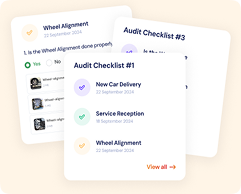
Before an audit begins, it’s critical that every department operates under the same set of rules. Relying on manual checks leaves room for human error, which is why a digital framework is essential. Conduct routine internal self-audits using digitized checklists to proactively identify documentation gaps in sales and warranty claims before the OEM auditor arrives.
- Standardize Processes: Review and update your internal SOPs to ensure they align with the most current OEM requirements.
- Identify Operational Gaps: Conduct internal self-audits to uncover process breakdowns before an external auditor does.
Our Dealership Audit Management software automates SOP validation and monitors compliance in real time. By eliminating Excel spreadsheets and paper-based tracking, it ensures consistent standards across every location in your network using a dealership compliance inspection checklist that highlights gaps the moment they appear. Our technical audit checklists help ensure repair documentation is accurate, complete, and standardized.
Technical and Facility Compliance
OEMs place significant weight on the physical condition of your dealership and the technical precision of your service operations. Maintain facility and technical standards through dedicated 5S and Technical Audit modules that ensure the shop floor and showroom consistently meet strict brand image requirements.
- Conduct 5S Audits: Walk the facility to confirm work areas are organized, clean, and efficient under 5S principles, Sort, Set in order, Shine, Standardize, and Sustain.
- Verify Technical Standards: Confirm all inspections and repairs meet manufacturer-required industry standards.
The Autosmart Audits App offers customizable 5S and technical audit checklists. It simplifies shop-floor data collection and improves inspection accuracy, helping prevent the costly mistakes that lead to audit penalties. AutoSmart offers a comprehensive dealership audit preparation guide with dedicated 5S and image modules to keep showrooms and service bays consistently aligned with brand requirements.
Evidence Collection and Documentation
An audit is only as strong as the proof you can produce. If an action isn’t documented, the auditor will assume it never happened. Capture live digital evidence by attaching annotated photos and videos directly to inspections, creating a clear, transparent, and traceable audit trail.
- Capture Live Evidence: Document failed parts, facility deficiencies, and compliance issues using clear, high-quality photos.
- Maintain Traceable Audit Trails: Preserve a digital record of every inspection, showing when and how each check was completed.
Autosmart Audits removes the challenge of matching evidence. You can capture photos and video in real time, annotate for clarity, and upload supporting documents directly within the app, creating a transparent, traceable audit trail that’s instantly accessible. AutoSmart supports this by teaching you how to prepare for a dealership compliance audit through real-time evidence capture to demonstrate compliance.
Environmental and Safety Risk Management
Environmental and safety compliance is among the highest-risk areas for dealerships, with the potential for significant fines and reputational damage.
- Track Environmental Compliance: Regularly verify proper hazardous waste handling and sustainable shop practices.
- Proactive Risk Identification: Use routine safety audits to identify hazards in service bays or showrooms before they escalate into incidents.
Autosmart Audits includes dedicated environmental and safety audit modules with real-time monitoring, using tools like our health and safety checklist for automotive dealerships to help reduce compliance risk and allow you to address issues before they become liabilities.
Action Plans and Continuous Improvement
The audit itself is only one step; what matters most is how you respond to any findings.
- Assign Corrective Actions: When a deficiency is identified, assign it to a specific individual with a defined deadline for resolution.
- Monitor Real-Time Scores: Track your compliance score in real time to see where your dealership stands at any moment.
Autosmart Audits automatically generates actionable improvement plans from audit results. You can track failed items, assign a point of contact, and monitor recurring issues through a live dashboard, transforming audits from one-time events into an ongoing cycle of continuous improvement.
Ready to Ace Your Next OEM Audit?
An OEM audit becomes far more manageable when manual fire drills are replaced with digital precision. By leveraging AutoSmart to perform internal self-audits, capture live digital evidence, and track automated action plans, you can significantly reduce the risk of costly chargebacks. With the right preparation in place, a high-stakes inspection becomes a routine, stress-free confirmation of your dealership’s operational excellence and your success during a regulatory inspection for automotive dealerships.
الأسئلة الشائعة
What is the primary goal of an OEM audit at a dealership?
The main purpose of an OEM audit is to formally verify that the dealership is complying with the operational, compliance, and brand standards defined in its franchise agreement.
How often do manufacturers typically conduct these audits?
Audits may be performed annually as part of a routine review, or triggered for cause when a dealership’s warranty spending or sales data shows unusual or unexpected spikes.
What are the most common reasons for audit chargebacks?
The majority of chargebacks result from clerical errors, rebate non-compliance, irregularities in documents, etc.
How does AutoSmart help a dealership survive an OEM audit?
AutoSmart digitizes the entire audit-preparation process by using real-time checklists, live evidence capture, and automated action plans, ensuring every department remains audit-ready at all times.

Ejaz leads engineering at AutoSmart. He built the platform around a constraint most audit software ignores: the auditor is standing in a workshop with no signal. He writes about offline-first architecture, audit data structures, and scoring systems.