Workshops that stay organised tend to perform better, not because tidiness is a value in itself, but because disorganisation introduces delays, safety risks, and inconsistencies that compound over time. The 5S principles provide a structured way to address this, turning workplace organisation from an informal habit into a repeatable, auditable standard.
For automotive facilities, where tools, parts, and documentation move constantly across shared spaces, 5S gives teams a common framework for how the workshop should look, how it should be maintained, and how deviations are identified and corrected.
What Does 5S Stand For and What Does It Mean?
The 5S meaning and methodology originates from five Japanese terms, each representing one step in a fixed sequence, since each 5S principle builds on the one before it.
- Sort (Seiri): Remove anything not needed for current operations, broken tools, obsolete parts, expired materials, and items kept out of habit.
- Set in Order (Seiton): Arrange everything that remains in a designated, clearly labelled location, obvious to anyone working in the area.
- Shine (Seiso): Clean the workspace thoroughly and make cleaning a routine rather than an occasional event, covering spills, dust, and equipment condition.
- Standardise (Seiketsu): Document the standard so it can be followed consistently across shifts and locations. Without this, the first three steps tend to revert within weeks.
- Sustain (Shitsuke): Build the discipline to maintain the standard over time, typically through regular audits, moving 5S from a one-time clean-up to an ongoing process.
How 5S Principles Apply in an Automotive Service Workshop
Applying 5S principles in a workshop differs from a manufacturing plant or office. The environment is physically demanding, and tools and parts move between bays constantly throughout the day.
- Sort means removing broken tools and unclaimed parts, and stocking consumables based on actual usage.
- Set in Order means shadow boards for hand tools, labelled diagnostic equipment storage, and a parts staging area kept separate by job.
- Shine means daily cleaning routines, prompt spill management, and regular checks on extraction systems and lighting.
- Standardise means documenting these routines so any technician can follow them. A documented 5S checklist for workshops gives teams a structured reference to audit against.
- Sustain means scheduled audits checking whether the standard is actually maintained, not just whether the workshop looked tidy once.
The Difference Between 5S and 6S
6S adds a sixth step, Safety, to the original five 5S principles, treating it as a distinct, auditable step rather than folding it into the existing five.
In practice, the difference between 6S vs 5S is less about a new concept and more about how explicitly safety is tracked. A well-implemented 5S programme already addresses safety through Shine and Standardise. 6S simply makes that layer visible as its own audit category, useful where safety compliance needs separate reporting.
For most automotive facilities, 5S with safety built into each step covers the requirement. 6S becomes more relevant where regulatory or OEM reporting requires safety as a standalone metric.
Where Lean Production 5S Fits In
5S is often described as the foundation of lean production 5S methodology. Lean production aims to reduce waste, and applying 5S principles to a disorganised workspace removes a major source of that waste: time spent searching for tools, movement between poorly laid out stations, and delays caused by missing parts.
Implementing 5S doesn’t make a facility lean on its own, but it removes the physical disorder that makes other lean improvements harder to sustain.
Moving from Manual Checklists to 5S Audit Software
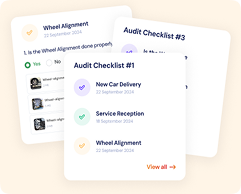
Paper-based checklists built around 5S principles work for a single site running occasional inspections. For dealer networks managing multiple workshops, the limitations show quickly: inconsistent scoring, no trend visibility, and corrective actions noted but never tracked to closure.
5S audit software addresses this by digitising the inspection process, standardising scoring across every site, and tracking corrective actions with assigned owners and deadlines. AutoSmart’s platform covers 5S alongside facility, SOP, and compliance audits within the same system.
Sustaining 5S Across a Dealer Network
Applying 5S principles once is relatively straightforward, but sustaining them across multiple branches over months and years is where most programmes lose momentum. The most common failure point is not the initial clean-up but the absence of a repeatable audit cycle that holds each site accountable to the same standard, with findings tracked and trend data visible to leadership rather than buried in individual site reports.
For dealer networks looking to bring 5S auditing into a structured, repeatable system, AutoSmart’s audit platform covers the full cycle from inspection to corrective action to trend reporting. Book a demo to see how AutoSmart standardises 5S compliance across every branch in a network.

ناصيف عمر هو المؤسس والرئيس التنفيذي لشركة أوتوسمارت تكنولوجي، وهي منصة برمجية كخدمة (SaaS) تقوم برقمنة عمليات التدقيق لشركات تصنيع السيارات والموزعين وشبكات الوكلاء. ومن خلال خبرته السابقة في شركة تويوتا (عبد اللطيف جميل) وخلفيته في تقنية المعلومات والإدارة الصناعية، يكتب عن عمليات التدقيق، والانضباط التشغيلي، وبناء المنتجات البرمجية لعملاء المؤسسات عبر مختلف الأسواق.