The challenge
Challenges tyre retail networks face
Tyre brands, dealer networks and fitting-centre chains describe the same three problems.
“One fitting mistake is a safety incident”
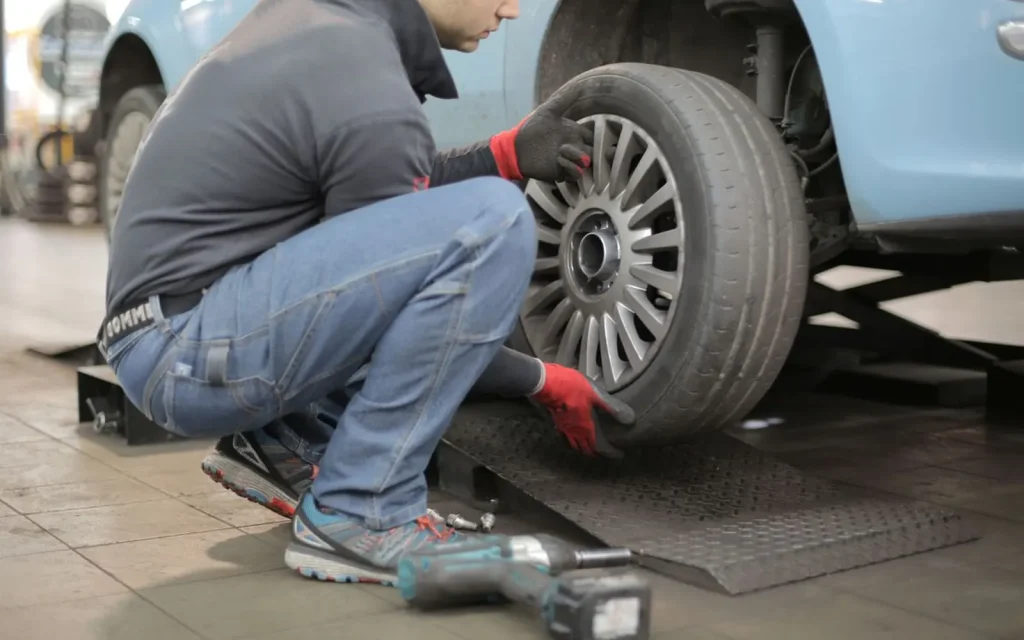
Torque not recorded, an inflation cage not used, a wheel not re-checked: small misses in the bay carry the biggest risk.
“Old stock ends up on the rack”
Without regular checks of the production date, tyres that are too old for sale stay on display and get fitted.
“Every centre runs its own way”
Stores, bays and customer handover differ from centre to centre, and the brand can’t see where the gaps are.
How AutoSmart helps
How AutoSmart helps tyre retail and fitting centres
Solves challenge 1
A fitting bay checklist for every centre
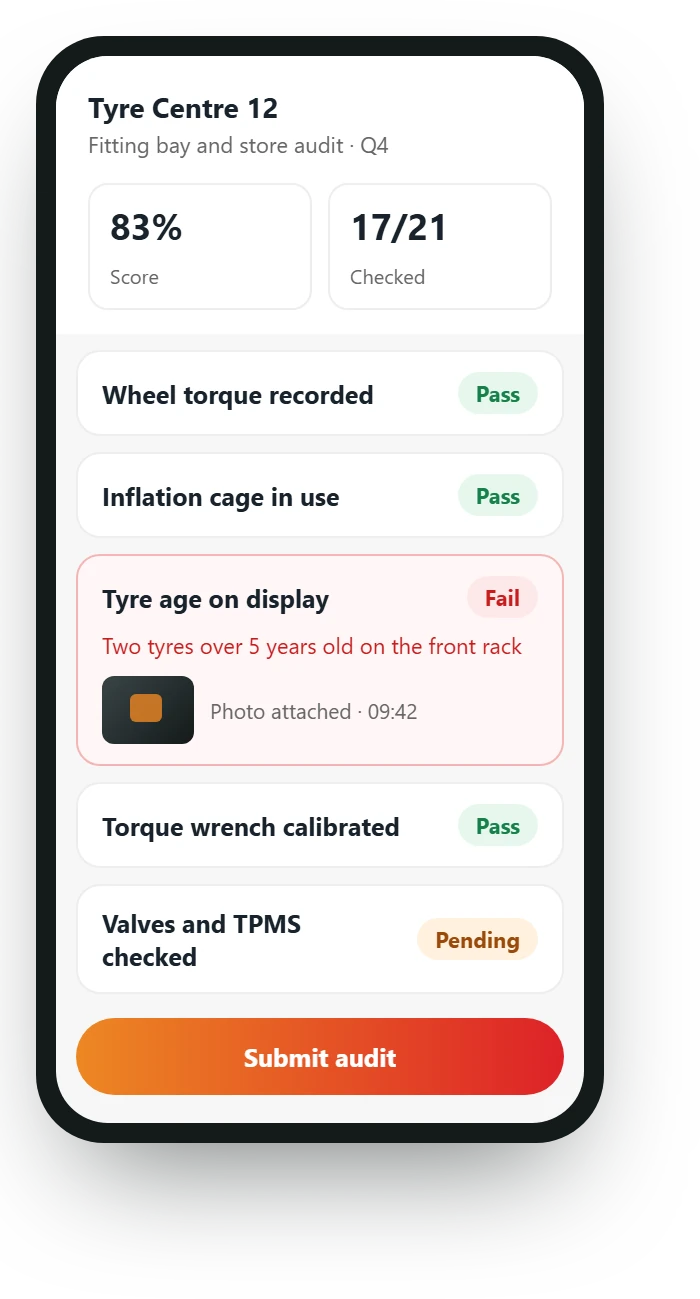
Torque, inflation, equipment and store checks become one scored tyre shop audit checklist on the auditor’s phone, with photos where they matter, so every fitting centre is checked the same way.
- Torque and inflation checks recorded
- Photos required where they matter
- Works offline in the bay
Solves challenge 2
Every finding becomes a fix with an owner
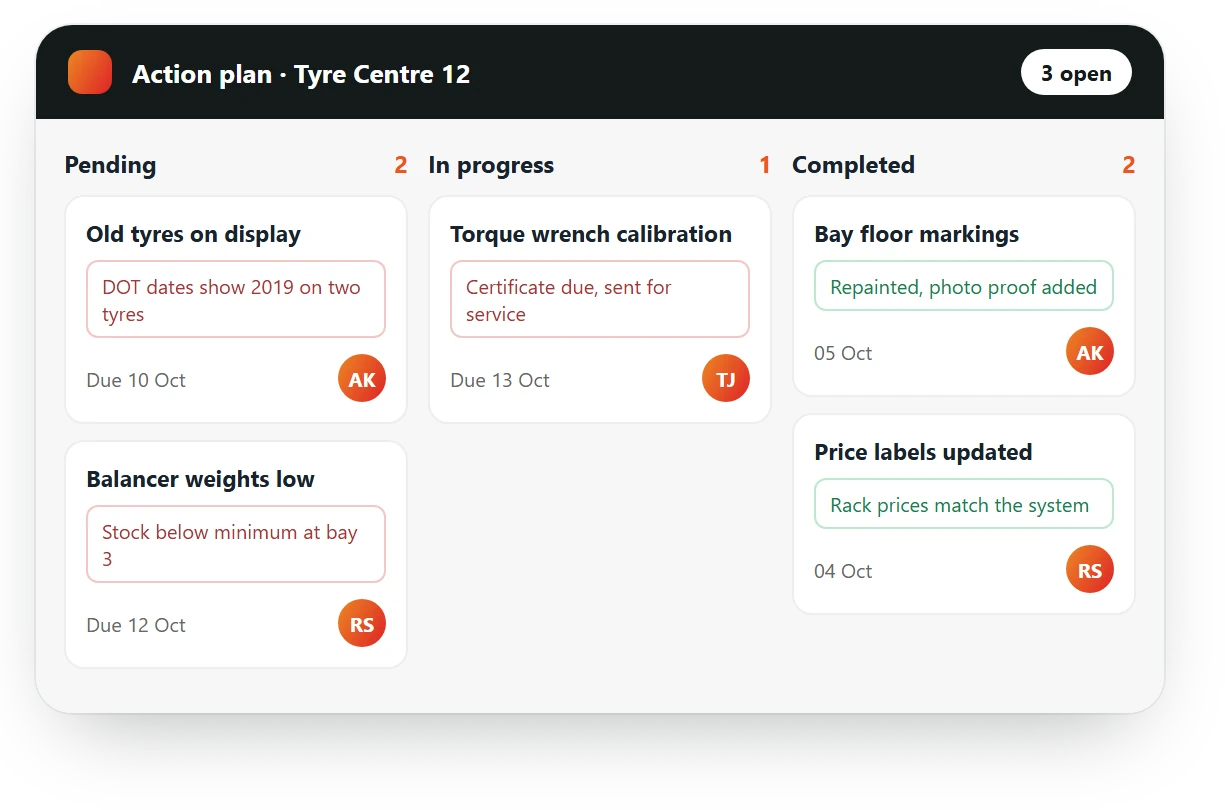
Old tyres on the rack or a torque wrench due for calibration become actions with a person in charge and a due date, closed with a photo of the fix.
- A person in charge and a due date
- Pending, In progress, Completed
- Photo proof of every fix
Solves challenge 3
Every centre compared on one scale
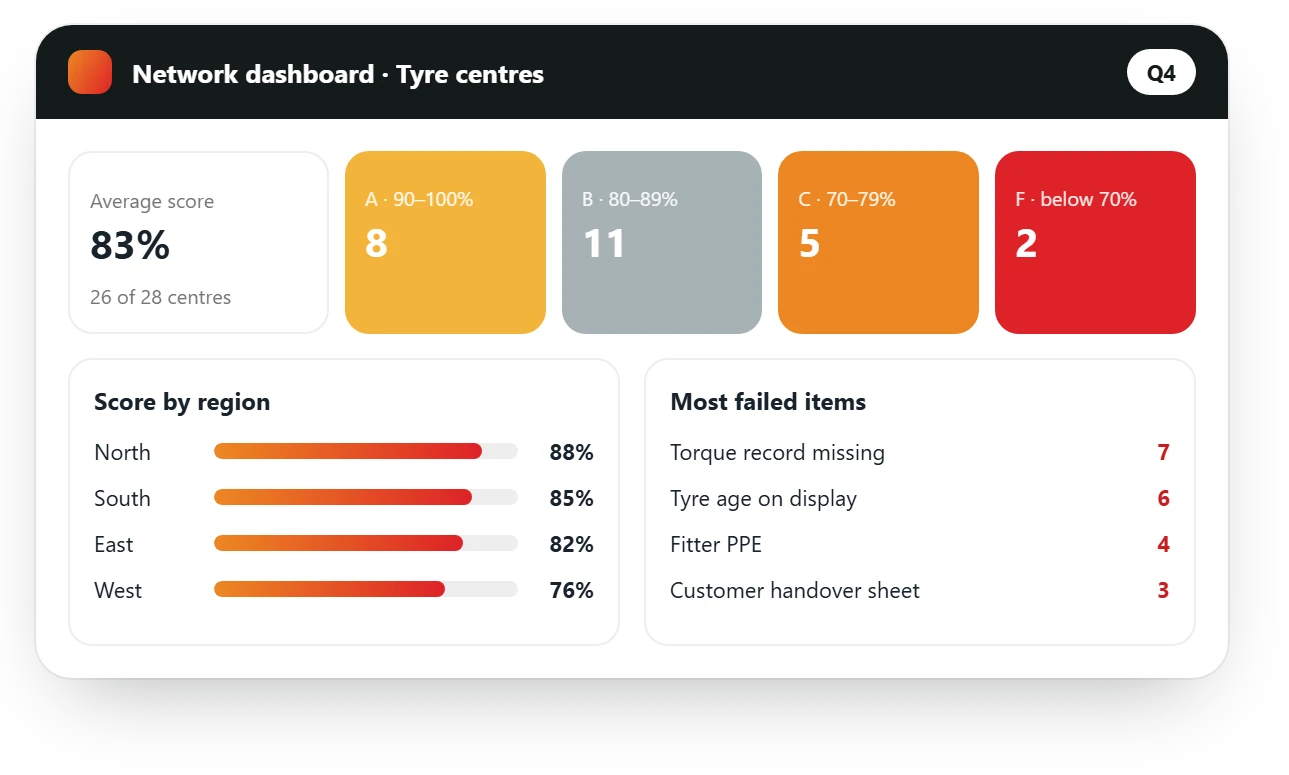
Scores, failed items and open actions reach the dashboard as each audit is submitted, so you see which centres and regions need attention first.
- Scores by region and centre
- Most failed items across the network
- Missed audits flagged
What gets audited
What a tyre shop audit covers
A typical tyre fitting centre audit in AutoSmart is grouped into six areas. Start from it and add your brand’s dealer standard.
Fitting bay safety
- Lifts and jacks inspected
- Inflation cage used for every tyre
- Fitter PPE: gloves, boots, eye protection
- Bay floor clean and marked
Wheels and torque
- Torque setting recorded for each wheel
- Re-torque advice given to the customer
- Wheel balancing checked
- Valves and TPMS sensors checked
Tyre storage and age
- Production date (DOT code) checked on stock
- First in, first out on the racks
- Tyres stored away from heat and sunlight
- Damaged tyres quarantined
Equipment
- Torque wrenches calibrated
- Balancer and changer serviced
- Alignment equipment checked
- Compressor and air lines safe
Store presentation
- Tyre display and price labels
- Brand signage and point of sale
- Customer area clean
- Uniforms and grooming
Customer service
- Tyre inspection explained
- Quote matches the invoice
- Handover sheet with torque values
- Old tyres disposed of properly
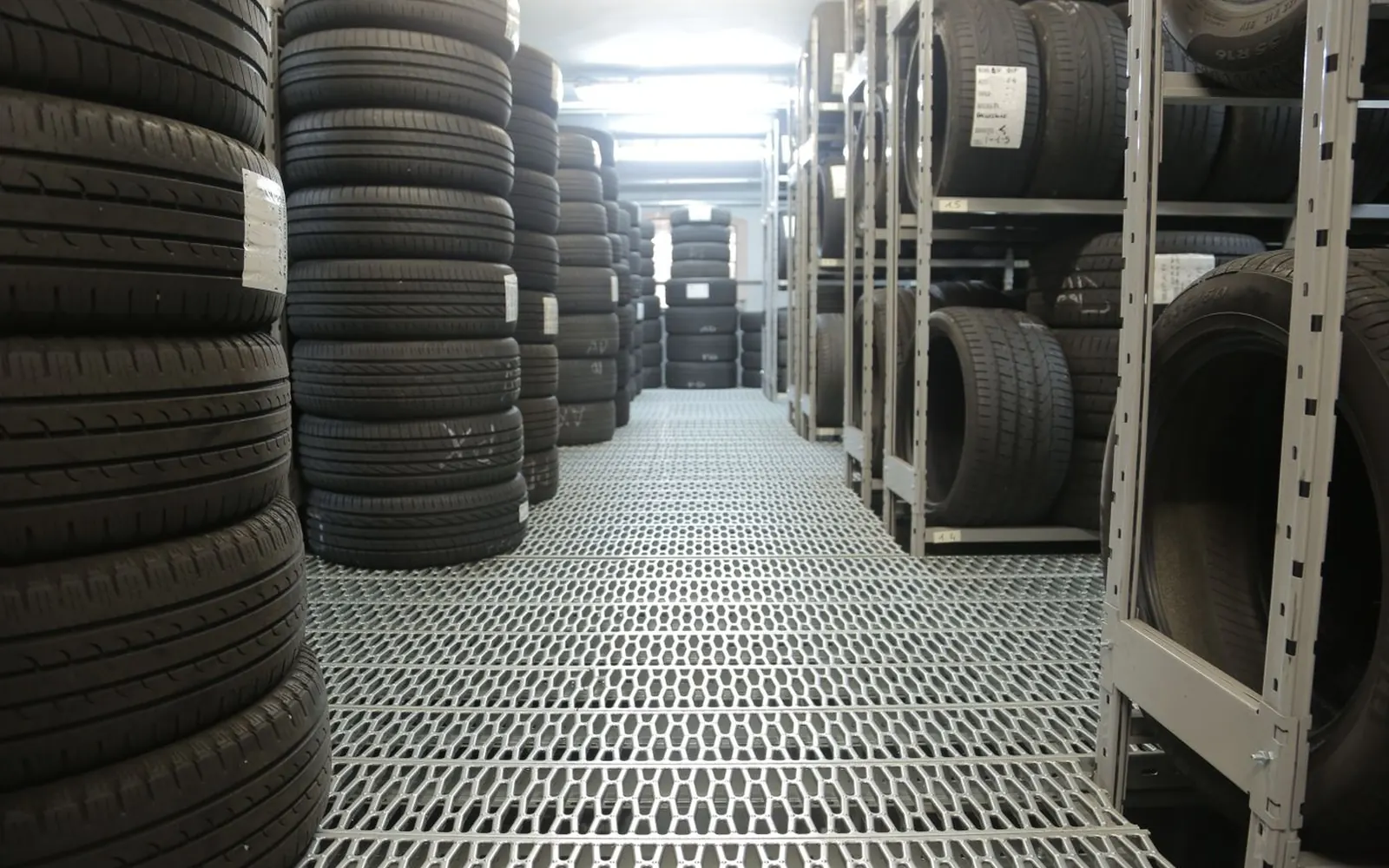
From the stock racks to the fitting bay, every centre checked the same way.
Standards and regulations
Standards and regulations, built into your checklists
Product, safety and brand rules sit in the same audit, so one visit covers all of them.
Tyre production date (DOT code)
The week and year of manufacture, checked on stock and on display.
BIS certification (India)
Mandatory certification marks on tyres sold in India.
GCC tyre conformity (GSO, MOIAT in the UAE)
Conformity and labelling rules for tyres sold in the Gulf.
Workshop safety
Lifts, inflation cages and PPE in the fitting bay.
Your tyre brand’s dealer standard
Your dealer programme: store look, bay set-up and service steps.
Your store standard
Your own checks, scored exactly the way you score them today.
FAQ
Tyre shop audits: common questions
What is tyre shop audit software?
Tyre shop audit software replaces paper checklists for fitting centre and store visits. Auditors check the bays, torque records, stock and the store on a phone, attach photos, and every failed item becomes an action with an owner. Head office sees every centre’s score as soon as the audit is submitted.
What should a tyre shop audit checklist cover?
Most networks check six areas: fitting bay safety, wheels and torque, tyre storage and age, equipment, store presentation, and customer service. Add your brand’s dealer standard and local rules on top.
How do you check tyre age during an audit?
The production date is the last four digits of the DOT code on the sidewall: week, then year. Auditors check a sample of stock and every tyre on display against your age limit and photograph any that fail.
Can tyre brands audit their dealer network?
Yes. Company stores and independent dealers sit in one network, grouped by region. The brand sees every centre on one scale, while each dealer works through the actions for its own sites.
Can wheel torque checks be recorded?
Yes. Torque values and wrench calibration are part of the checklist, with photos where you require them, so you can show the check was done.