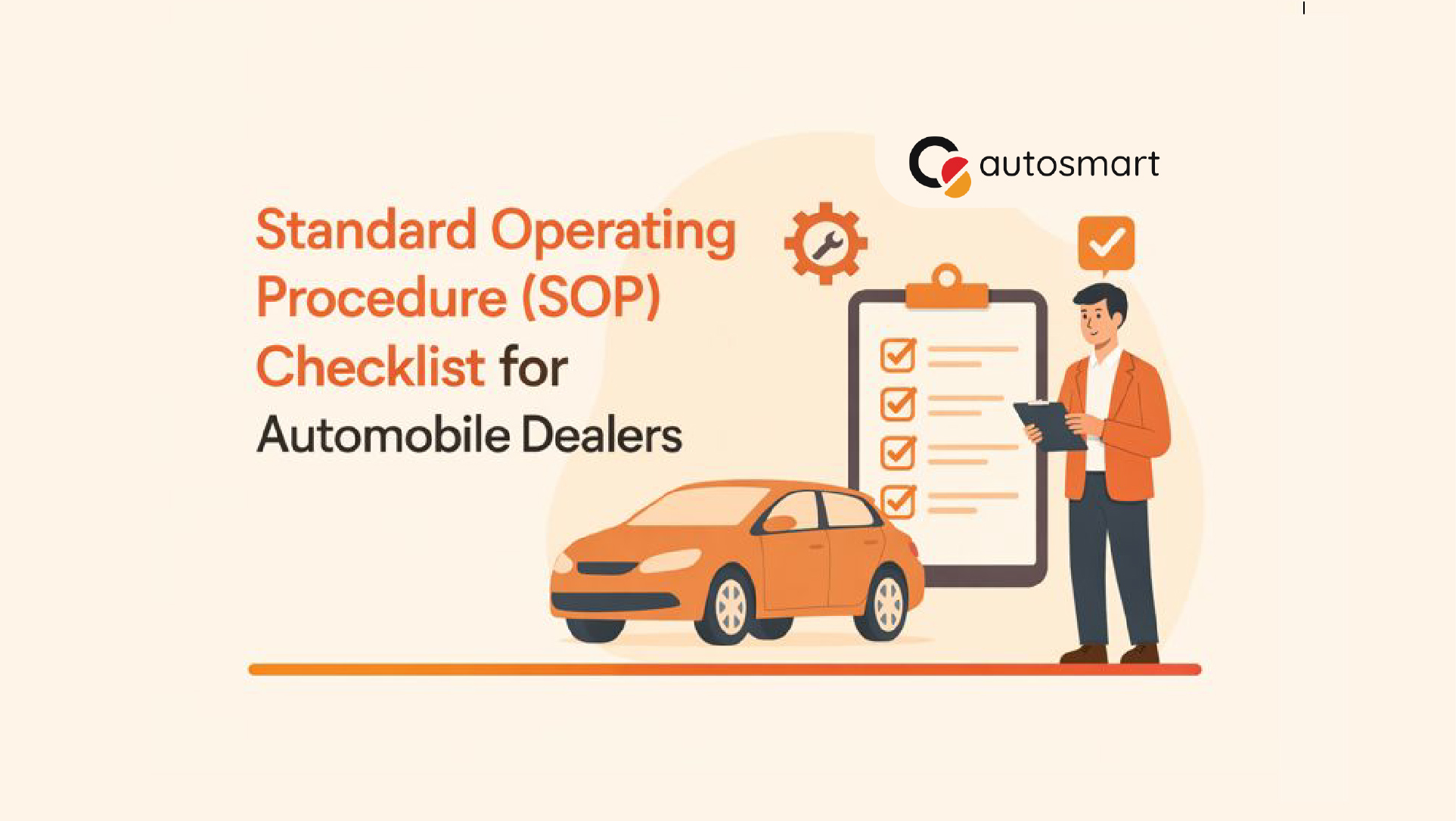
Dealerships operate under guidelines set by the OEMs, from the presentation of the store to the arrangement of the product. But why can’t dealerships operate on their own? An effective sop automotive strategy is the answer.
A dealership is a direct representation of the OEM’s brand and policies. Customers often associate a dealership’s service with the brand’s image and quality. When this synergy fails, the gap between brand promise and customer experience can cause irreparable damage to reputation. Therefore, maintaining alignment between the manufacturer’s vision and the dealership’s execution is not merely a procedural requirement but a critical strategic imperative.
An automotive dealership showroom is a highly dynamic place, involving a myriad of practices, from customer walk-ins and lead follow-ups to sales and post-sale service. But different departments carry out all these processes, yet they must function as a single, cohesive unit to the consumer. How do OEMs make this happen? In this blog, let’s make an in-depth analysis of how OEMs standardise and condense complex workflows.
How do OEMs Make Dealerships Align with their Standards?
With a standardised framework to synchronise these moving parts, the handoff between sales, finance, and service often becomes a point of friction rather than a seamless transition. To maintain the values and standards of a manufacturer, Original Equipment Manufacturers adopt strict Standard Operating Procedures (SOPs). But what is the definition of standard operating procedures in this context? These SOPs are the operational rulebook that ensures customers, whether they walk into a dealership in New York or New Delhi, have the same brand experience. By providing a clear definition, standard operating procedures allow for universal quality control.
How do OEMs standardise these SOPs across every dealership?
OEMs write the SOP checklists to dictate everything from how a showroom’s parking lot is arranged to the very words a service advisor should use. By standardising that work, they take away tribal knowledge and different ways of doing the same things, and introduce repeatable, auditable systems. The automotive landscape has shifted. Customers are smarter, new-car margins continue to erode, and the need for fixed operations profitability has never been greater, as inconsistency does not look good to the bottom line. This is why a robust sop automotive framework is essential.
Without a standardised checklist, the majority of the operations collapse.
- Brand Integrity: One day, a customer gets excellent service; the next day, it’s just chaos.
- Liability: Bad logs of safety checks or test drives could cost millions in legal bills.
- Loss of productivity: Technicians or salespeople start thinking conceptually about what to do next, today, rather than following a proven process.
The AutoSmart Library
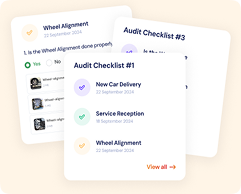
AutoSmart Audits enables dealership and OEM managers to centrally manage SOP checklists and track compliance at a network level as it happens, solving all of your dealership’s impediments. Every dealership should have perfected SOP checklists, as classified in the AutoSmart Audit’s library. Implementing a tailored auto sop system ensures these standards are met daily.
Sales and Finance (F&I) SOPs
This checklist is for the sales floor, where the brand promise is first put to the test. It is critical to have a well-defined SOP for car dealership checklists so that every lead is managed with the same level of priority and professionalism.
- Sales SOP Checklist for Auto Dealers: Establishes a fundamental process for the entire customer experience, from every new shopper’s first contact with staff through the handshake after they’ve made a purchase, and streamlines every part of the sales process.
- Lead Management and Follow-up: It includes how quickly clients can expect responses to digital leads, the number of follow-up calls needed, and the company’s policy to avoid losing potential buyers.
- Financing and Insurance Disclosures: Provides standardised visibility into interest rates, warranties and insurance products for complete transparency and legal compliance.
- Pre-Delivery Inspection (PDI) Coordination: This SOP outlines the preparations the Sales and Service department must make to ensure the car is clean and mechanically sound when the customer arrives for delivery.
Service, Parts & Technical SOP Checklist
Service departments are a dealership’s profit centres. Given their technical complexity, labour intensity, and logistical demands, SOP checklists play a crucial role in safety and efficacy. This is another area where a specialised SOP automotive plan prevents errors.
- Quick Service SOP: This SOP is catered for fast-turnaround bays, ensuring oil and tyre technicians work efficiently as a pit crew without compromising factory safety efforts.
- Parts SOP: Parts SOP for car dealerships controls all aspects of the parts’ life cycle, from part requisition and receipt to rapid delivery to the technician’s bay.
- Multi-Point Inspection (MPI) SOP: This required checklist for every car entering the shop identifies immediate repairs and future sales opportunities.
- Work Order SOP: This SOP systematises how service advisors record customer complaints so that technicians don’t rely on re-dos or comebacks.
- Body & Paint SOP for Automotive Dealerships: A very technical process emphasising correctness in colour matching, safety of the structure, and proper handling of painting substances.
Customer Experience and Site Management SOP
The architectural context of a dealership says much about the marque. Customer experience SOPs constantly ensure the facility remains a top-class space for consumers.
- Customer Service SOP: Concentrates on the soft skills of the service department, such as professional greetings and the management of comfortable waiting areas.
- Salutation and Hospitality Procedures: States how the customer is welcomed within 10 seconds of being on site, such as offering beverages or directions to relevant areas.
- Handling Complaints: A step-by-step method of addressing complaints so that unhappy customers are heard, documented, and satisfied before leaving.
- Site Management SOP: Includes a daily walk-around of facilities to ensure brand signage is lit, the showroom is clean, and the restrooms meet 5-star hygiene standards.
Safety, Risk, and Regional Compliance
In a global market, dealerships must navigate local and international regulations.
- Health and Safety SOP: This must-have guide outlines how to prevent workshop accidents, maintain fire safety, and ensure all heavy-lifting equipment is certified and functional.
- Data Privacy and Information Security: Standardises handling of customer data to comply with local privacy laws.
- Environmental and Waste Management: Details the proper disposal of tyres, batteries, and oil to prevent fines and protect the dealership’s name.
How are AutoSmart Audits’ Dealership Management Software Better Than Paper-Based Audits?
Paper clipboards are still standard at many dealerships, but successful dealerships have moved to AutoSmart Audit’s Dealership Management Software.
- Transparency and Evidence: Staff take photos of cars or service bays and upload them to the audit, creating an undeniable digital trail.
- Real-Time Accountability: Failed health & safety checks trigger instant alerts to management for immediate fixes.
- Eliminating Pencil-Whipping: Digital timestamps ensure checks are done in real time, not from memory.
- Benchmarking and Analytics: Cloud data enables dealership groups to compare performance, identify best practices, and train weaker branches.
- Remote Access: Managers and OEM auditors can access the software remotely on their mobile devices or computers. This kind of flexibility takes the workload off of managers, allowing them to focus on other process bottlenecks.
Turning Your Dealership Procedures into Profits
Success in the auto industry isn’t accidental; it’s the outcome of small tasks done correctly daily. By using AutoSmart Audits’ SOP library and implementing a comprehensive sop automotive strategy, dealerships eliminate guesswork that costs money and reputation. To survive tomorrow, your dealership must be standardised today. From oil changes to complex finance deals, let SOPs guide you toward excellence in every customer interaction.
FAQs
Why are SOPs crucial for car dealers?
SOP manuals help dealership chains standardize operations so that each location runs in sync with the OEM’s brand guidelines, legal requirements, and customer experience expectations. SOPs remove guesswork, prevent mistakes, and maintain brand standards across all locations.
What if a dealer fails to comply with OEM SOP checklists?
Failure to comply can result in poor customer experiences, safety hazards, legal issues, loss of OEM trust, financial penalties, and long-term brand damage.
What departments in the dealership need SOP checklists?
SOPs should cover Sales, F&I, Service, Parts, Body & Paint, Customer Experience, Site Management, Health & Safety, and Environmental compliance to maintain complete operational control.
What is the role of SOPs in enhancing dealership profitability?
By standardizing processes, SOPs reduce rework, improve technician efficiency, lower compliance risks, boost customer satisfaction, and allow dealerships to focus on high-margin fixed operations like parts and service.
What does not work for dealerships when it comes to paper-based SOP audits?
Paper audits are prone to delays, incomplete data, and manual errors. They lack real-time visibility, evidence, and accountability across the dealership network.
How does digital SOP management support OEMs in managing large dealer networks?
Digital systems allow OEMs to centrally manage SOP checklists, monitor compliance in real time, compare dealership performance, and enforce corrective actions consistently across regions.

Ejaz leads engineering at AutoSmart. He built the platform around a constraint most audit software ignores: the auditor is standing in a workshop with no signal. He writes about offline-first architecture, audit data structures, and scoring systems.