
Automotive dealerships in the United Arab Emirates operate in a highly regulated environment, where OEM standards, Dealer Operating Standards, safety requirements, VAT documentation, and internal quality audits all take place simultaneously.
While many organisations have moved away from paper based audits, dealerships face a unique challenge. The problem is not only paper. It keeps consistency, visibility, and control in different locations.
This article looks at what sets dealership audits apart in the UAE. It also highlights what businesses should consider when choosing audit software.
What Is Audit Software for Dealerships?
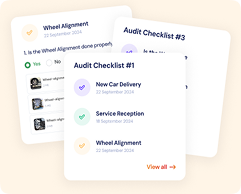
Audit software for dealerships is a digital tool. It helps plan, execute, track, and review audits in showrooms, workshops, and service areas. It helps dealership groups keep standards consistent. It also aids in managing corrective actions. Plus, it prepares them for OEM inspections.
This software focuses on real operations, not just document management. That makes it great for multi-branch dealership networks.
Why Dealership Audits Are Fundamentally Different
Most audit tools are built for office-based or document-focused environments. Dealership audits are operational and physical.
Audits occur across showrooms, service bays, workshops, and customer areas. Evidence is visual and time-sensitive. Auditors often move between locations rather than working from desks.
Typical dealership audits include:
- Showroom branding and facility standards
- Workshop safety and tooling inspections
- Service process compliance
- SOP adherence across departments
- OEM readiness checks
Because of this, audits must be fast, repeatable, and consistent. Tools that slow auditors down or require heavy post-audit work often lose adoption quickly.
The Reality of Multi-Location Dealership Audits in the UAE
Dealership groups in Dubai, Abu Dhabi, Sharjah, and other emirates often run several branches of the same brand. On paper, standards are uniform. In practice, small differences appear over time.
One location may interpret guidelines differently. Another may delay corrective actions. The head office often becomes aware of these gaps only when OEM audits highlight them.
Common challenges include:
- Limited visibility across branches
- Inconsistent audit execution
- Delayed escalation of repeat issues
- Dependence on manual reporting
What Dealership Audit Software Should Actually Solve
Good audit software does more than replace spreadsheets. Its real value lies in operational control.
It should help dealerships:
- Maintain consistent audit standards across all locations
- Identify weak branches early
- Track recurring non-compliance issues
- Follow up actions without manual chasing
- Support year-round audit readiness
If software only stores audit results without improving these outcomes, it adds little strategic value.
Key Capabilities That Matter for Dealerships
Not every feature marketed by audit software vendors is useful for dealerships. The main focus now should be on execution and visibility.
Standardised but flexible audits: the tool used for auditing should standardize yet accommodate small changes to suit each branch.
Mobile-first audit execution: The audit software must be compatible with mobile devices to allow auditors to move around with them and conduct audits at the very showrooms, service bays, and workshops.
Evidence linked to physical locations: must include photos. These should clearly show showrooms, service bays, or other operational areas.
Action tracking at scale: Corrective actions should not disappear after audits. Tracking ownership and progress across branches is critical.
Management-Level Visibility: Leadership should quickly access audit results and trends. They shouldn’t have to wait for compiled reports.
In simple terms, dealership audit software should help with:
- Consistent standards across branches
- Early visibility into risks and recurring issues
- Structured action follow-up
- Continuous OEM readiness
Where Dealerships Often Go Wrong
A common mistake is choosing audit software designed for generic corporate audits.
These tools may handle documentation well but struggle in operational environments. Limited offline options make it hard for auditors. Slow mobile interfaces also slow them down. Poor evidence handling reduces adoption rates.
Another mistake is treating audits as isolated events. In dealerships, audits happen all the time. Software needs to help with ongoing improvement, not just with occasional checks.
Audit Software and OEM Readiness
OEM audits rarely fail because of one major issue. More often, failure comes from small problems repeating across time and locations.
Audit software helps by:
- Highlighting recurring issues
- Showing patterns instead of isolated failures
- Allowing early corrective action before OEM visits
This turns audits from stressful, one-time events into continuous readiness programs.
How Dealerships Use Audit Software Effectively
Dealerships that truly benefit from audit software see it as a management system, not just a compliance tool.
Successful practices include:
- Carrying out audits throughout the year
- Viewing trends over time rather than specific scores
- Regularly compare the performance of different branches
- Prioritizing corrective actions
The platforms that are built based on the operations-first approach, such as the AutoSmart Audit, are a testament to this fact. However, what has the most significant impact is how you use, train on, and integrate the process, not the tool.
Audit Software as a Decision Support Layer
For the dealership leadership, the primary benefit will be in the decision-making process.
When leadership is able to rapidly identify:
- Which locations should be a priority
- Which standards are slipping
- Where training or process changes are required
Audits are no longer administrative activities but strategic management tools. This is particularly relevant to dealership groups dealing with multiple brands or planning expansion.
Choosing the Right Audit Software for a Dealership Group
Before selecting an audit system, dealerships should consider:
- Number of locations and departments audited regularly
- Whether audits are operational or document-focused
- Need for mobile or offline access
- Importance of trend analysis over time
Running a pilot in one branch is often the best way to evaluate usability, adoption, and ROI.
Final Thoughts
Paperless audits are only the starting point. For UAE dealerships, the main challenge is keeping standards consistent over time and across locations.
Audit software for a dealership should help you to be prepared throughout the year, reduce OEM inspection surprises, and sustain operational consistency across your organization. Good audit software, therefore, isn’t the software with the most features. Instead, the best software for your dealership will be the ones that make the most sense according to your reality, and from this, better and wiser decisions can be made by the people in a dealership.
Frequently Asked Questions
Is audit software necessary for UAE dealerships?
Yes. Dealerships in the UAE face frequent OEM and compliance audits across multiple locations. Audit software helps maintain consistency and reduces last-minute audit risk.
How is dealership audit software different from general audit tools?
Dealership audit software targets operational audits, mobile execution, and visual evidence. In contrast, general audit tools mainly focus on documents.
Can audit software improve multi-branch dealership performance?
Yes. It tracks trends, highlights recurring issues, and helps management standardize processes across all locations for consistent results.

Ishaq leads go-to-market at AutoSmart. He spends most of his week in conversations with OEM and distributor teams about how their audit programmes actually run. He writes about network standards, rollout across markets, and building the business case for digital audits.