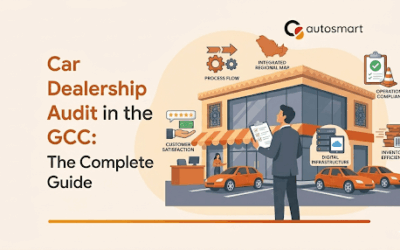

Dealer audits usually go on for days and sometimes even weeks. The process is overlong and requires assiduous work for weeks, even after the audit. With the recent upgrades in technology and surge in customer demands, both automotive dealerships and manufacturers have the need to produce, maintain, market, and sell a large number of vehicles.
With these many items at their disposal, audits aren’t exactly enjoyable or easy for either dealers or manufacturers. Interpreting the audit with such a massive chunk of data can be arduous.
But what if all the work could be reduced to half? Or even less? Autosmart Audits’ mobile audit app for dealerships doesn’t just cut time; it also refines the process, making it more straightforward and user-friendly.
Let’s examine how dealership audits work and how automated audits help dealerships and manufacturers.
How do Manual Dealership Audits Work?
Manual audits involve paperwork, images, clipboards, and live inspection of the dealership showroom.
Why do Dealership Audits Happen?
Before getting into the process of manual audits, let’s walk through why dealership audits happen.
Maintaining Brand Image: Well-established automotive brands like BMW, Toyota, and Hyundai rely heavily on customers’ perception of their products. The dealership audit checks the dealership’s presentation and customer experience. The manufacturer/OEM checks the dealership’s showroom structure, service desk, and even brand display, as these factors pass on the brand’s voice.
Checking Finances: For every vehicle sold, the dealership receives an incentive from the OEM. Rebates and bonuses are an essential part of OEM-dealership relationships. Rebates are often given to customers by dealerships. Financial audits are conducted to check the documents that substantiate the sales and rebates. Since dealerships also process insurance claims, financial audits also inspect those documents.
Inventory Checklist: An inventory audit ensures that the dealership effectively and accurately manages manufacturer-approved parts and accessories. The auditors will have a parts checklist, as given on the Autosmart Audit website. The purpose of an inventory audit is to verify that the dealership always has the correct components accessible for servicing, prevent waste, and maintain transparency with the manufacturer. Effective inventory management has a direct impact on service speed, customer happiness, and operating expenses.
Warranty Claims: A warranty audit verifies that all warranty claims filed by the dealership are valid, well-documented, and performed in accordance with OEM guidelines. They examine if genuine parts were utilized for warranty repairs, if the repair technique followed manufacturer requirements, the correctness of customer complaints, job cards, and repair documentation, and any evidence of overcharging, inaccurate claims, or needless replacements.
Now that we’ve seen why dealership audits happen, let’s see how these audits take place. Audits usually take place in these three stages.
Notifying the Dealership
Most audits are arranged ahead of time, allowing the dealership to gather records. Surprise audits are less usual, although they do occur, particularly when fraud is suspected.
The manufacturer’s audit department or a representative sends the dealership a formal letter or an email. This letter defines the scope, the time period under audit, and a thorough list of documents to prepare.
Visiting the Dealership
The auditor, or a team of auditors, comes to the dealership and typically sets up in a designated office or conference room. This approach is systematic and evidence-based. The auditor first meets with the dealership manager, general manager, or supervisor to discuss the procedure and timing.
The following documents are usually checked:
- All vehicles’ sales file
- Buyer’s orders and registration documents
- Bank funding documents
- Warranty repair orders
- Parts requisitions
- Old or replaced parts
- Technician time cards
- Physical inventory counts
- Parts ordering records
- Invoices.
The auditor may also consult with the sales manager, service manager, parts manager, and even individual salespeople or technicians to confirm protocols and understand how specific transactions were handled.
Audit Results
After the on-site inspection, the auditor has a formal departure meeting with dealership management to discuss their first findings. A formal, thorough report is produced a few weeks following the on-site inspection. It emphasizes any inconsistencies, violations, or exceptions discovered.
How Does a Mobile Audit App for Dealerships Automate These Audits?
Digital audits, in general, have speed and accuracy compared to physical ones. Through digitising, a mobile audit app for dealerships streamlines these audits by automating every stage of the process, from preparation to reporting, reducing human labor and speeding up compliance checks.
But does digitising audits have tangible results? To answer that question, we should first know how automated audits work and the best app for car dealership audits.
Automated Checklists
Autosmart Audit’s mobile audit app for dealerships includes ready-made digital checklists that auditors may use right away. Instead of carrying printed forms, they use mobile phones or tablets to complete each audit point. The software gives a mobile inspection checklist for auto dealers that is pre-built to meet OEM specifications. Mandatory fields, dropdowns, and scoring standards guarantee that nothing is missed or entered improperly. For each dealership, the OEM can automatically customize checklists, maintaining uniformity across all locations and auditors. We even have customised demo checklists on our websites.
Real-time Audit Reporting
Auditors can record findings in the app when auditing sales, service, parts, or warranty departments. The app’s mandatory fields, dropdowns, and validation rules prohibit skipped or inaccurate entries, minimizing mistakes immediately. Data is stored quickly and synchronized to the cloud, reducing delays and human errors.
Compliance Checks
Our mobile audit app for dealerships performs compliance checks by directly comparing dealership operations to pre-defined OEM standards and regulatory requirements. Rather than manually examining each rule, the app leverages built-in scoring logic, necessary fields, and validation rules to indicate non-compliant objects right away.
Automatic Report Generation
Reports can be generated anytime through the app with the pre-updated details. You can even customise the details needed in the report.
Allows Remote Access
Auditors do not necessarily need to be present with our mobile audit app, giving them complete access to the dealerships’ operations. They may upload photographs, videos, and documents to the app, allowing OEMs to conduct partial or complete remote audits. This lowers travel, accelerates audit cycles, and enables regular monitoring.
What used to take days of paperwork, human verification, and delayed follow-ups can now be accomplished in a fraction of the time while maintaining more accuracy and openness. With faster reporting, greater compliance, and real-time visibility across all dealership locations, your audit process will be made easier, smarter, and much more dependable.
Switch to Autosmart Audit’s Smart Audit
Mobile audit apps for dealerships are revolutionizing the way audits are conducted. Shifting to automated audits is no longer a luxury; they’ve become an essential. Check out our dealer management software now.
Along with our dealer management software, we also offer a myriad of other tools, including quality management, the dealership compliance audit mobile app, and bodyshop management software.
FAQs
How much time can a mobile audit app save vs. paper audits?
With digital audits, businesses can save several weeks of their time compared to physical audits.
What features help speed up dealer audits?
Autosmart Audit’s digital checklists, automated compliance checking, live tracking, cloud storage, etc, and other cutting-edge tools help speed up dealership audits.
Can mobile audit tools work offline?
Yes, Autosmart Audit’s mobile app can be accessed by OEMs and dealerships alike from anywhere in the world.
How do dealer networks manage audits across multiple locations?
Dealership networks can be managed through Autosmart Audit’s centralized dashboard, role-based access, comparative analytics, and other features, offering a unified platform for multiple dealerships.

Naseef Umar is the Founder & CEO of AutoSmart Technology, a SaaS platform digitizing audits for OEMs, distributors, and dealer networks. With prior experience at Toyota (Abdul Latif Jameel) and a background in IT and Industrial Management, he writes about audits, operational discipline, and building SaaS products for enterprise customers across markets.