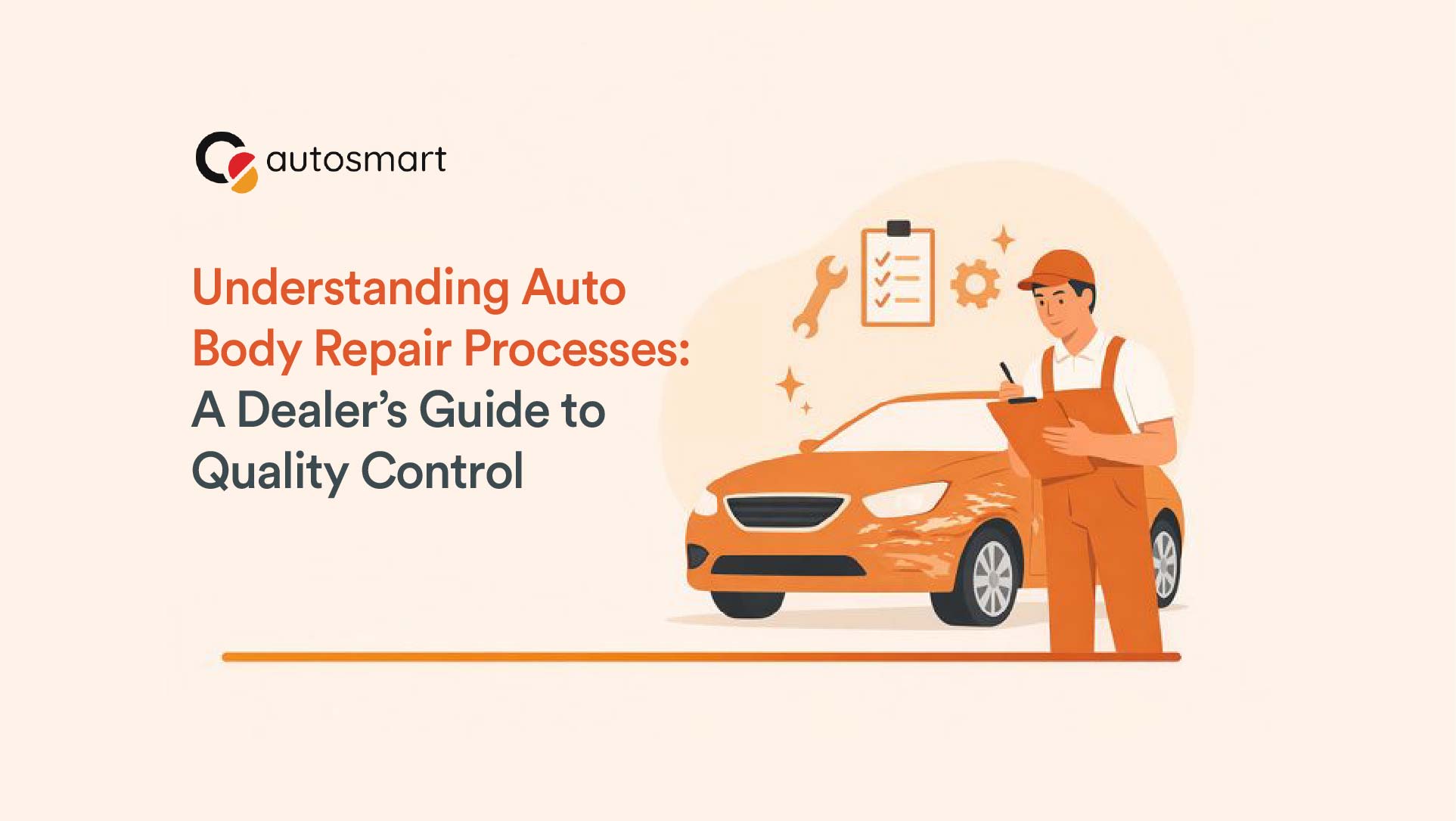
Whether you run a compact collision repair shop or manage a broad dealer-group body-shop network, having a dependable auto body repair workflow matters for operational smoothness, customer confidence, and profit margins. A clearly defined repair process paired with regular automotive audits helps ensure each repair meets required standards, reduces waste or rework, and preserves your shop’s reputation.
What happens in the Repair Process
From the moment a damaged vehicle arrives at your facility until it returns to its owner, the repair journey involves several critical stages.
Damage Assessment
When a damaged car arrives, technicians or inspectors evaluate the extent of damage: structural, cosmetic, mechanical and prepare an estimate.
Challenges dealers often face:
- Missing hidden damage under paint or panels, leading to incomplete repair scope.
- Under or overestimation of repair cost/time, causing customer dissatisfaction or margin issues.
- Poor documentation of initial damage, making it difficult to justify insurer claims or post-repair disputes.
A thorough, documented assessment provides a solid baseline for the rest of the process, but only if it’s systematically recorded and stored.
Parts Procurement
After damage assessment, the right parts must be sourced before repair begins, ideally OEM-certified or insurer-approved components.
Common issues during procurement:
- Using non-OEM or substandard parts, which can compromise repair integrity or customer trust.
- Delays in sourcing parts causing extended delivery times and unhappy customers.
- Lack of traceability or records, making it difficult to prove compliance with OEM or insurer requirements.
Ensuring parts procurement follows approved standards is key to long-term reliability of repair work.
Repair & Painting
Actual repair: structural straightening, bodywork, welding, followed by paint and finishing steps, is performed by certified technicians, ideally following OEM or industry-approved procedures.
Risks if standards are not enforced:
- Misaligned panels, improper welding, poor paint matching.
- Inconsistent workmanship across different technicians or shops, especially in multi-location operations.
- Unsafe repairs if safety-related aspects (e.g. structural integrity, weld strength) are compromised.
Skilled, certified technicians are essential but even then, oversight and consistent standards must be maintained.
Quality Inspection
Once repair and refinishing are complete, the vehicle must be inspected for safety, alignment, cosmetic finish, and compliance with OEM standards.
Common pitfalls at this stage:
- Cosmetic imperfections are overlooked or accepted due to time pressure.
- Structural or alignment issues missed due to lack of standardized inspection protocols.
- No formal record of inspections making it hard to track quality over time or defend against insurer/customer disputes.
A robust quality inspection phase ensures that the repaired vehicle is safe, meets expectations, and upholds the reputation of your shop or dealership.
Where Audits Fit In
Without periodic, structured audits, the smallest oversights, an un-torqued bolt, a mismatched paint panel, a missing safety inspection can escalate into major problems. These include costly rework, dissatisfied customers, warranty claims, regulatory or insurer disputes, and tarnished brand reputation.
Regular audits provide a safety net. They verify that each stage in the repair pipeline from assessment through procurement, repair, and final inspection adheres to OEM guidelines, insurance requirements, and internal standard operating procedures. They help catch deviations before the vehicle leaves the shop or before issues become systemic.
Using a tool designed for auditing, rather than relying on paper logs or spreadsheets, improves consistency, traceability, and accountability across every repair job.
What AutoSmart Audit Offers
AutoSmart Audit is a digital audit and inspection management platform tailored for the automotive industry. It is particularly suited for collision repair shops, dealership body-shops, multi-shop networks, and OEM operations.
- Custom Digital Checklists
- Mobile and Multi-Device Support
- Photographic Evidence & Documentation
- Real-Time Dashboards & Reporting
- Customizable Audit Schedules & Programs
With these features, AutoSmart Audit helps convert what would be a chaotic, error-prone, documentation-heavy process into an organized, trackable, and repeatable audit regime.
Benefits for Dealers and Repair Groups
Adopting AutoSmart Audit or integrating regular audits into your workflow offers several concrete advantages for dealers, collision centres, and multi-location repair groups:
- Reduced Rework Costs
- Consistent Repair Quality Across All Locations
- Better Relationships with OEMs and Insurers
- Transparency and Accountability Among Technicians and Teams
- Operational Clarity and Data-Driven Decisions
How AutoSmart Audit Fits Into Your Repair Workflow
Here is how a typical integration of AutoSmart Audit into a repair workflow could look like:
- Define Audit Templates and Standards: Create checklists based on OEM repair guidelines, insurer requirements, internal SOPs, and safety standards.
- Use the Audit App at Key Stages: At vehicle intake (damage assessment), parts procurement, repair completion, paint finish, and final quality inspection. Technicians or auditors capture data including photos, comments, and pass / fail markers.
- Submit Audit Results & Build Report: Once audit is complete, the data syncs to a central dashboard (even from a remote shop floor), generating a full audit report with evidence.
- Review & Assign Corrective Actions: If any audit item fails, the system flags it, assigns a corrective task to responsible personnel, and tracks resolution (with deadlines, comments, or re-audit).
- Track Trends, Identify Improvement Areas: Over time, review analytics to spot recurring issues: e.g., frequent paint defects, consistent misuse of non-OEM parts, or shops with sub-par inspection compliance. Use these insights to schedule training, rework protocols, or branch-level audits.
Why Dealers and Collision Centre Leaders Should Care
If you operate a single-shop repair centre or run a network of dealerships, quality control and compliance are not optional, they directly influence your bottom line, customer satisfaction, and brand image.
Manual systems: paper forms, Excel sheets, ad-hoc inspections are vulnerable to human error, inconsistent documentation, and lack of traceability. Over time, these gaps result in rework costs, dissatisfied customers, warranty claims, and strained insurer or OEM relationships.
By adopting a platform like AutoSmart Audit, you gain: a repeatable audit framework, real-time visibility across locations, documented proof of compliance, and actionable insights. This helps preserve repair standards, reduce losses, and maintain customer trust.
Conclusion
For any dealer or collision repair centre aiming for consistent quality, compliance with OEM or insurer standards, and a strong service reputation, building a structured audit process is vital. The repair process presents multiple points of potential failure. Without oversight, these can erode profit margins, damage reputations, and alienate customers or partners.
AutoSmart Audit is designed to help dealerships embed that oversight in a practical, scalable, traceable way, applying audit checklists across every step, capturing evidence, enabling data-driven insights, and promoting accountability.