Every major OEM has its own compliance framework to maintain brand standards and operational quality. BMW has Retail. Next, Honda has GDSI, and Mercedes-Benz runs its Signature Program.
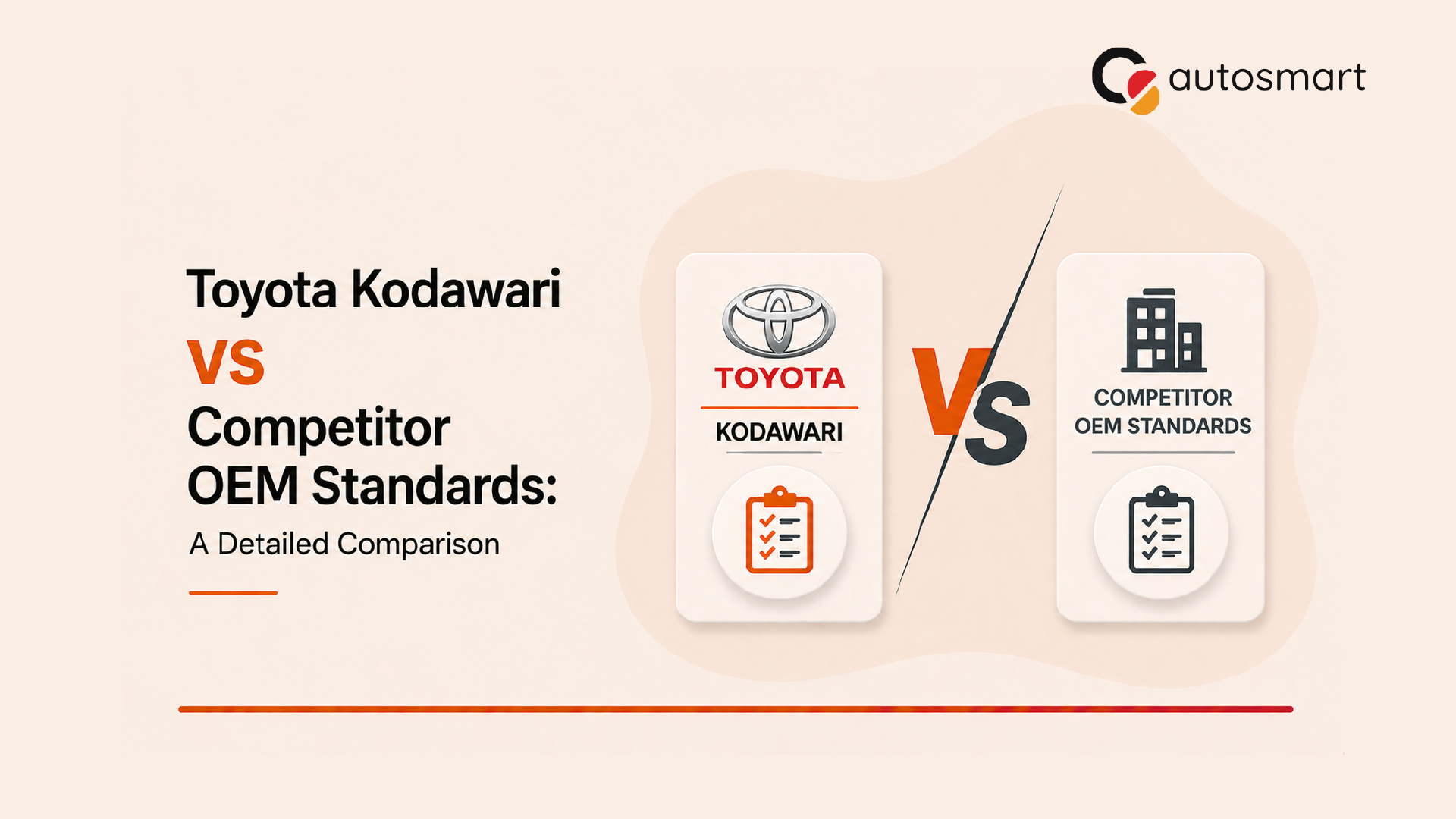
This article compares Toyota Kodawari to dealership management and OEM audit programs. It looks at philosophy, implementation, audit scope, and operational impact.
Overview of OEM Dealership Compliance Programs
Regardless of the brand, most OEM compliance frameworks all target the same objective: to have a consistent controlled customer experience across every customer touchpoint. These are the main three outcomes usually OEM frameworks aim for:
- Consistent customer experience across all location
- Unified brand identity across showrooms
- Standardization of service processes
Leading automotive manufacturers have developed structured programs to enforce these standards. For example:
- BMW: Retail.Next and Future Retail
- Honda: GDSI (Global Dealership Space Identity) and SEA (Service Excellence Audit)
- Kia: Retail Quality Standards (RQS)
- Mercedes-Benz: Signature Program
- Toyota: Kodawari
Toyota Kodawari stands out by blending cultural philosophy, process discipline, and operational training into a single standard, even though some objectives overlap. Toyota Kodawari’s commitment to service excellence underpins its approach across facilities, service processes, and staff behaviour.
Toyota Kodawari vs Competitor Frameworks: Core Differences
While most OEM compliances are targeting the same outcome, the way they are executed and structured significantly varies from brand to brand; you can clearly see these differences by looking at how each framework prioritises design, operations, and internal processes.
BMW Retail.Next
- 152+ standards per audit across Brand, Technical, and Fleet areas
- Strong focus on identity and customer-facing presentation
- Secondary emphasis on service process or workshop operations
Honda GDSI and SEA
- GDSI governs facility branding and layout
- SEA governs operational processes separately
- Dual-framework model can create disjointed compliance levels
Mercedes-Benz Signature Program
- Focus on premium showroom design, digital touchpoints, and real-time audits
- Aligns with brand positioning over internal process optimization
Toyota Kodawari
- Unified system integrating facility, people, and process standards
- Continuous evaluation of 5S methodology and workflow discipline
- Prioritizes internal operational excellence as much as external brand representation
Kodawari combines visual compliance and operational behaviour, so both are audited together.
Toyota Kodawari’s Operational Framework
Toyota Kodawari sets measurable expectations across five core areas:
- Facility Standards: 5S discipline (Sort, Set, Shine, Standardize, Sustain) across every department.
- Service Process Compliance: End-to-end customer flow coverage, from reception to post-service follow-up.
- Staff Competency: Regular technical and soft-skill training programs.
- Parts and Process Integrity: Mandatory use of genuine parts and verified SOP adherence.
- Customer Interaction Metrics: Transparent communication, repeat visit tracking, and satisfaction indexing.
This unified system ensures consistency from showroom to workshop floor.
5S Methodology: Continuous Operational Control
Unlike other OEM frameworks, Kodawari doesn’t treat 5S as a one-time setup audit. Toyota enforces it as part of everyday culture.
- Competitor Models: 5S applied during facility setup, checked annually.
- Toyota Kodawari: 5S is reviewed in every audit cycle, either quarterly or biannually, to check daily use.
This approach boosts facility safety, technician productivity, and customer trust by maintaining discipline.
Audit Frequency and Compliance Enforcement
How effectively dealerships’ standards are maintained is heavily based on the audit frequency. Most of the OEMs carry out our regular audits, but still the frequency, focus and impact of this can vary widely.
Toyota Kodawari
Toyota Kodawari follows a high-frequency audit cycle, typically conducted quarterly or biannually.
Key characteristics include:
- Regular evaluations across operations, facility, and staff performance
- Immediate identification of gaps and corrective actions
- Direct impact on internal rankings and incentive eligibility
This shorter feedback loop helps dealerships fix problems fast. This cuts down the chance of long-term operational drift.
Competitor OEM Programs
Brands like BMW and Mercedes-Benz use frameworks that include structured audits. However, these audits tend to have a more strategic impact than an operational one.
Typically, these audits:
- Influence franchise agreements and brand compliance decisions
- Focus heavily on corporate identity and customer experience standards
- Operate on longer feedback cycles
As a result, gaps in day-to-day operations may take longer to surface and resolve.
What This Means in Practice
Toyota Kodawari has a faster audit cycle and quick feedback. This makes it better for ongoing, real-time improvement.
It allows for continuous operational discipline. This means standards are not only met but also kept steady over time.
Kaizen Integration: Toyota’s Continuous Improvement Infrastructure
Kodawari is based on Toyota’s Kaizen principle. This means continuous, small improvements in every operation.
Competitor frameworks focus on aesthetics and brand alignment. Kodawari defines compliance as:
“A system that continues improving even when audits stop.”
This mindset makes continuous improvement a standard practice. No other OEM program does this as completely.
Key Takeaways for Dealership and OEM Teams
- Integration over segmentation: Kodawari audits facility, staff, and processes as one.
- Quarterly improvement loops: Frequent evaluation maintains alignment with Toyota brand standards.
- Cultural adoption: Kodawari builds long-term operational discipline, not temporary audit compliance.
- 5S and Kaizen principles work for all dealerships. They boost workflow consistency and enhance safety culture.