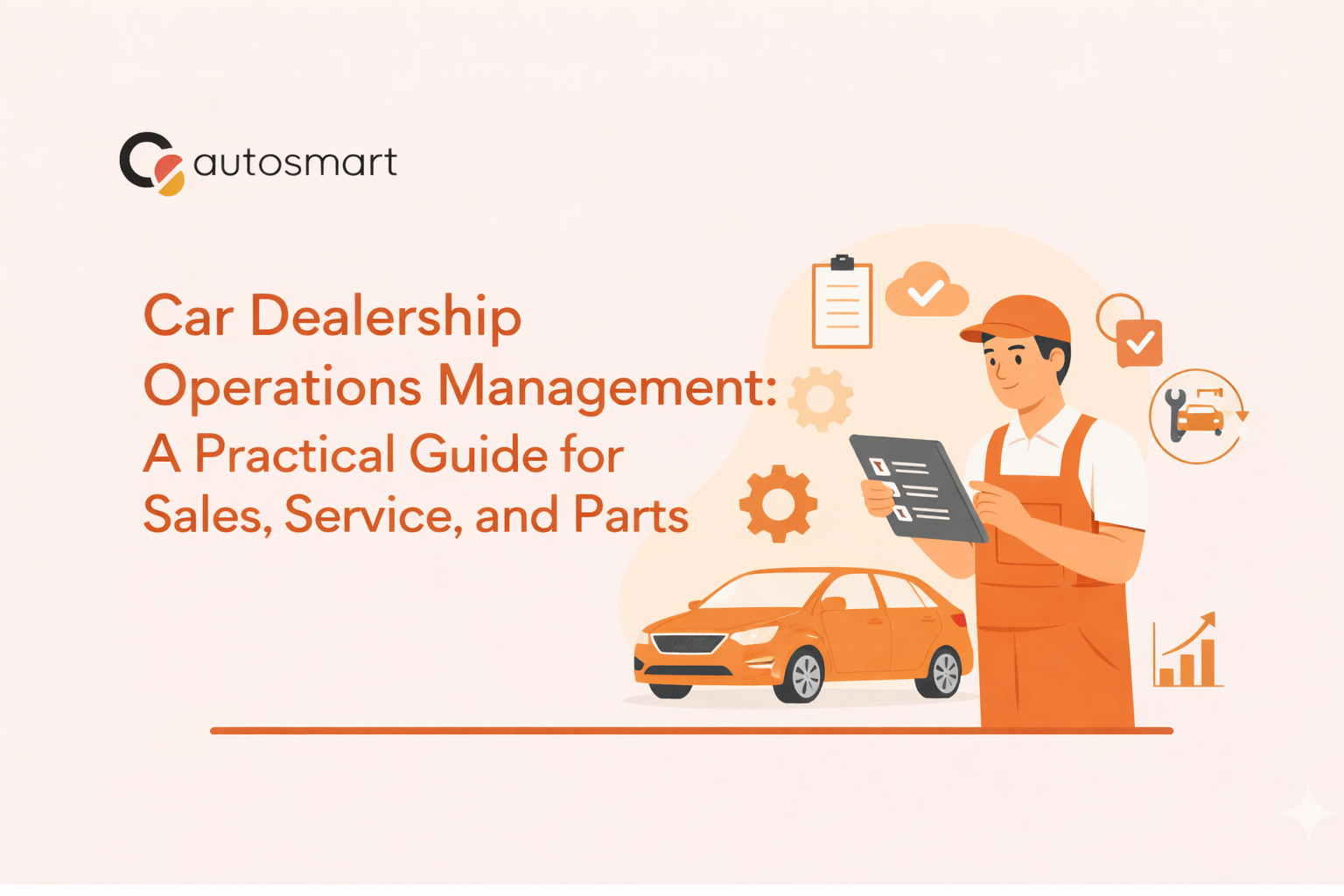
Dealership operations management involves handling sales pressure, service wait times, parts availability, and regulatory inspections. When these activities are not managed in an organised manner, the impact becomes visible within days. This often results in idle service bays, poor sales performance, and dissatisfied customers.
In this article, it is explained how the automotive dealership industry has been leveraging the use of technology-enabled operation checklists and audit tools for fixing problematic processes while cutting audit time by up to 80%.
Main Problems in Dealer Operations
The major cause for a loss in most of the dealerships is not because of a lack of demand for vehicles. The reason is that their daily activity is not organised. The result of these unorganised activities can be seen in each department, for example:
- According to recent data, it shows that the sales department in the dealership fails in handling almost 43% of sales due to an unorganised sales funnel.
- It shows that about 35% of bay capacity is not used not because of lack of demand, but due to inefficient scheduling.
- Poor tracking of parts inventory leads to shortages, causing repairs to be postponed for days and leaving both customers and technicians frustrated.
All these problems in the dealership mainly point to only one thing: their not-so-organised process structure.
How Car Dealership Operations Management Corrects Sales Delays
The sales process becomes ineffective when there is not a defined process from walk-in to the delivery of the vehicle. In some of the dealerships of Dubai, this process can take up to 22 days.
With a Sales Operations Checklist we can bring uniformity without adding time. Through this, leads are recorded correctly, customer requirements are assessed early, vehicle inspections are carried out systematically, and pricing is presented the same way every time. Approvals and e-signatures can be done within a 60-minute timeframe.
Key actions that make the greatest difference:
- Recording each lead with date and source
- Follow a consistent flow in presenting vehicles.
- Doing paperwork digitally rather than by hand
The dealerships that use digital checklists are able to close sales faster and receive better customer ratings. This happens because the sales process gaps that are missed are automatically identified and assigned for correction.
How Better Parts Operations Prevent Hidden Revenue Loss
The parts departments are places that quietly lose funds, where the loss isn’t immediately apparent to management.
This is normally due to a few recurring problems:
- Incorrect bin placements
- Missed Reorder Points leading to Stockouts
- Processing of warranty claims taking too long
- Mismatches on invoice
With efficient car dealership operations management, parts handling becomes traceable and measurable. Bin locations are confirmed through photo verification, automated alerts prevent missed reorders, warranty returns are recorded against VIN numbers, and invoice discrepancies are identified early.
As a result, dealerships achieve inventory turnover of eight times per year, along with improved compliance and fewer service delays.
Handling Multiple Dealership Facilities Without Losing Control
In a group of dealerships, the biggest problem is “visibility”. The headquarters may find out about a problem at their dealerships weeks after it begins.
A centralised system for managing car dealership operations solves this problem by linking all branches of the dealership in real time. Rather than having to wait for reports, management can know exactly what is going on at each location on a daily basis.
The standards for measuring the customer experience remain the same for all stores. These standards include showroom cleanliness, waiting area facilities, follow-ups after 48 hours, and feedback taken when handing over the vehicle.
Live dashboards are then used for comparisons in real time, enabling early detection of any issues that may be addressed promptly.
Financial Impact of Strong Operations Management
By having an appropriate organisational system in the dealership, it becomes possible to witness measurable results in different departments such as:
- Increased revenue per vehicle due to consistent presentations in F&I
- Enhanced Customer Satisfaction through Reliable Service Processes
- Inventory turns at a quicker pace with accurate parts tracking.
- Increased usage of service bays through effective job scheduling
The reason for this improvement is that digital dashboarding links operations to financial performance through the identification of patterns like unsigned approvals and stockouts. The manager can then correct the root cause before it negatively impacts profitability.
How to Apply Operations Management at Car Dealerships in 4 Weeks
A structured operations process can be rolled out at a dealership in approximately just four weeks.
It’s a simple formula:
- Audit current workflows and score each department.
- Load and customise digital checklists.
- Train employees in short training sessions of approximately 15 minutes.
- Dashboards must be reviewed every week, and decisions must be made using live data.
For doing this, free checklist templates are now available online, including those that are in Arabic.
Strong management of car dealership operations means that firefighting is replaced with predictable performance. Car dealerships that have adopted this have seen profits rise without any addition to staff or workload.

نصيف عمر هو المؤسس والرئيس التنفيذي لشركة AutoSmart Technology، وهي منصة SaaS تعمل على رقمنة عمليات التدقيق لمصنعي المعدات الأصلية والموزعين وشبكات الوكلاء. بفضل خبرته السابقة في شركة تويوتا (عبد اللطيف جميل) وخبرته في مجال تكنولوجيا المعلومات والإدارة الصناعية، يكتب عن عمليات التدقيق والانضباط التشغيلي وتطوير منتجات SaaS للعملاء من الشركات في مختلف الأسواق.