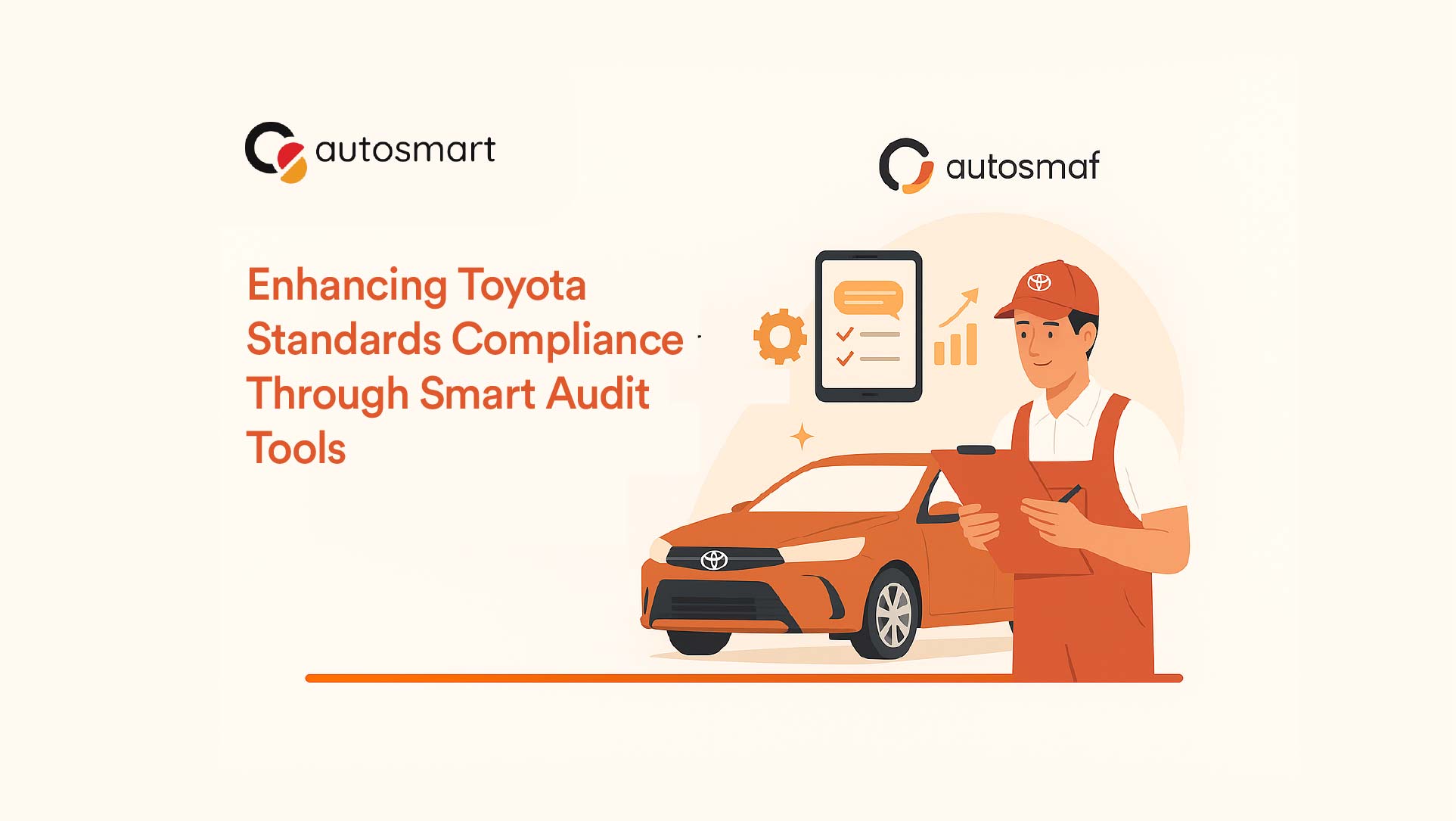
The quality, reliability, and continuous-improvement philosophy of Kaizen have been synonymous with the Toyota brand and its production for decades. To maintain such a reputation, it requires its dealerships to not only sell cars but also adhere to a rigorous ecosystem of operational standards, from the service bay to the showroom floor. Compliance is what holds the brand’s legal and industry-specific guidelines in Toyota together.
Not so long ago, maintaining these standards involved heavy binders, manual spreadsheets, and frantic preparation. That landscape has shifted. The integration of Toyota standards audit software with dealerships and OEMs revolutionizes how dealerships manage compliance. Autosmart Audit gives you the advantage of taking an obligation filled with tension and turning it into a daily operational advantage.
The Complexity of the Toyota Standards Audit Software
Toyota’s operational standards are among the most detailed in the automotive industry. They focus on providing a customer in Tokyo with a similar quality of service as the one in Texas, but the volume of checkpoints can be overwhelming.
Dealerships need to balance several frameworks all at once: TSM for Toyota Customer Service Workshop Management, focused on workshop efficiency and safety; the compliance framework of Toyota Kodawari, with an emphasis on the “omotenashi”; environmental standards like DERAP; and various local operational guidelines, such as DISHA in some markets.
It takes more than a clipboard to manage these efficiently; it takes a centralized, dedicated Toyota audit automation platform like Autosmart Audit’s Dealership Audit Management software for such diversified requirements.
Moving Beyond the Clipboard: The Digital Shift
Let’s break down how dealership audits happen in the conventional way. Traditional audit involves printing a checklist, walking the floor, and perhaps taking a few photos physically with a separate camera. Then all of that information needs to be manually entered into a computer, a process fraught with human error and lag time.
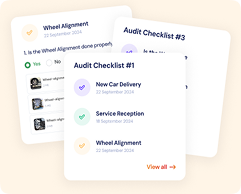
But with our audit management software, real-time visibility can be achieved. By transitioning to digital audits, dealership SOP assessment tools are housed even on mobile devices. This kind of digital approach provides the potential for:
Instant Evidence Capture: Auditors can take photos and videos within the app itself, timestamping and geo-tagging to provide proof of compliance.
Automatic Scoring: No more manual calculations, as the software automatically weighs sections according to Toyota’s scoring logic.
Actionable Insights: Digital tools immediately generate action plans regarding non-compliant items, rather than having a static score.
The Power of the Digital TSM Checklist
One of the most critical areas for any Toyota dealership is the service department. This is where the digital TSM checklist becomes a game-changer. TSM audits cover everything from the cleanliness of the technician’s bays to the flow of the appointment system.
With our audit software designed around Toyota standards, you can run a self-audit on the morning of each day. If it shows a faded safety line on the floor or if a tool is out of place, they immediately flag it in the system, assign it to one of their staff for rectification, and track it until fixed. This proactive approach means that by the time the official OEM audit comes along, your dealership is ready.
Toyota Dealer Performance Monitoring and Analytics
Compliance does not stop with just avoiding penalties; it is about performance. For monitoring the performance of Toyota dealerships, data is used to outline trends.
For instance, assuming a dealership group owns ten locations, manual audits make it hard to perform side-by-side comparisons among them. Is the inventory management process failing across all sites or just one? Autosmart Audit’s smart audit tools collate the details of each dealership into dashboards. Operators can view maps of compliance failures. If five out of ten dealers are failing the vehicle handover section of Toyota Kodawari compliance, then OEMs would know to deploy training specifically on that topic. This data-driven approach saves money and improves the overall Customer Service Index (CSI).
Empowering Field Managers and OEMs
This benefit extends even outside of the dealership. For OEM area managers, travel time is a fundamental constraint. Our Toyota standards audit software allows for remote audits and hybrid auditing models wherein field managers can review self-audit data submitted by the dealer before they even hit the site. Such transparency builds trust between OEMs and dealerships.
Future-Proofing Your Dealership
Everything from EV sales to online service booking is rapidly digitizing the automotive industry. It is now time to take operational compliance out of the analog era. For high-performing dealerships, adopting robust Toyota standards audit software is not a luxury anymore; it’s a necessity. By automating the mundane aspects, your staff can focus on essential matters. Autosmart Audit has software for automation in every part of this journey, like Quality Audits Software, Compliance Audit Software, etc.
FAQs
1. What audit requirements does Toyota enforce at dealerships?
Toyota implements numerous strict standards according to regional compliance and dealer functions. The most prevalent ones are TSM for workshop operations, Toyota Kodawari compliance for customer satisfaction and hygiene, DERAP for environmental compliance, and DISHA with respect to sales and operational processes in specific markets. These audits cover physical facility conditions, staff behaviors, safety protocols, and standard operating procedures (SOPs).
2. How do digital tools improve Toyota’s compliance scores?
Autosmart Audit’s digital tools enhance scores by facilitating proactive self-assessments. Instead of waiting for an external auditor to find their faults, the dealership staff can use a digital TSM checklist to identify and fix issues on a daily basis. These digital tools also prevent data entry errors, ensure that photo evidence is attached to audits, and provide automated reminders for non-compliant tasks so that nothing falls between the cracks.
3. Can one software cover Kodawari, TSM, and DISHA?
Yes, our extensive Audit, Dealership, Compliance, and Quality automation programs are designed to be agnostic regarding the particular checklist. You can experiment with a load of various templates, Kodawari, TSM, and DISHA, in the same interface. This enables you to quickly switch between multiple audit types while keeping all performance data in one centralized dashboard.
4. How do OEM field managers benefit from automated audit reports?
OEMs significantly benefit from dealer performance monitoring features. Automated reports let them access the real-time compliance status of all dealerships in their territory without having to travel. They are able to analyze aggregate data to identify regional trends, better prepare for site visits by reviewing past audits, and produce professional reports with a single click immediately post-visit.

Naseef Umar is the Founder & CEO of AutoSmart Technology, a SaaS platform digitizing audits for OEMs, distributors, and dealer networks. With prior experience at Toyota (Abdul Latif Jameel) and a background in IT and Industrial Management, he writes about audits, operational discipline, and building SaaS products for enterprise customers across markets.