Running a dealership is not easy. There are customers to manage, vehicles to track, technicians to coordinate, and administrative tasks that demand constant attention. When a dealership starts losing efficiency, the first instinct is often to blame the team. But in most cases, the real issue lies in how the work is organised, not who is doing it.
That is where a 5S audit checklist for dealerships comes in. It gives you a simple, structured way to look at your workspace, understand how work moves through it, and spot exactly where things are going wrong.
In this guide, you will find a ready to use 5S checklist automotive teams can start with straight away, a clear scoring guide to measure where you stand, and the most common mistakes dealerships make when running their first audit.
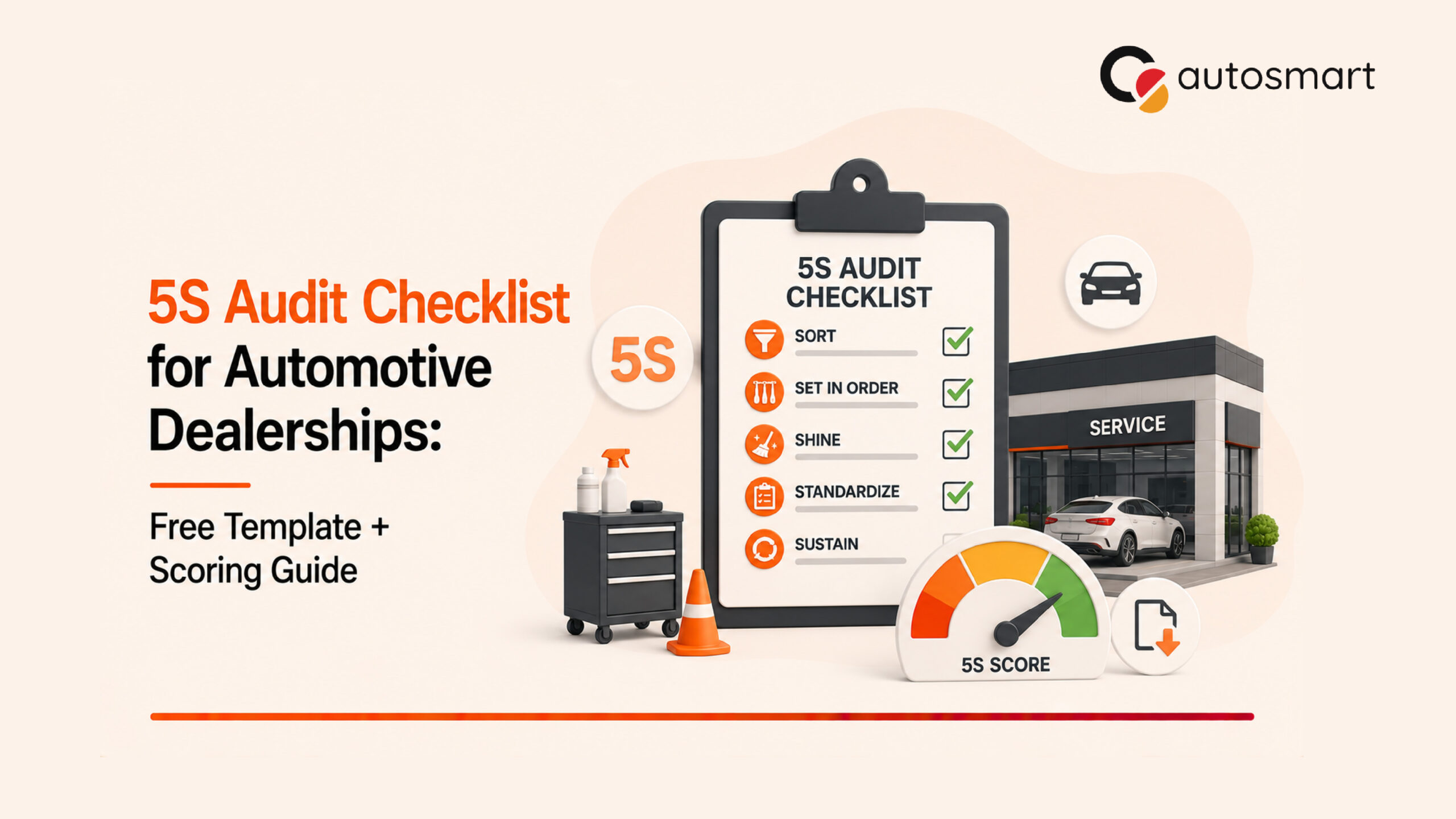
The 5S Audit Checklist for Automotive Dealerships
The checklist below covers all the key areas of a dealership, from the showroom floor to the workshop and back office. Work through each section during your audit and note what is in place, what is missing, and what needs attention.
S1: Sort
Sorting means removing anything from the workspace that does not belong there. In a dealership, this includes old parts, outdated marketing materials, unused equipment, and anything that is taking up space without serving a purpose.
Checklist points:
- Are tools and equipment limited to what is actually needed in each area?
- Have expired or damaged stock items been removed?
- Is the showroom floor free of unnecessary furniture or displays?
- Are workshop bays clear of parts that do not belong to the current job?
S2: Set in Order
Once you have removed what does not belong, everything that remains needs a proper place. Set in Order is about making sure the right tools, documents, and materials are easy to find and easy to put back.
Checklist points:
- Are tools stored in labelled locations in the workshop?
- Are customer-facing areas arranged logically for easy navigation?
- Is stock stored in a way that makes inventory checks quick and accurate?
- Are frequently used documents or forms within easy reach of the staff?
S3: Shine
Shine means keeping the workspace clean, not just once a week but as part of the daily routine. In an automotive dealership, cleanliness directly affects customer perception and staff morale.
Checklist points:
- Are showroom floors, glass surfaces, and display vehicles cleaned daily?
- Is the workshop floor free of oil spills, debris, and clutter?
- Are toilets, waiting areas, and staff rooms maintained to a consistent standard?
- Is cleaning responsibility assigned to specific team members?
S4: Standardise
Standardising means documenting the good practices your team already follows and turning them into clear, written procedures. When every department works from the same set of guidelines, the quality of work stays consistent regardless of who is on shift or how long they have been with the dealership.
Checklist points:
- Cleaning and organising schedules are written down and displayed where staff can see them
- All departments follow the same process for storing and finding items
- New staff are shown how to follow 5S procedures when they join the team
- There is a standard format that everyone uses when completing the audit
S5: Sustain
Most dealerships do well in the first few weeks of introducing 5S. The team is engaged, the space looks better, and the results are visible. The real challenge begins after that initial period, when the energy settles and daily pressures take over.Sustaining is about making sure 5S does not become a one-time effort. Regular audits, open team reviews, and simple progress tracking keep the system alive and ensure the improvements made in the earlier steps are not lost over time.
Checklist points:
- Are 5S audits conducted on a regular schedule, weekly or monthly?
- Are audit results shared with the team and reviewed openly?
- Are team members recognised for maintaining standards?
- Is there a process for flagging and fixing issues between audits?
How to Score Your 5S Audit
A simple 1 to 5 scoring system works well for most dealerships:
- 1 — Not in place at all
- 2 — Started but incomplete
- 3 — In place but inconsistent
- 4 — Mostly consistent with minor gaps
- 5 — Fully in place and consistently maintained
Score each checklist point and add up the total for each S. A perfect score per section is 20. A total score of 80 or above across all five sections means your dealership is in good shape. Anything below 60 means there are areas that need immediate attention.
Use this scoring guide every time you run a 5S audit template dealer review so results are comparable over time.
Common Mistakes Dealerships Make During 5S Audits
Even well-run dealerships make mistakes when they first start using a 5S checklist automotive teams can rely on. Here are the most common ones:
Doing the audit once and moving on
5S only works if it is repeated regularly. A one-time audit gives you a snapshot but not a habit.
Scoring too generously
It is tempting to give high scores to avoid difficult conversations. Honest scoring is what makes the 5S audit checklist for dealerships useful.
Leaving out certain departments.
Every part of the dealership needs to be included, from the parts department to the finance office. Partial audits give partial results.
Not assigning ownership.
Every checklist point should have a name next to it. Without accountability, nothing changes.
Run Your First 5S Audit Today
A 5S audit checklist for dealerships is one of the simplest and most effective tools a dealership manager can use. It does not require expensive software or outside consultants. It just requires consistency, honesty, and a commitment to doing things the right way.
Start with this 5S checklist automotive guide, run your first audit this week, and use the scoring system to identify your biggest gaps. The results will show you exactly where to focus.