

Running a multi-location dealership network without a systematic oversight framework or a dealership audit software is like wandering through the woods without a map; intuition may feel right, but operational blind spots accumulate quietly. Whether you oversee two franchises or twenty, a properly driven dealership audit process is one of the best things your team leaders can do to minimise profit risk, preserve OEM compliance, and ensure dealer operations and customer experience are consistent at every touchpoint. This blog takes you step by step through a dealership audit from the initial planning stages through the monitoring and validation of corrective actions.
What is a Dealership Audit Process and Why are they Important for Operational Success?
A dealership audit is an in-depth examination of a store’s bookkeeping, inventory accuracy, and compliance with OEM (Original Equipment Manufacturer) standards.
Dealerships exist at the intersection of customer expectations, OEM requirements, and local regulatory obligations. All three must be met simultaneously, and all three are subject to change. Structured audits ensure that operational reality stays aligned with all three, not just at launch, but continuously. There are 5 stages of a dealership audit process.
- Scope and Objective
- Checklists and Stakeholders
- On-site Audit
- Finding and Scoring
- Actions and Follow-up
Phase 1: Setting the Audit Scope and Objectives
No solid audit comes from the showroom floor; it starts at the planning table. This stage is answering the three basic questions:
- What are we auditing?
- Why are we auditing it?
- How will we measure success?
The responses dictate whether the effort that follows produces true insight for the dealership evaluation process or just paperwork. Leadership, at this stage, would scope the departments in-scope, sales operations, service bays, parts inventory and customer experience touch points and articulate KPIs for each. When defining the scope, the minimum requirements of OEM franchise agreements are often mandated; therefore, relevant automotive OEM Audit standards and checklists are considered prior to finalising.
Phase 2: Pre-Audit Preparation: Checklists, Teams, and Communication
Preparation is the stage where planning is turned into actionable assets. The audit team, whether it is internal or from an OEM representative, will seek the following before landing on the floor steps,
- Purpose-built checklists tailored to the specific audit scope
- Historical performance history for repeated patterns
- Clear definitions of roles for each auditor.
An automotive dealership audit checklist ensures that an auditor asks the same question no matter the location and makes comparisons between sites reliable by removing any variation from the equation.
Phase 3: On-Site Execution, Where the Real Work Happens
If planning & prep have been done well, on-site is then a data-gathering process, not a high-pressure situation. Next, the auditor conducts walkthroughs, step by step and department by department.
- Service Drive: processes related to organisation and customer intake flow.
- Showroom: Brand Identity (CI) + Presentation.
- Technician Bays: Efficiency and Safety compliance.
- Components Department: Stock levels and inventory accuracy.
- Sales/CRM: Quality of follow-up and lead management.
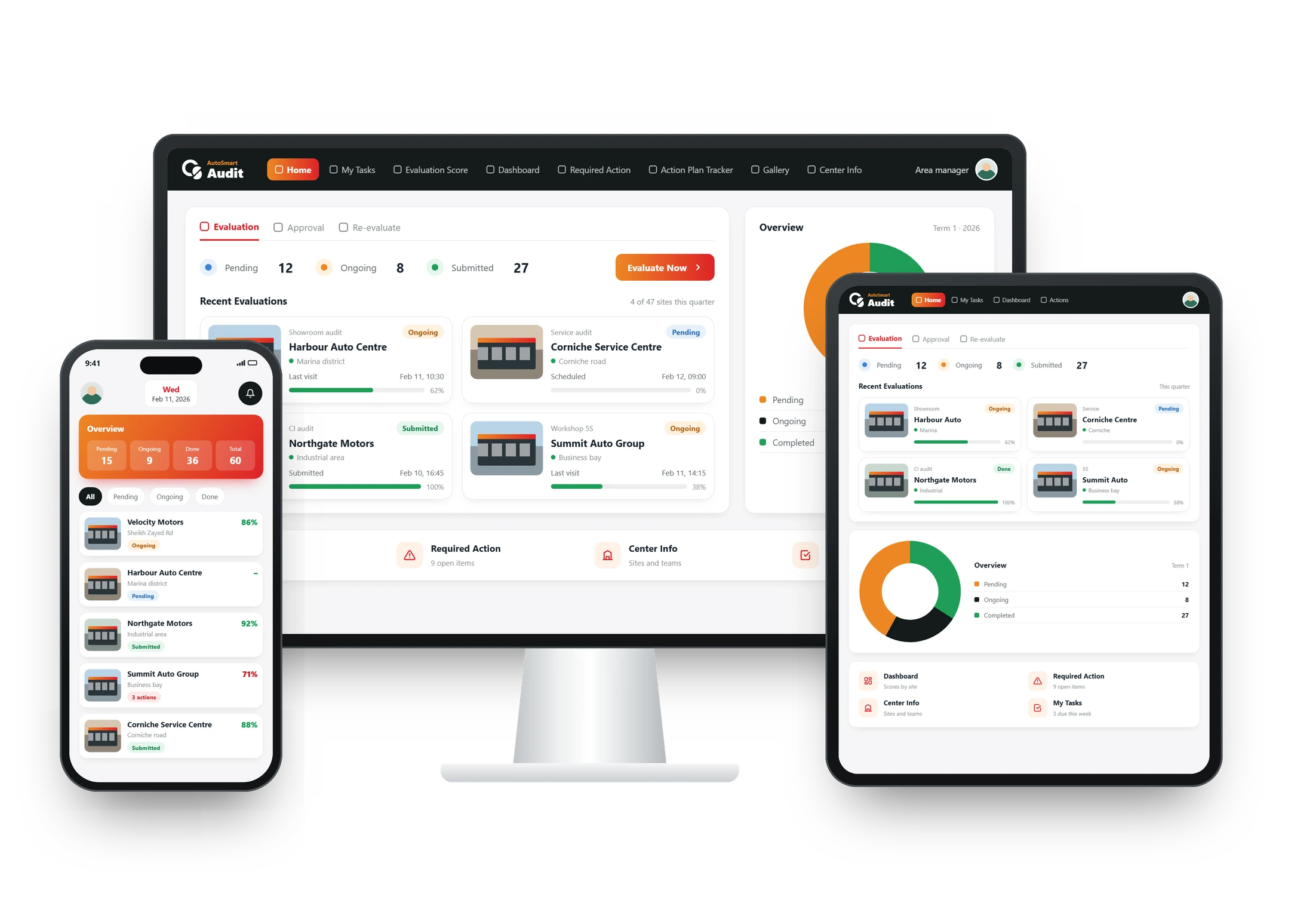
This is where digital audit platforms like Autosmart Audit become essential; using paper-based clipboards leads to human error and delays in reporting by a huge margin.
An audit workflow in automotive goes as follows,
- Opening Meeting: Align scope & timing
- Showroom Review: Brand CI & presentation
- Service Bay Check: Safety & productivity
- Parts Inventory: Stock & compliance
- CRM & Sales Review: Lead & follow-up quality
- Evidence Capture: Photos, docs, log
- Real-Time Scoring: Digital auto-scoring
- Closing Meeting: Findings & next steps
Phase 4: Reporting and Findings Documentation
After on-site work is wrapped, focus turns to communication, including writing a clear, actionable, and accessible report for the right audience in any standard audit workflow in the automotive industry. This is where most traditional audit processes fall flat, observations are aggregated days or weeks later, shared in static documents and forgotten about before there has been time to drive any remedial action.
Our audit management software mitigates this by leveraging
- automatic reporting with scores
- photo evidence
- a prioritised list of actions
All are auto-populated when an audit within the dealership audit process is started and completed. Our dealer audit management software generates these reports in real-time to dealership management and OEM teams via centralised dashboards, eliminating the delay that so often allows non-compliance to continue.
A good audit report is not just a catalogue of wrong things. It compares current performance with historical audit cycles and peer network locations, providing management with the context needed to determine whether a problem is limited or systemic.
Phase 5: Action Planning, Accountability, and Continuous Improvement
An audit that produces findings without producing assigned, time-bound actions is merely an expensive documentation exercise. Effective action planning requires:
- Ownership: Assigning each finding to a named manager.
- Deadline: Setting a clear timeframe for resolution.
- Resolution Path: Outlining the specific steps to fix the issue.
- Verification: A requirement for a follow-up check to confirm the fix has taken hold.
Over time, this creates a culture of continuous improvement where recurring issues are identified and addressed at their root rather than patched repeatedly at the surface.
Revolutionise Dealership Audits with Autosmart Audit
Dealership audit does not stop when an auditor leaves your dealership; rather, it fuels a continuous cycle of feedback through the dealership audit process that both raises operational guardrails, protects, and enhances brand equity while delivering measurable increases in CSI scores, bay utilisation, and profitability at every location within your network. The audits become a permanent engine of improvement, not something to fear for leading dealerships in their markets.