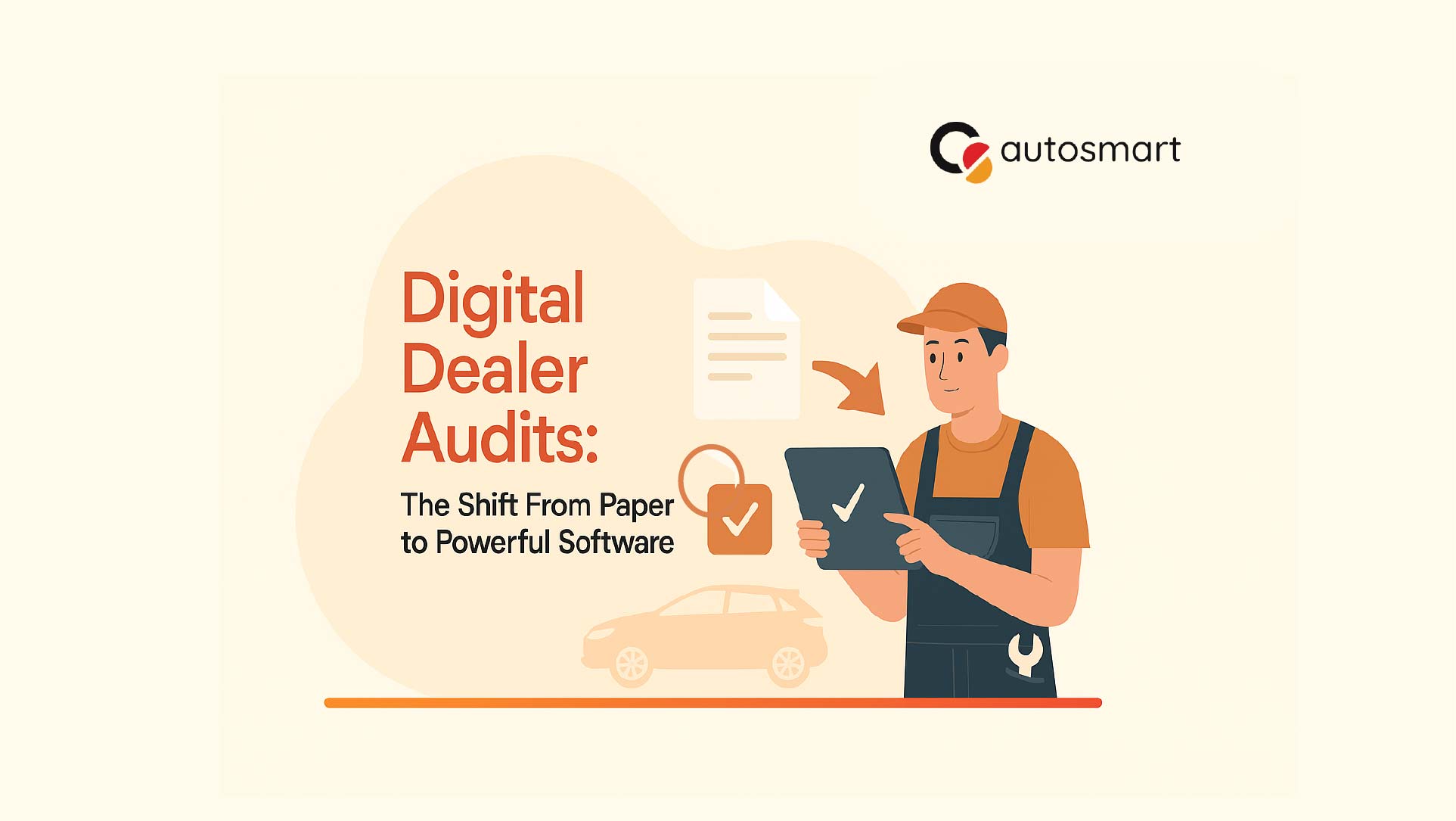
In today’s increasingly digital automotive landscape, efficiency, accuracy, and traceability are critical to success. Dealer audits, once entirely manual and paper-based, are now transforming through advanced software solutions designed to streamline processes, enhance compliance, and improve visibility across dealership networks. As the automotive industry navigates stricter regulations, rising customer expectations, and global brand consistency challenges, transitioning from traditional audits to digital systems is no longer just beneficial; it’s essential.
This blog explores why automotive OEMs and dealers are embracing digital audit software, the problems inherent in paper-based systems, and how modern technology is reshaping the future of retail audits.
The Downside of Traditional Paper-Based Dealer Audits
For decades, dealer audits involved printed checklists, physical documentation, handwritten notes, and in-person verifications. While common practice, these manual methods carry significant limitations:
- High error rates: Handwritten inputs may be unclear, incomplete, or inconsistent.
- Limited traceability: Paper files are difficult to track, easy to misplace, and offer minimal data history.
- Slow resolution: Reporting, reviewing, and approving corrections may take weeks.
- Lack of real-time insights: Decisions on inventory, branding, or compliance are delayed until audits are compiled and shared manually.
- Poor collaboration: Multiple stakeholders struggle to access records and contribute simultaneously.
- Cost implications: Printing, storage, courier services, and travel add ongoing operational costs.
In an industry where precision and brand consistency are paramount, relying on outdated methods exposes both manufacturers and dealers to compliance risks and lost opportunities.
Digital Dealer Audit Software: A Game-Changer
Digital audit platforms eliminate inefficiencies by replacing paper forms with centralised, cloud-based systems that enable seamless inspection, real-time reporting, automated alerts, and corrective action workflows. Industry leaders such as Toyota, BMW, Kia, and Hyundai have already shifted toward digital tools to maintain high standards across their dealer networks.
Here’s how digital solutions enhance dealer audit excellence:
- Automated Checklists for Standardised Compliance
Instead of using static paper templates, digital audit software provides dynamic, customizable checklists aligned with OEM guidelines. These checklists help ensure that every dealership adheres to global standards covering areas such as facility branding, customer experience, service operations, spare parts management, and safety protocols.
- Real-Time Data Sharing and Decision Making
Auditors can instantly record observations, attach images/videos, scan documents, and sync data with headquarters. OEMs receive immediate notifications of non-compliance issues and can initiate corrective actions without waiting for physical reports to arrive.
- Complete Traceability and Audit History
Digital systems maintain an evidence-based audit trail, retaining every record, update, timestamp, and responsible individual. This improves accountability and simplifies re-evaluation and dispute resolution cycles.
- Reduced Downtime and Quick Resolutions
By enabling automated approval processes and task delegation, issues can be resolved faster. Dealerships can upload proof of rectification and request re-audit digitally, minimising disruptions.
- Improved Scalability
For global OEMs managing thousands of dealerships, software allows bulk audits, comparative performance analysis, and instant onboarding of new dealerships without increasing the workforce.
Why Now? The Industry Drivers Pushing Digital Adoption
The automotive business is undergoing a massive transformation driven by:
- Stricter compliance norms
Regulatory and quality standards have tightened globally, and digital platforms help OEMs maintain consistent enforcement across all locations. - Rise of electric and connected vehicles
These newer vehicle formats require updated audit parameters, which are easier to integrate in software than paper formats. - Demand for data-driven decision-making
OEMs now rely on dealer performance data for strategic planning, inventory forecasting, service operations, and retail management. - Remote auditing advancements
After the COVID-19 pandemic, many manufacturers adopted remote or hybrid audit models, which were only made possible through digital platforms. - Sustainability commitments
Shifting from paper to digital supports environmental goals and improves operational sustainability.
Typical Features Offered by Modern Dealer Audit Software
- Custom audit checklist templates
- Mobile and offline audit support
- Real-time data capture (photos/videos)
- Automated scoring and risk-based evaluation
- Geo-tagging for visit proof
- Non-compliance alerts and escalation
- Task assignment and corrective actions
- Dashboards and analytics
- Centralised documentation repository
- Multi-language support
- Integration with CRM, ERP, or dealer management systems
From Inspection to Intelligence: The Strategic Benefits
While traditional audits merely identified issues, digital audits turn every inspection into a data-driven opportunity for improvement.
Traditional dealer audits rely heavily on manual processes, with auditors juggling handwritten notes, physical checklists, and stacks of paperwork. This often results in delays, inconsistencies, and a higher probability of human error. Reports may take days or even weeks to compile, making it difficult for OEMs and dealers to respond quickly to compliance gaps or performance issues. Collaboration is also limited, as findings are usually shared locally and not accessible to wider stakeholders in real time.
In essence, shifting from manual paper-based audits to digital software isn’t just an upgrade; it’s a transformation that accelerates decision-making, reduces risk, enhances transparency, and equips automotive brands for the future.
Transitioning from Paper to Digital: Key Implementation Steps
- Define objectives and compliance requirements.
Align audit metrics with OEM branding, operational, and regulatory standards. - Digitise existing audit checklists.
Convert paper-based formats into interactive digital ones. - Train auditors and dealer teams.
Ensure smooth adoption through hands-on tool onboarding. - Integrate data systems.
Sync audit software with ERP, CRM, sales, and performance tools. - Monitor performance and optimise workflows.
Continuously refine checkpoints based on audit data patterns.
Why OEMs Choose Digital Audit Solutions
Leading automotive brands select digital platforms because they:
- Eliminate manual dependency
- Improve dealer performance consistency
- Reduce compliance risk
- Speed up corrective workflows
- Make audits scalable, paperless, and sustainable
- Enable deep insights into retail operations
Digital transformation here is not merely operational; it’s strategic.
Final Call: It’s Time to Upgrade Your Audit Strategy
Switching from paper-based audits to digital dealer audit software isn’t just an upgrade — it’s a necessity for staying relevant in today’s competitive automotive ecosystem. As vehicles become smarter, the systems used to manage, inspect, and optimise dealership operations must evolve as well.
With powerful digital solutions like Autosmart, OEMs and dealerships can streamline inspections, track performance in real time, and maintain consistent compliance across every retail location. The result is stronger brand visibility, higher customer satisfaction, and sustainable long-term growth.