
 AutoSmart Guidebooks
What this guidebook covers
Oil, filters, coolant, batteries, paint, tyres, airbags and refrigerant: a dealership produces a steady stream of waste, and under the duty of care it stays your responsibility after it leaves the yard. Waste and pollution offences carry unlimited fines and up to 5 years in prison.
This guidebook covers 6 environmental standards with 18 checkpoints: waste duty of care, hazardous waste consignment notes, bunded oil storage, drains and interceptors, legal tyre storage and collection, and A/C refrigerant (F-gas).
The 6 environmental standards
Open a standard to see the law behind it, what is checked, what it can cost and the evidence. Ideal fix times are counted from audit submission.
ENV-01Waste duty of care7 days
- The law
- Environmental Protection Act 1990 · Environmental Permitting Regulations 2016 · EPA 1990 s.34 duty of care · waste transfer notes kept for 2 years
- What we check
- All waste goes to a registered carrier, each transfer has a waste transfer note, and notes are kept for at least 2 years.
- What it can cost
- A small garage paid £2,564 for missing notes. If your waste is fly-tipped, it's an unlimited fine and cleanup costs.
- Evidence
- Transfer notes + register checks
ENV-02Hazardous waste consignment notes72 hours
- The law
- Environmental Protection Act 1990 · Environmental Permitting Regulations 2016 · Hazardous Waste (England and Wales) Regulations 2005: classification, segregation, consignment notes kept 3 years
- What we check
- Oil, filters, coolant, brake fluid, batteries, paint waste and airbags are classified as hazardous, kept separate, and moved with consignment notes kept for 3 years.
- What it can cost
- Mixing or mis-describing hazardous waste can be prosecuted with unlimited fines.
- Evidence
- Consignment notes + photos
ENV-03Oil storage bunded30 days
- The law
- Environmental Protection Act 1990 · Environmental Permitting Regulations 2016 · Control of Pollution (Oil Storage) (England) Regulations 2001: secondary containment of at least 110%
- What we check
- Oil containers of 201 litres or more (new oil, used oil, gear oil) sit inside a bund or drip tray holding at least 110% of the largest container, kept free of water and debris.
- What it can cost
- Pollution from unbunded oil brings unlimited fines and cleanup costs.
- Evidence
- Photos + tank list
ENV-04Drains and interceptorsImmediate
- The law
- Environmental Protection Act 1990 · Environmental Permitting Regulations 2016 · Water Resources Act 1991 s.85 / EPR 2016 water discharge activities · trade effluent consent
- What we check
- Workshop and wash-bay drains go through a maintained oil interceptor to the foul sewer with consent. Nothing goes to surface water drains.
- What it can cost
- Water pollution is one of the EA's most prosecuted offences: unlimited fines, up to 5 years in prison.
- Evidence
- Plan + service records + consent
ENV-05Tyres stored and collected legally7 days
- The law
- Environmental Protection Act 1990 · Environmental Permitting Regulations 2016 · EPR 2016 waste exemptions and permits · duty of care for waste tyres
- What we check
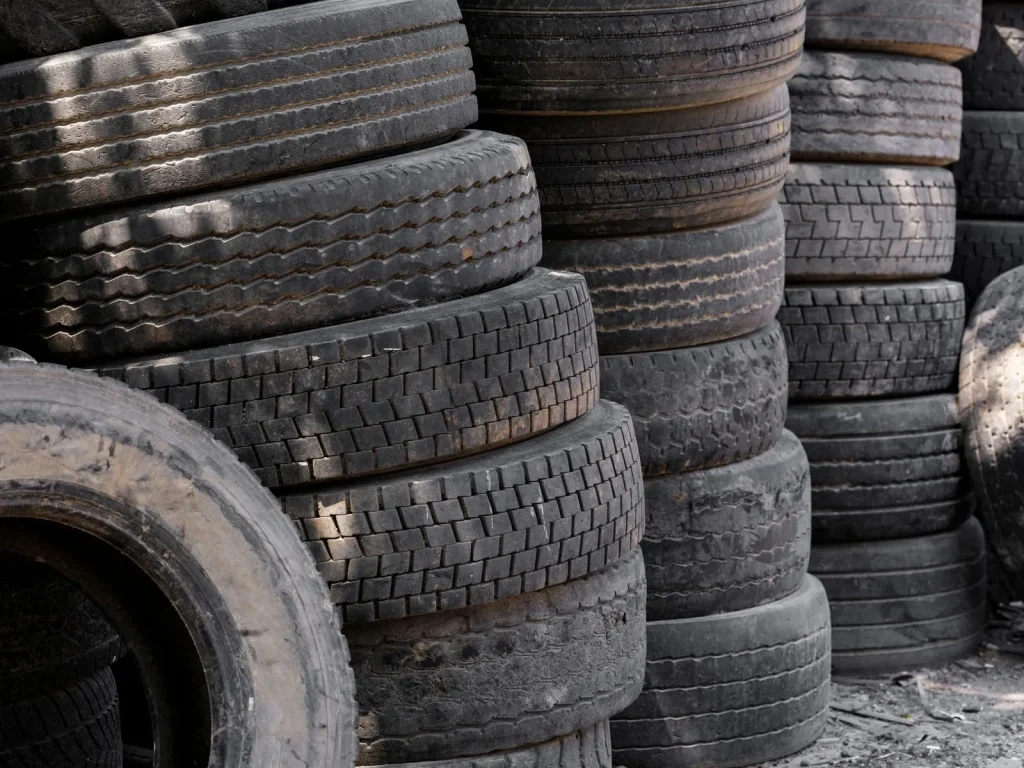
- Waste tyres are stored within exemption limits, in a safe stack, and collected by a registered carrier who takes them to a permitted site.
- What it can cost
- A tyre firm paid £13,000 for an illegal stockpile and fake notes. Unpermitted storage is an unlimited fine.
- Evidence
- Photos + notes
ENV-06A/C refrigerant (F-gas)7 days
- The law
- Environmental Protection Act 1990 · Environmental Permitting Regulations 2016 · Fluorinated Greenhouse Gases Regulations 2015 · MAC qualification requirements
- What we check
- Only technicians with a mobile air-conditioning (MAC) qualification recover and recharge vehicle A/C, using proper recovery equipment. Refrigerant is never vented.
- What it can cost
- F-gas offences can bring civil penalties and unlimited fines on prosecution.
- Evidence
- Certificates + records
How to run a UK environmental and waste audit, step by step
- Confirm what applies. List every waste stream and its carrier; Scotland, Wales and Northern Ireland have their own regulators and some different rules.
- Walk the site, standard by standard. Score each of the 18 checkpoints Pass, Fail or N/A. N/A only where the standard rules it out, with the reason recorded. Look inside the general skip, check the oil tank bund, and trace where yard and wash-bay drains go.
- Capture the evidence. A pass counts only with proof captured at the time of the audit: waste transfer and consignment notes, carrier registrations, interceptor service records and F-gas logs.
- Give every fail an owner and a fix time. Record what you saw and who owns the fix. Each standard carries an ideal fix time, from immediate to 30 days, counted from audit submission (see the table above).
- Fix it, then prove it. The site fixes the cause and uploads proof of closure; the auditor checks the proof before closing the finding.
- Re-check at the next audit. Confirm closed findings stay closed, and look for the same fail at your other sites so one gap doesn't repeat across the network.
Who this guidebook is for
- Service and body shop managers
- Facility managers
- Auditors
A reference document, not legal advice. Fines and rules change: check the current text with the regulator or your legal adviser before acting.