Disclaimer: AutoSmart Audit is an independent dealer audit management platform, not affiliated with or endorsed by Hyundai Motor Company. All references to Hyundai dealer standards are based on publicly available industry information. All brand names belong to their respective owners.
For distributors managing a Hyundai dealer network, understanding how retail standards are assessed is central to maintaining consistent performance across every location.
This guide explains what the Retail Quality Standards programme covers, how compliance is generally assessed, and how distributors can manage the process at scale.
Understanding Hyundai Dealer Audit Standards
These standards form part of a wider framework used to measure how well each dealership meets defined operational and brand expectations. Rather than focusing on sales figures alone, they examine the day-to-day realities of the dealership: how it presents itself, how staff engage with customers, and whether agreed processes are being followed.
For distributors, the reason this matters is straightforward. A network is only as strong as its weakest location, and when one dealership falls below standard, the brand as a whole carries the cost.
What Hyundai’s Retail Quality Standards (RQS) Programme Covers
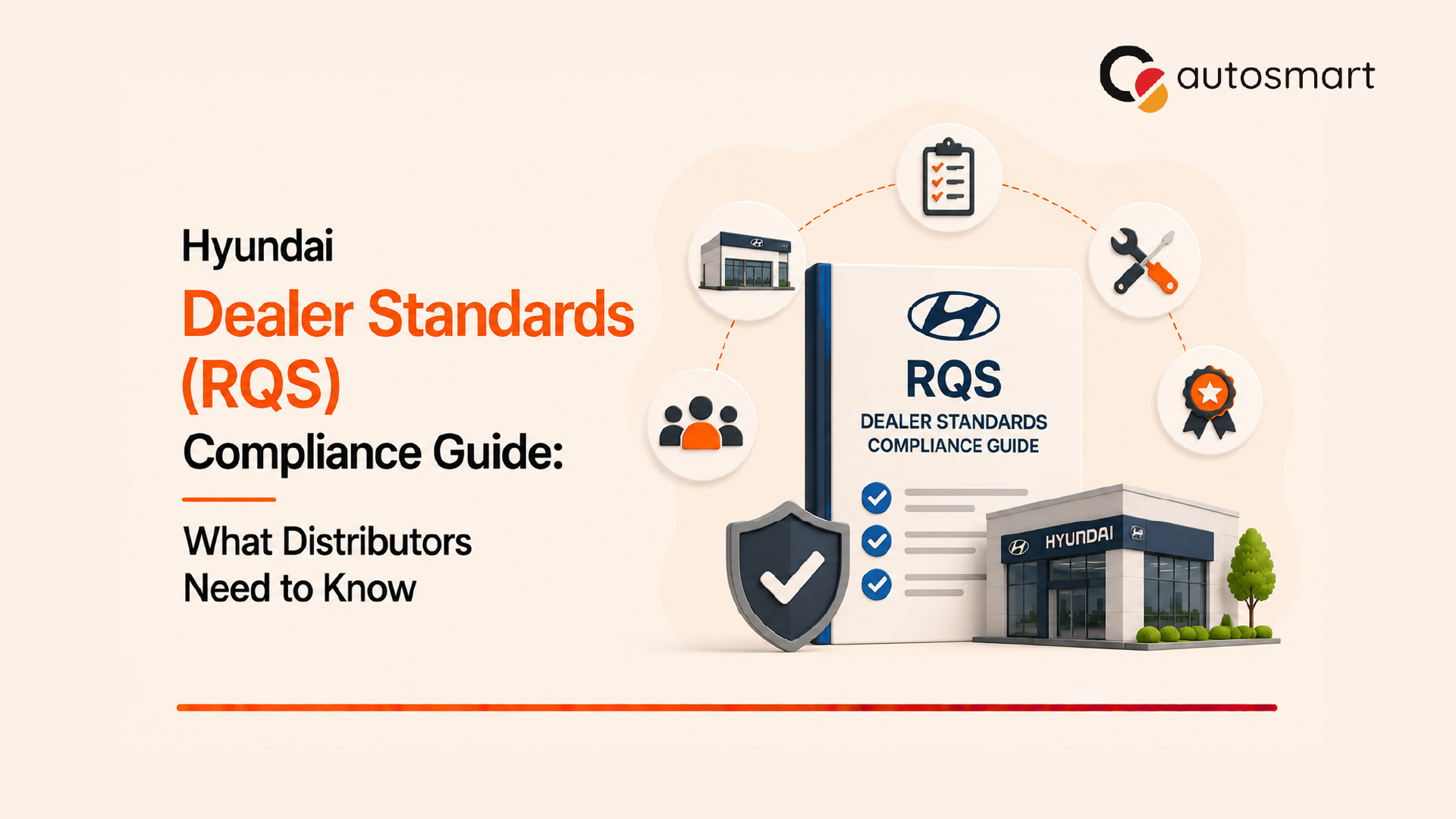
Hyundai RQS compliance is generally understood to assess several core areas of dealership operation. Based on publicly available industry information, the programme evaluates customer flow, corporate identity branding, staff grooming and presentation, and the use of digital systems within the dealership.
Each area contributes to the customer experience differently:
- Customer flow examines how customers move through the dealership, from arrival to handover.
- Corporate identity branding assesses whether signage, layout, and visual elements align with Hyundai dealer facility branding requirements.
- Staff presentation covers grooming, uniform standards, and how teams represent the brand.
- Digital systems usage looks at whether teams use the required tools correctly.
A Hyundai retail quality standards checklist brings these areas into a single structured assessment, allowing every dealership to be measured against the same criteria.
What a Hyundai Dealership CI Audit Covers
Corporate identity is the visual and physical expression of the brand at dealership level. Publicly available information indicates that such reviews generally cover showroom layout, digital touchpoints, and customer zones, examining whether the dealership looks and functions as the brand intends.
Facility standards are not static. Hyundai’s Global Dealership Space Identity programme sets out how dealerships should present themselves, and it has evolved over time. You can read more in our guide to Hyundai GDSI and dealership design identity.
How the Audit Process Generally Works
While the exact process varies by market and distributor agreement, most OEM dealer audits follow a broadly similar structure:
- Preparation. Dealerships are given a framework outlining what will be assessed, allowing them to review standards, update records, and address visible issues. For distributors, it ensures each location is evaluated on equal terms.
- On-site evaluation. The auditor moves through the dealership, observing operations, reviewing documentation, and scoring each item against a fixed standard. Consistent scoring allows results to be compared across the network.
- Review and corrective action. The dealership receives a scored report and a structured review. Shortfalls are explained and corrective actions agreed before the next cycle. This stage delivers most of the audit’s value.
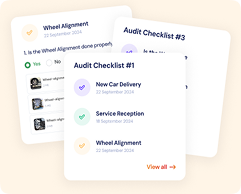
Looking for a better way to manage dealer compliance across your network? See how AutoSmart Audit helps distributors and OEM field teams track compliance and corrective actions at scale. [Link to product page]
Managing Compliance Across a Dealer Network
For a distributor overseeing multiple dealerships, the challenge is rarely the individual audit but managing findings across the whole network over time. A dealer network compliance management software approach makes that manageable, giving distributors one view of results across every location.
Three principles matter. Every finding needs a named owner and a deadline. Results should be reviewed network-wide rather than location by location, since recurring issues usually point to something structural. And scores should be tracked across cycles, so declining performance is visible early. Hyundai dealer compliance software, or any structured OEM dealer standard audit tool, exists to support exactly this.
Building a Stronger Hyundai Dealer Network with AutoSmart Audit
Hyundai dealer audit standards exist to protect the consistency of the customer experience across every dealership carrying the brand. For distributors, meeting them is not about passing an inspection, but about running a network where every location performs to the same level.
The distributors who manage this well are not the ones who prepare hardest for the audit. They are the ones who already know what it will find. AutoSmart Audit gives that visibility across every dealership in the network.
Book a demo of AutoSmart Audit to see how distributors manage dealer compliance across their networks.