
An automotive dealership facility audit is a detailed inspection of the dealership’s building, grounds, and customer areas. It checks if they meet OEM brand standards, safety codes, and franchise rules. It differs from a financial audit or an operational review. This focus is solely on the facility’s physical state. It considers what the customer sees, where the technician works, and what the OEM expects during a field visit.
It’s run by OEM field teams, third-party evaluators, or dealer group audit teams. This usually happens every three or six months. It impacts franchise standing, dealer incentive eligibility, and customer experience scores.
What Does a Dealership Facility Audit Actually Cover?
The scope of a dealership facility audit is broader than most dealership managers assume. It’s not limited to the showroom floor. A full car dealership inspection looks at every area where customers and technicians meet the brand. This starts when a customer drives into the lot and ends when a vehicle leaves the service bay.
Here is how those zones break down.
The 8 Zones of a Dealership Building Audit Checklist
1. Exterior and Signage
Auditors begin outside. The building façade, signage (placement, lighting, size), entrance access, lot lighting, vehicle display, flags, and banners are all checked against the OEM’s brand identity manual. Expired, damaged, or poorly placed signs are common issues in dealer networks.
2. Showroom and Sales Floor
In the showroom, the audit reviews several key areas: the vehicle display layout, lighting levels, flooring, wall finishes, digital screens, pricing boards, and customer greeting zones.
Standards here usually follow the OEM’s retail image programme. Every major manufacturer has one. For example, there’s Ford’s Lincoln Retail Image standard, Toyota’s DERAP, or a similar regional standard. Non-compliant display vehicles, cluttered floors, or mismatched branding are flagged as findings.
3. Customer Waiting and Lounge Areas
Seating conditions and quantity, refreshment availability, Wi-Fi, cleanliness, and digital entertainment are inspected here. These areas directly impact customer satisfaction index (CSI) scores. A poorly maintained lounge isn’t just a compliance issue; it’s a clear risk to customer loyalty.
4. Service Reception and Write-Up Area
The service advisor’s desk setup, service menus displayed, the physical write-up bay condition, and the availability of digital check-in points are evaluated. OEM service process standards outline the required appearance of this area and the information that should be visible to customers during vehicle handover.
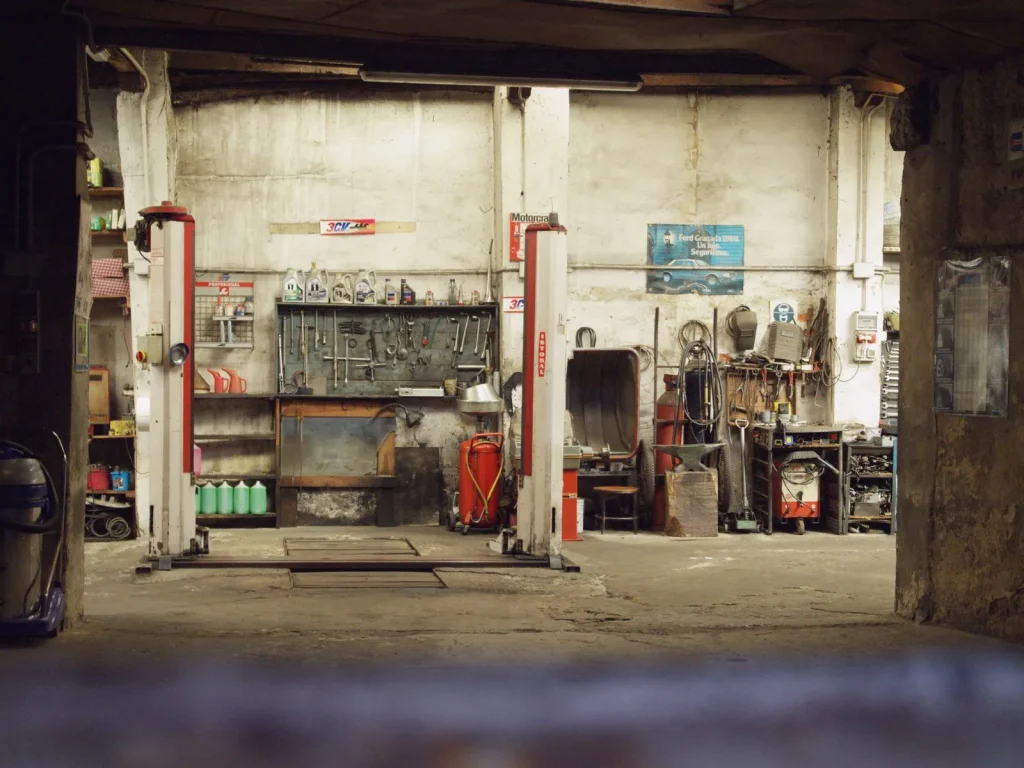
5. Workshop and Service Bays
This is typically the highest-weighted zone in any automotive facility compliance inspection.
Auditors check the following:
- Bay count against franchise minimums
- Lift and equipment calibration records
- Tool storage and 5S compliance
- PPE availability
- Fluid and chemical containment
- Workshop lighting and ventilation
Uncalibrated equipment, improper chemical storage, or a missing fire suppression unit can lead to a serious non-conformance finding.
6. Parts and Accessories Department
Parts room organisation, bin labelling accuracy, obsolete parts identification, secure access controls, and storage environment conditions (temperature and humidity for sensitive electronic components) are assessed here. OEMs specify minimum stocking requirements for fast-moving parts, and the audit verifies compliance with those requirements.
7. Restrooms and Welfare Facilities
Customer and staff restrooms are inspected separately. Cleanliness, fixture condition, supply availability, and separation of customer-facing from staff-only facilities are checked against local municipal hygiene standards and the OEM’s own branch standards.
8. Bodyshop and Paint Facility (Where Applicable)
For dealerships with a bodyshop, the audit covers:
- Spray booth certification
- Air filtration compliance
- Paint mixing room standards
- Solvent storage and disposal practices
These areas follow OEM bodyshop certification standards and local environmental and fire safety rules. Not following these can lead to the highest regulatory risk in the facility.
How Is a Dealership Facility Audit Scored?
Facility audits use a weighted scoring model. Each zone has a specific weight. Workshops and showrooms usually have the highest weight due to their greater brand and safety risks. Within each zone, individual criteria are scored on a pass/fail or scaled basis (e.g., 0–3).
Findings are classified into tiers:
- Compliant: meets the standard
- Minor Non-Conformance: a deviation that doesn’t affect safety or core brand experience
- Major Non-Conformance: a significant gap requiring corrective action within a defined timeframe
- Critical Finding: immediate rectification required; may trigger a follow-up visit or escalation
Photo evidence is a mandatory requirement in any credible dealership facility audit. Without photos of each finding, the audit can’t be defended. This applies to both the dealer and the OEM leadership looking at network performance data.
What Happens After the Inspection?
A facility audit that produces a report but no action is the most common failure mode in dealer networks that rely on manual processes. The report gets emailed, filed, and forgotten, and the same findings appear in the next audit cycle.
A properly closed audit loop works like this:
1. Formal report generation: Each finding includes evidence, a severity rating, and the relevant standard it didn’t meet.
2. CAPA assignment: Each finding has a specific owner at the dealership (a named person, not just a department), a deadline, and a required corrective action. Preventive actions address root causes to stop recurrence.
3. Re-inspection or evidence submission: If it’s serious, the dealer sends photos to show it’s fixed or gets a follow-up visit.
4. Impact on dealer standing: Audit scores affect dealer incentives, franchise renewals, and in some networks, marketing fund distribution. A pattern of recurring major non-conformances puts the dealer’s franchise agreement at risk.
Common Findings in Automotive Facility Compliance Inspections
Across dealer networks, the same categories of findings appear repeatedly:
- Signage that is expired, damaged, or installed outside OEM-specified dimensions
- Service bay equipment with no calibration records on file
- Chemical and fluid storage that doesn’t comply with local environmental or fire safety standards
- Customer-facing areas that meet standard on audit day but aren’t maintained between cycles
- Missing documentation, fire inspection certificates, equipment service logs, OEM certification renewals
The last point is significant. Many dealerships don’t fail due to non-compliance. They fail because the paperwork proving compliance isn’t ready during the audit. Document management is as much a part of the facility audit as the physical inspection.
How Digital Audit Software Changes the Facility Inspection Process
A manual facility audit involves using a clipboard, spreadsheet, and photos emailed separately. This process can take days to turn into a useful report. By the time leadership sees the findings, the window for rapid corrective action has already closed.
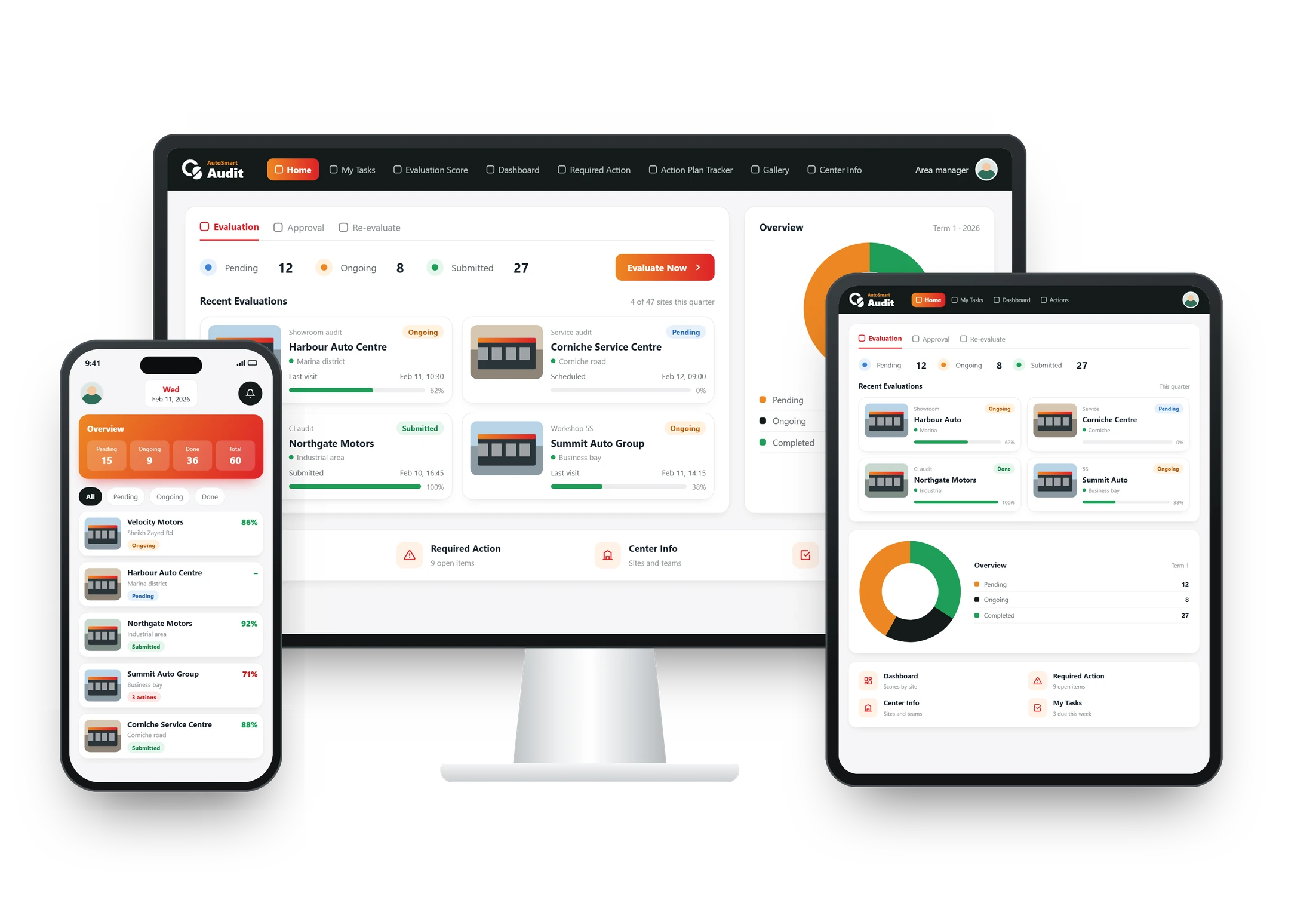
Digital audit platforms like AutoSmart change the entire workflow. Auditors use a mobile audit checklist with scoring. They can take photos for each finding and create a structured report in real time. Action plans are assigned from within the platform, with named owners and deadlines. Leadership sees network-wide findings on a live dashboard, not in a PDF that arrives a week after the audit closed.
For OEMs and dealer groups handling audits at many locations, shifting from manual to digital makes a big difference. It can turn an audit programme into a tool for improvement, not just a source of paperwork.
Run Your Facility Audits on a Platform Built for Automotive Networks
AutoSmart’s audit management platform provides OEM field teams and dealer group audit managers a central hub. Here, they can create facility inspection checklists, perform mobile audits with photo evidence, assign CAPA actions, and monitor completion in real time at every location.
Over 1,700 dealerships already run their audits on AutoSmart. Schedule a free demo to see how it works for your network.