
 AutoSmart Guidebooks
What this guidebook covers
Paint, fuel and tyres make every dealership a fire risk, and more electric vehicles bring new risks. PSP (the State Fire Service) inspects buildings, fines breaches under art. 82 of the Code of Petty Offences and orders them to be fixed. Where the danger is serious, it can ban use of the building.
This guidebook covers 5 fire safety standards for dealers, across the showroom, workshop, paint shop, store and EV areas, with 14 checkpoints: the fire safety instruction, flammable materials, escape routes, extinguishers and inspections, and electric vehicles. The guidebook PDF is in Polish.
The 5 fire safety standards
Open a standard to see the law behind it, what is checked, what it can cost and the evidence. Ideal fix times are counted from audit submission.
POZ-01Fire safety instruction30 days
- The law
- Fire Protection Act · Regulation on fire protection of buildings · Code of Petty Offences art. 82 · fire safety instructions for the building
- What we check
- The premises have current fire safety instructions (showroom, workshop, paint shop, store), and staff know them.
- What it can cost
- A fine and an enforcement order.
- Evidence
- Fire safety instructions
POZ-02Flammable materialsImmediate
- The law
- Fire Protection Act · Regulation on fire protection of buildings · Code of Petty Offences art. 82 · storage of flammable materials
- What we check
- Paints, solvents and fuels are kept in fire-resistant cabinets, in minimum quantities, away from ignition sources.
- What it can cost
- A fine and a ban on use.
- Evidence
- Photos
POZ-03Escape routesImmediate
- The law
- Fire Protection Act · Regulation on fire protection of buildings · Code of Petty Offences art. 82 · escape routes and exits
- What we check
- Escape routes are clear, signed and lit, and exits open without a key.
- What it can cost
- A fine and a ban on use.
- Evidence
- Photos
POZ-04Extinguishers and inspections7 days
- The law
- Fire Protection Act · Regulation on fire protection of buildings · Code of Petty Offences art. 82 · servicing of fire equipment and installations (at least once a year)
- What we check
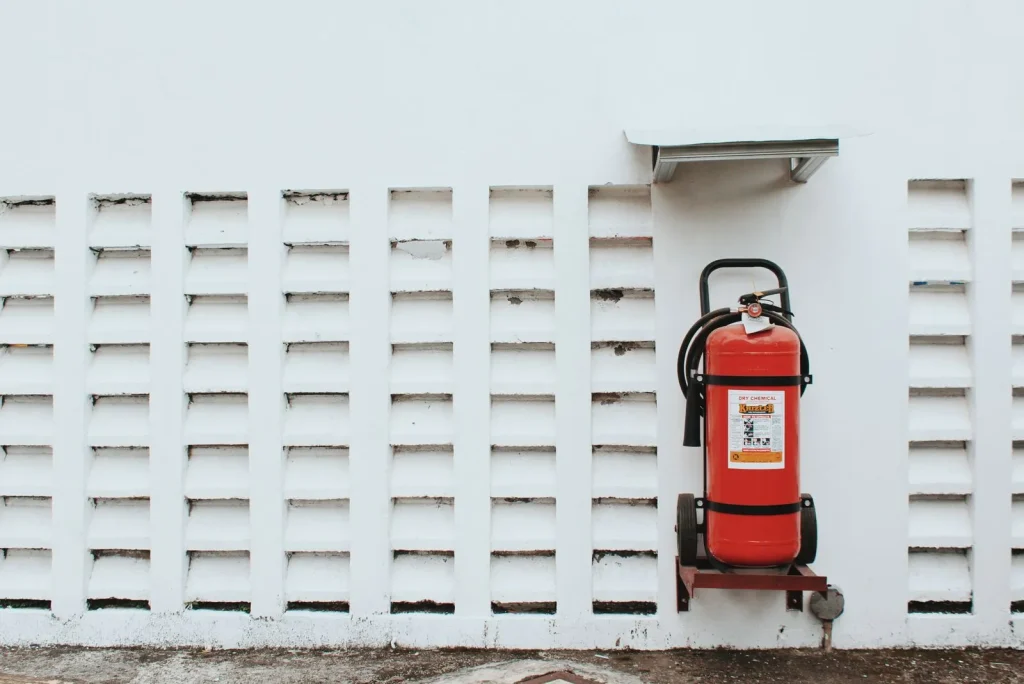
- Extinguishers and installations (alarms, hydrants) are serviced at least once a year, and staff are trained.
- What it can cost
- A fine under art. 82 of the Code of Petty Offences.
- Evidence
- Service reports
POZ-05Electric vehicles72 hours
- The law
- Fire Protection Act · Regulation on fire protection of buildings · Code of Petty Offences art. 82 · hazard assessment for lithium-ion batteries and chargers
- What we check
- Damaged electric cars stand in a quarantine area away from the building, chargers are installed to the rules, and staff know the procedure. Applies to dealers selling or servicing EVs and hybrids.
- What it can cost
- A fire in the showroom can destroy the building.
- Evidence
- Photos + procedure
How to run a Polish fire safety audit, step by step
- Confirm what applies. Detailed requirements depend on the building's risk category for people; the EV standard applies to dealers that sell or service electric vehicles and hybrids.
- Walk the site, standard by standard. Score each of the 14 checkpoints Pass, Fail or N/A. N/A only where the standard rules it out, with the reason recorded. Ask for the fire safety instruction, walk the paint shop and every escape route, check the extinguisher labels, and walk the EV areas.
- Capture the evidence. A pass counts only with proof captured at the time of the audit: the fire safety instruction, inspection reports, the EV procedure, and photos of storage, exits and EV areas.
- Give every fail an owner and a fix time. Record what you saw and who owns the fix. Each standard carries an ideal fix time, from immediate to 30 days, counted from audit submission (see the table above).
- Fix it, then prove it. The site fixes the cause and uploads proof of closure; the auditor checks the proof before closing the finding.
- Re-check at the next audit. Confirm closed findings stay closed, and look for the same fail at your other sites so one gap doesn't repeat across the network.
Who this guidebook is for
- Boards: protecting the building
- Facility managers: escape routes and equipment
- Auditors: checking the site like a firefighter
A reference document, not legal advice. Fines and rules change: check the current text with the regulator or your legal adviser before acting.