

Warranty compliance across a dealer network is not just an administrative concern. It directly affects claim recovery, audit outcomes, dealer profitability, and OEM reputation. Poor warranty controls often lead to rejected claims, recurring repairs, inflated warranty costs, and avoidable chargebacks that impact both dealers and manufacturers.
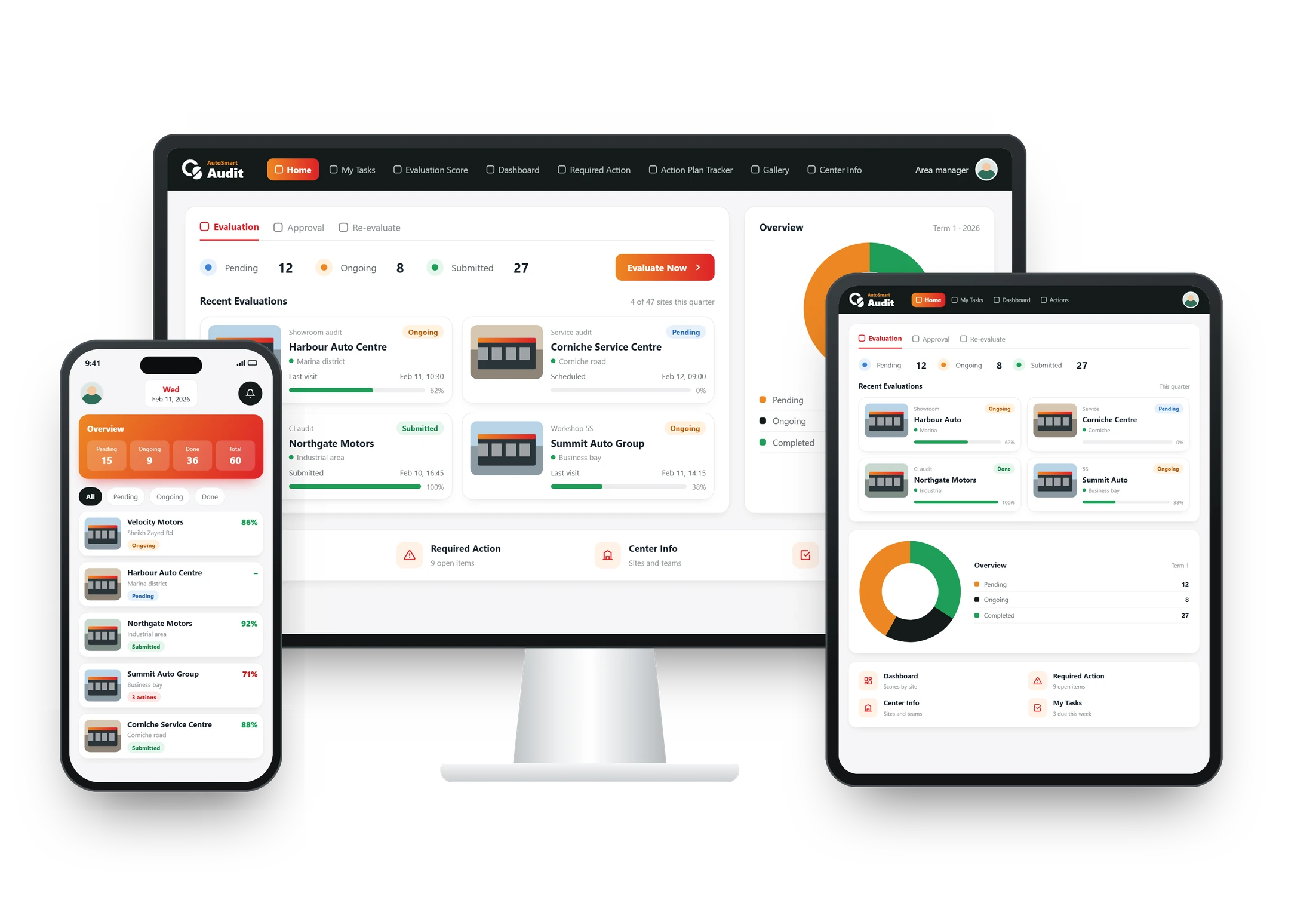
For OEM aftersales teams, managing warranty compliance dealer network operations at scale requires more than periodic reviews. It requires a structured process that connects documentation, repair quality, dealer accountability, and audit visibility across every location. Platforms such as AutoSmart Audit help OEMs achieve this by standardizing compliance workflows and providing network-wide audit visibility.
As warranty costs continue to rise across the automotive sector, OEMs are placing greater scrutiny on dealer warranty practices. Networks that rely on inconsistent claim handling or manual oversight often struggle to maintain compliance standards across multiple dealerships. A stronger approach combines standard operating procedures, internal audits, measurable KPIs, and consistent reporting structures.
What Warranty Compliance Means in a Dealer Network
Warranty compliance has two core components that must work together.
The first is warranty claims compliance. This focuses on whether claims are submitted correctly with accurate labour operation codes, technician details, diagnostic records, parts documentation, and repair descriptions. Errors in claim submissions often result in rejected reimbursements or future chargebacks during a dealer warranty audit.
The second component is repair quality compliance. A claim may appear correct on paper while the actual repair fails to meet OEM technical standards. Repeat repairs, recurring faults, and poor Fix It Right First Time (FIR) performance usually indicate underlying process issues within the workshop.
OEMs monitor both areas closely because repeated warranty failures create financial and operational risks across the network. Effective automotive warranty process management depends on controlling documentation accuracy and repair execution together.
Standardise Documentation at the Point of Repair
One of the largest causes of warranty non-compliance is incomplete repair documentation. Missing information at the time of repair becomes difficult to recover later during an audit or chargeback review.
Every dealer in the network should follow the same documentation standards for warranty repairs. Standardisation reduces inconsistencies between locations and improves claim quality across the network.
Each warranty job card should include:
- Customer complaint in the customer’s own words
- Confirmed root cause of the issue
- Repair procedure performed
- OEM-approved part numbers used during repair
- Technician identification and certification details
- VIN and vehicle mileage
- Diagnostic scan reports before and after repair
Documentation discipline must happen during the repair process rather than after claim submission. Dealers that attempt to correct records retrospectively often struggle to provide complete evidence during OEM reviews.
For stronger OEM warranty management, many networks also use structured digital forms within the DMS to reduce missing fields and improve consistency between service advisors, technicians, and warranty administrators.
Conduct Monthly Dealer Warranty Audits
Annual OEM audits should never be the first time a dealer’s warranty process is reviewed. Dealers that wait for external audits often discover recurring issues after financial losses have already occurred.
Monthly internal dealer warranty audit reviews help identify gaps before they become network-wide problems. These audits can be conducted by warranty administrators, aftersales managers, or field teams during dealer visits.
A monthly audit sample should evaluate:
Customer Complaint Accuracy
The customer concern should be recorded clearly and without vague descriptions. Generic statements often create claim disputes during OEM reviews.
Root Cause Documentation
The technician must document the actual cause separately from the symptom. This helps validate whether the repair aligns with the labour operation submitted.
Labour Operation Validation
The labour code used in the claim must match the repair completed on the vehicle. Incorrect coding remains one of the most common audit findings.
Parts Return Compliance
Where required by OEM policy, all replaced components must have traceable return records attached to the claim.
Claim-to-Repair Consistency
The job card, technician notes, and claim amount should support each other without contradictions.
Internal audit results should be visible at network level rather than remaining isolated within individual dealerships. A dealer showing repeated documentation failures over multiple months represents a higher compliance risk for the OEM.
Assign Clear Warranty Compliance Ownership
Many dealer groups treat warranty administration as a finance responsibility rather than an operational function. This creates accountability gaps between the service department and warranty team.
Warranty compliance should have a clearly assigned owner at each dealership. That individual should oversee:
- Claim submission accuracy
- Documentation completeness
- Chargeback handling
- Submission timelines
- Parts return compliance
- Internal audit coordination
In larger dealerships, this role may belong to a dedicated warranty administrator. Smaller operations may assign responsibility to the workshop controller or service manager. What matters is that ownership is documented and measurable.
For OEM aftersales leaders, warranty compliance should become part of regular dealer performance discussions rather than a topic raised only after failed audits or rejected claims.
Track Warranty Comeback Rates Across the Network
Warranty comeback rate is one of the strongest indicators of future compliance problems.
Chargebacks and rejected claims are lagging indicators because they identify issues after financial impact has already occurred. Warranty comebacks reveal operational problems earlier in the process.
A rising comeback rate often points to:
- Poor diagnostic accuracy
- Weak FIR performance
- Inconsistent technician capability
- Incorrect repair procedures
- Parts quality concerns
OEMs should track comeback rates alongside FIR metrics and audit pass rates for every dealership. Reviewing these KPIs together provides a clearer picture of workshop quality and warranty risk exposure.
For example, a dealer with high repair throughput, but increasing comebacks may appear operationally productive while creating larger warranty risks behind the scenes.
Monitoring these trends centrally supports better aftersales compliance management across the network.
Create a Structured Chargeback Response Process
Even strong dealer networks experience claim rejections and chargebacks. The difference lies in how consistently those cases are managed.
A structured warranty chargeback prevention process should include:
Review the Original Claim
The dealership should compare the OEM rejection reason against the original repair records and supporting documentation.
Identify the Root Cause
The issue should be classified as either a documentation failure, process gap, coding error, or genuine warranty ineligibility.
Correct and Resubmit Where Applicable
If the issue relates to missing or incomplete information, the dealer should follow a standard correction workflow before resubmission.
Prevent Repeat Failures
Recurring claim issues should trigger corrective actions such as technician coaching, documentation retraining, or process updates.
Dealer networks that handle chargebacks systematically often recover more claim value than those relying on inconsistent responses.
Structured validation within the DMS can also reduce claim errors before submission. Required fields, labour code checks, and document validation rules help reduce incomplete claims entering the OEM system.
Build Network Visibility Through Central Reporting
Warranty compliance becomes difficult to manage when dealer performance data remains fragmented across locations.
OEMs and dealer groups need central reporting visibility that allows aftersales teams to compare performance across the network. Key reporting areas should include:
- Claim rejection rates
- Warranty comeback trends
- Internal audit scores
- FIR performance
- Open chargeback cases
- Submission turnaround times
Central visibility helps identify high-risk dealerships earlier and supports more targeted dealer development initiatives.
Networks with stronger reporting structures are also better prepared for OEM franchise reviews and compliance assessments. AutoSmart Audit provides this central reporting capability, allowing OEMs to track rejection rates, comeback trends, and chargeback cases across the entire dealer network.
What Strong Warranty Compliance Looks Like
A well-managed warranty compliance dealer network usually shares several common characteristics:
- Standard documentation procedures across all dealerships
- Monthly internal warranty audits
- Clear accountability for warranty administration
- Consistent tracking of FIR and comeback metrics
- Structured chargeback management processes
- Central reporting visibility for OEM aftersales teams
Technology supports these processes, but software alone cannot fix inconsistent dealer operations. Long-term compliance depends on process discipline, accountability, and regular oversight across the entire network.
Conclusion
For OEMs and dealer groups, stronger warranty claims compliance is not only about reducing audit findings. It also improves repair quality, protects reimbursement recovery, and creates greater operational consistency across aftersales operations.
Tools such as AutoSmart Audit support OEMs in sustaining these compliance standards long-term by centralizing audits, streamlining reporting, and ensuring dealer accountability across the network.