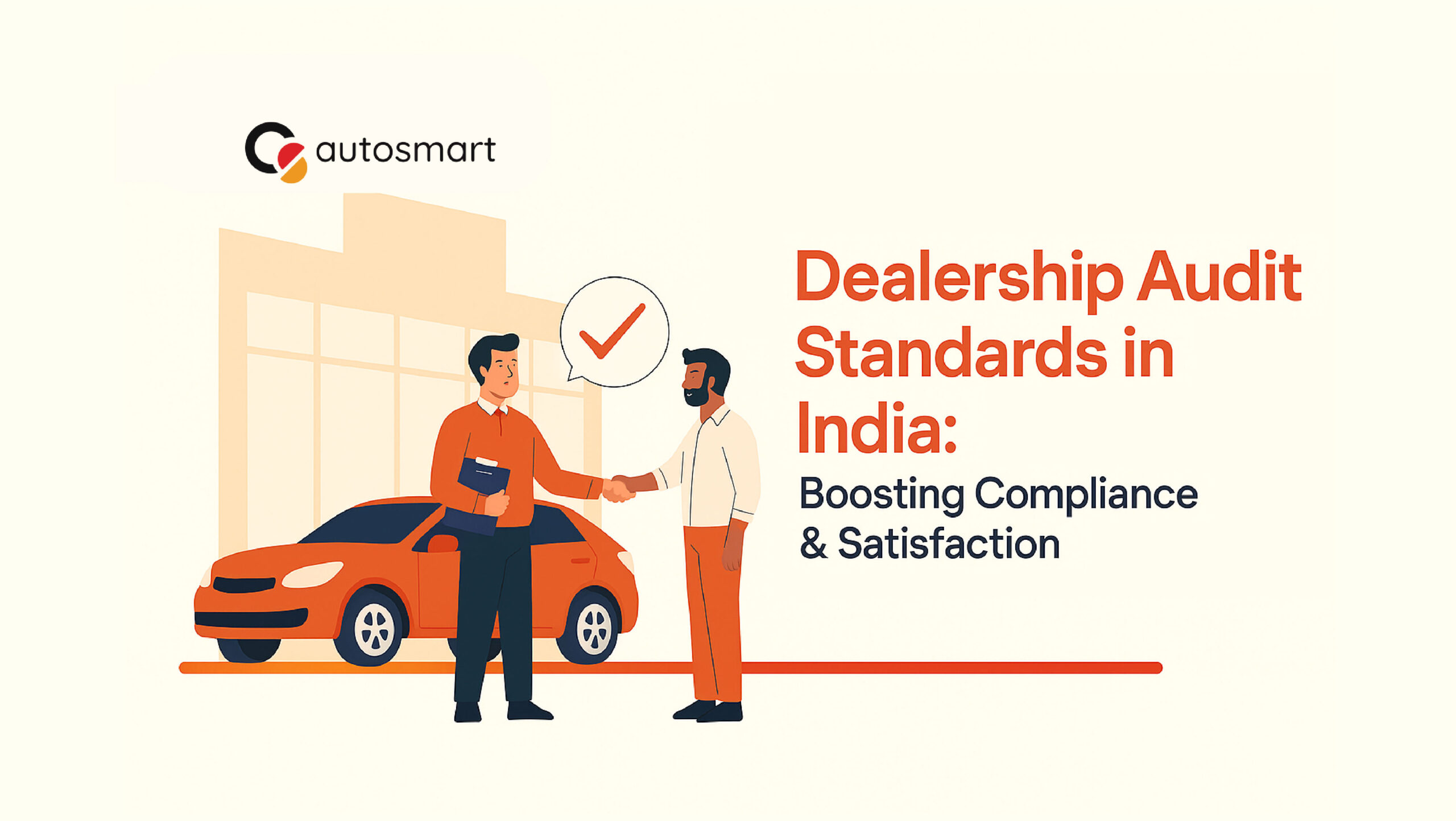
Managing consistent quality across automotive dealerships is no small task. For many dealer principals and OEM managers in India, staying on top of operational efficiency, customer satisfaction, and regulatory compliance is increasingly complex. With rising customer expectations and tighter regulations, manufacturers like Toyota, Maruti Suzuki, and Honda have introduced structured audit frameworks to keep their networks aligned.
This blog explores how these audit programs function and how digital tools like AutoSmart Audit can help dealerships keep pace.
Toyota’s Approach to Dealership Audits in India
Toyota’s dealership performance strategy in India reflects a combination of operational discipline and continuous improvement.
DISHA: A Comprehensive Evaluation Framework
Toyota Kirloskar Motor (TKM) uses DISHA, a dealership improvement framework that publicly represents the company’s approach to aligning dealer operations with customer satisfaction and process compliance. DISHA includes detailed operational audits, process verification, and facility assessments. Key areas often assessed include customer handling procedures, workshop efficiency, and service quality indicators such as first-time fix rate and turnaround time.
DISHA also promotes transparency through a centralized system accessible to Toyota’s field and corporate teams. Dealerships receive performance scores and feedback, which drive corrective actions and ongoing improvements. Higher scores often correlate with improved customer satisfaction and loyalty, reinforcing the value of continuous monitoring and process alignment.
Kaizen: Building Audit Readiness from Within
Toyota’s emphasis on Kaizen is visible through public initiatives such as employee-led Small Group Activities (SGAs), service improvement contests, and skill development programs. These efforts promote internal accountability and encourage dealership staff to take ownership of process gaps. By empowering staff to improve operations from the ground up, Toyota ensures that dealers not only pass audits but improve organically over time.
How Maruti Suzuki Drives Dealer Consistency Across India
Maruti Suzuki, India’s largest carmaker, has perhaps the most extensive dealership network. Managing uniformity across such a vast landscape is a challenge, one it tackles through its Dealer Standards Assessment framework.
This system evaluates every dealership against a clearly defined set of benchmarks, covering:
- Infrastructure and Facility Readiness: Clean, organized, and brand-compliant spaces.
- Staff Training and Certification: Technicians and sales staff trained per Maruti’s guidelines.
- Process Adherence: From vehicle delivery to post-service follow-up.
- Customer Experience: Measured through direct feedback and satisfaction scores.
Dealers are regularly audited and scored. These results directly impact performance reviews and incentive programs. Any non-compliance is logged and tracked with deadlines for resolution. For larger dealership groups, this often means managing several audits simultaneously, a complex task without digital assistance.
Honda’s G-HQS and Emission Compliance Standards
Honda’s Global Honda Quality Standard (G-HQS) sets a benchmark for quality consistency across its operations. Indian dealerships must align with this global standard, which borrows elements from industry-specific guidelines. Public resources confirm G-HQS includes structured audits of service processes, staff training, customer handling, and workshop practices.
Honda also places strong emphasis on In-Service Compliance (ISC) for emission norms. Under BS-VI regulations, Honda collaborates with dealers to collect and inspect vehicles to ensure real-world emissions stay within permissible limits. This process includes data retrieval from onboard systems and exhaust analysis. Dealers are instrumental in coordinating with customers and facilitating these tests and must ensure technical readiness to support this initiative.
Common Elements Across OEM Audit Programs in India
While the frameworks vary in detail, most dealership audit programs share a few foundational traits:
1. Structured Checklists
2. Scorecards and Performance Ratings
3. Training and Capability Building
4. Continuous Improvement
5. Environmental and Regulatory Compliance
Why AutoSmart Audit is Built for Today’s Dealership Needs
Managing audits across multiple OEM standards manually can be inefficient and error-prone. AutoSmart Audit simplifies this by centralizing all compliance activities in one platform.
With AutoSmart Audit, dealerships can:
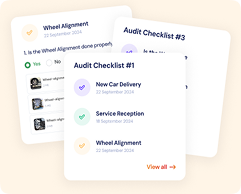
- Digitize and customize OEM-specific checklists (DISHA, G-HQS, etc.)
- Schedule audits and track them across multiple locations
- Generate visual scorecards instantly
- Assign and monitor corrective actions with deadlines
- Access past data to identify trends and prevent recurring issues
Dealership groups that manage multiple OEM brands can standardize processes across their outlets while staying aligned with each manufacturer’s unique requirements. From emissions compliance to service workflow adherence, AutoSmart offers complete visibility and control.
Conclusion
Thus, structured dealership audits are critical to success in India’s auto retail sector. Using digital tools like AutoSmart Audit to manage these programs offers a real advantage in not just saving time, but in driving meaningful improvements in service quality, employee performance, and overall compliance.
Disclaimer: This blog does not include or rely on any confidential content from Toyota, Honda, Maruti Suzuki, or any other OEM. References to programs like DISHA, G-HQS, etc. are made only to illustrate industry-standard practices. AutoSmart Audit is an independent dealer audit management platform and is not a part of any OEMs mentioned above.

Naseef Umar is the Founder & CEO of AutoSmart Technology, a SaaS platform digitizing audits for OEMs, distributors, and dealer networks. With prior experience at Toyota (Abdul Latif Jameel) and a background in IT and Industrial Management, he writes about audits, operational discipline, and building SaaS products for enterprise customers across markets.