
 AutoSmart Guidebooks
What this guidebook covers
Under the Fire Safety Order, the employer or occupier is the responsible person, and breaches are criminal: unlimited fines and up to 2 years in prison. Paint, fuel, tyres and batteries make every dealer a fire risk, and a blocked exit is an offence.
This guidebook covers 6 fire standards with 18 checkpoints across the showroom, workshop, paint shop, stores and EV bays: the fire risk assessment, flammables and paint storage (DSEAR), escape routes, alarms and emergency lighting, extinguishers, training and drills, and EV and battery fire risk.
The 6 fire safety standards
Open a standard to see the law behind it, what is checked, what it can cost and the evidence. Ideal fix times are counted from audit submission.
FIR-01Fire risk assessment7 days
- The law
- Regulatory Reform (Fire Safety) Order 2005 (as amended by the Fire Safety Act 2021 and Building Safety Act 2022) · FSO articles 9 and 11: suitable and sufficient assessment, recorded if 5+ employees, reviewed regularly
- What we check
- A competent person has done a written fire risk assessment for the whole site (showroom, workshop, body shop, stores, EV charging), with actions tracked to completion.
- What it can cost
- No valid assessment: unlimited fine, and the first charge in almost every fire prosecution.
- Evidence
- Assessment + action log
FIR-02Flammables and paint storage (DSEAR)Immediate
- The law
- Regulatory Reform (Fire Safety) Order 2005 (as amended by the Fire Safety Act 2021 and Building Safety Act 2022) · DSEAR 2002 dangerous substances and explosive atmospheres · FSO art.12
- What we check
- Paints, thinners, fuels and aerosols are kept in fire-resisting cabinets or stores, in minimum quantities, away from ignition sources, and fuel draining is done safely.
- What it can cost
- A fire that starts in stored flammables brings unlimited fines, prison risk and possible loss of the building.
- Evidence
- Photos + DSEAR assessment
FIR-03Escape routes clearImmediate
- The law
- Regulatory Reform (Fire Safety) Order 2005 (as amended by the Fire Safety Act 2021 and Building Safety Act 2022) · FSO article 14 emergency routes and exits
- What we check
- Escape routes and fire exits are clear, marked, lit and unlocked while people are in the building. Nothing is stored in corridors or in front of exits.
- What it can cost
- Blocked exits appear in prosecution after prosecution: unlimited fines, and a prohibition notice can close the site.
- Evidence
- Photos of routes
FIR-04Alarms and emergency lighting tested72 hours
- The law
- Regulatory Reform (Fire Safety) Order 2005 (as amended by the Fire Safety Act 2021 and Building Safety Act 2022) · FSO articles 13 and 17 detection, warning and maintenance · BS 5839 / BS 5266
- What we check
- The fire alarm is tested weekly, emergency lights monthly, and both are serviced by a competent engineer, with everything logged.
- What it can cost
- Missing maintenance is an unlimited fine offence, and a fatal fire makes it far worse.
- Evidence
- Log book + certificates
FIR-05Extinguishers, training and drills7 days
- The law
- Regulatory Reform (Fire Safety) Order 2005 (as amended by the Fire Safety Act 2021 and Building Safety Act 2022) · FSO articles 13, 15 and 21 firefighting equipment, procedures and training
- What we check
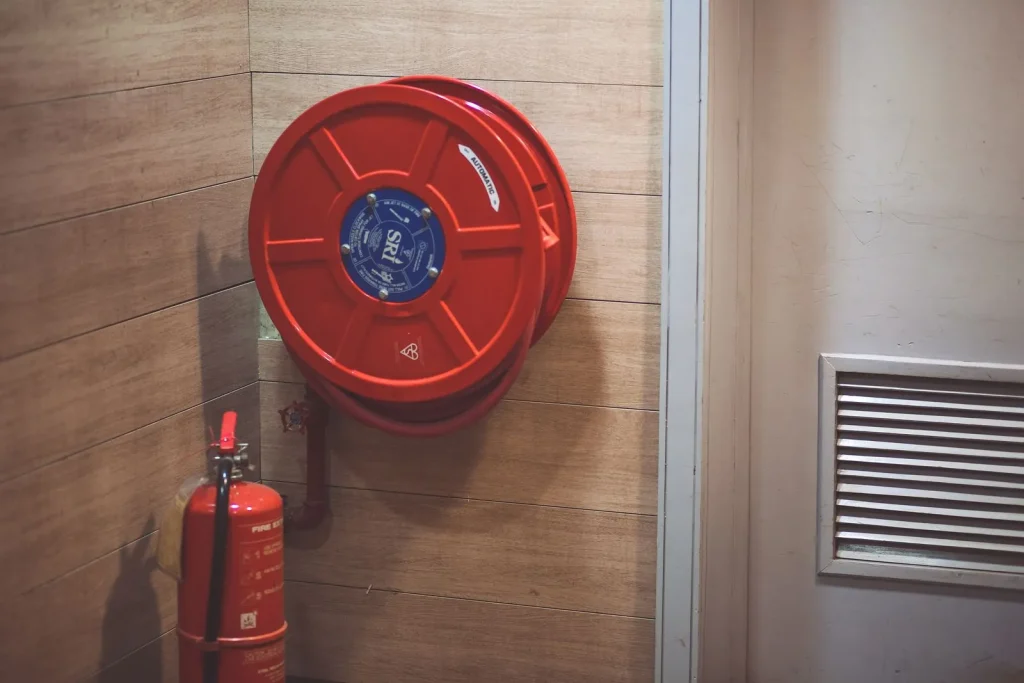
- Extinguishers suitable for each risk (including electrical and flammable liquids) are serviced yearly. Staff are trained, fire marshals are named, and evacuation drills happen at least yearly.
- What it can cost
- Untrained staff and lapsed equipment are standard charges in fire prosecutions: unlimited fines.
- Evidence
- Tags + training + drill log
FIR-06EV and battery fire risk72 hours
- The law
- Regulatory Reform (Fire Safety) Order 2005 (as amended by the Fire Safety Act 2021 and Building Safety Act 2022) · FSO article 9 risk assessment applied to lithium-ion batteries · manufacturer EV guidance
- What we check
- Damaged or high-risk EVs are quarantined outdoors or away from buildings, charging bays are assessed, and staff know the EV fire procedure. Applies when: Sites that sell, service or store electric and hybrid vehicles.
- What it can cost
- An EV fire inside a showroom can destroy the building. The FRA gap behind it is an unlimited fine.
- Evidence
- Photos + procedure
How to run a UK fire safety audit, step by step
- Confirm what applies. Name the responsible person for each site; Scotland and Northern Ireland have their own fire safety laws with similar duties.
- Walk the site, standard by standard. Score each of the 18 checkpoints Pass, Fail or N/A. N/A only where the standard rules it out, with the reason recorded. Walk every escape route, check where thinners and paint are kept, and read the alarm and emergency lighting test logs.
- Capture the evidence. A pass counts only with proof captured at the time of the audit: the fire risk assessment, test logs, training and drill records, and photos of exits and storage.
- Give every fail an owner and a fix time. Record what you saw and who owns the fix. Each standard carries an ideal fix time, from immediate to 7 days, counted from audit submission (see the table above).
- Fix it, then prove it. The site fixes the cause and uploads proof of closure; the auditor checks the proof before closing the finding.
- Re-check at the next audit. Confirm closed findings stay closed, and look for the same fail at your other sites so one gap doesn't repeat across the network.
Who this guidebook is for
- Dealer principals
- Facility managers
- Safety officers
- Auditors
A reference document, not legal advice. Fines and rules change: check the current text with the regulator or your legal adviser before acting.