
If you run warranty operations for an OEM, you already know the basic mechanics: a dealer submits a claim, the OEM pays it, and somewhere in between, a job card is supposed to justify the cost. What most networks don’t have a clean answer for is how often that justification actually gets checked, and by whom.
That gap is what a warranty audit exists to close. Not as a compliance checkbox, but as the mechanism that decides whether the money moving between OEM and dealer network reflects real repairs, real parts, and real labor.
What a Warranty Audit Actually Covers
A warranty audit isn’t a single check: it’s a review of the full chain that leads to a paid claim. That typically includes:
- Job card accuracy: Does the documented complaint, diagnosis, and repair match what was actually done?
- Parts usage: Were the parts billed the ones actually installed, in the quantities claimed?
- Labor time: Does the labor billed align with standard repair times for that operation?
- Technician and PIC accountability: Is there a named technician and supervisor tied to the job, or is it unattributed?
- Documentation completeness: Photos, signed job cards, diagnostic codes: whatever the OEM’s warranty policy requires as evidence.
Miss any one of these and a claim can look legitimate on paper while still being wrong in practice.
Why This Sits Apart From a Regular Service Audit
A general service or facility audit looks at how a dealership operates: cleanliness, process adherence, customer experience. A warranty audit is narrower and higher-stakes: it’s checking whether the OEM’s money was spent correctly. That distinction matters because the two audits get triggered differently, get reviewed by different teams, and carry different consequences. A failed 5S audit gets a corrective action plan. A failed warranty audit can mean a clawback, a dealer investigation, or a pattern flagged across the network.
Where Warranty Audits Tend to Break Down
Most networks aren’t skipping warranty audits entirely: they’re running them inconsistently. A few common failure points:
Sampling instead of coverage. With hundreds of claims a month per dealer, most OEMs audit a small sample and extrapolate. That works until the sampled claims happen to be the clean ones.
No link back to the job card. Claims get reviewed against submitted paperwork, not against the actual job card history at the dealership, so a mismatch between what was billed and what was logged on the floor goes unnoticed.
Findings that don’t travel. A discrepancy caught at one dealership doesn’t automatically get checked for at others, even when it’s a pattern rather than a one-off.
No standing severity model. A missing signature and a fabricated repair get treated with the same urgency, because nothing in the process distinguishes low-risk paperwork gaps from active warranty fraud.
What a Structured Warranty Audit Process Looks Like
At a working level, a warranty audit program needs a few things in place before it can scale past a handful of dealerships:
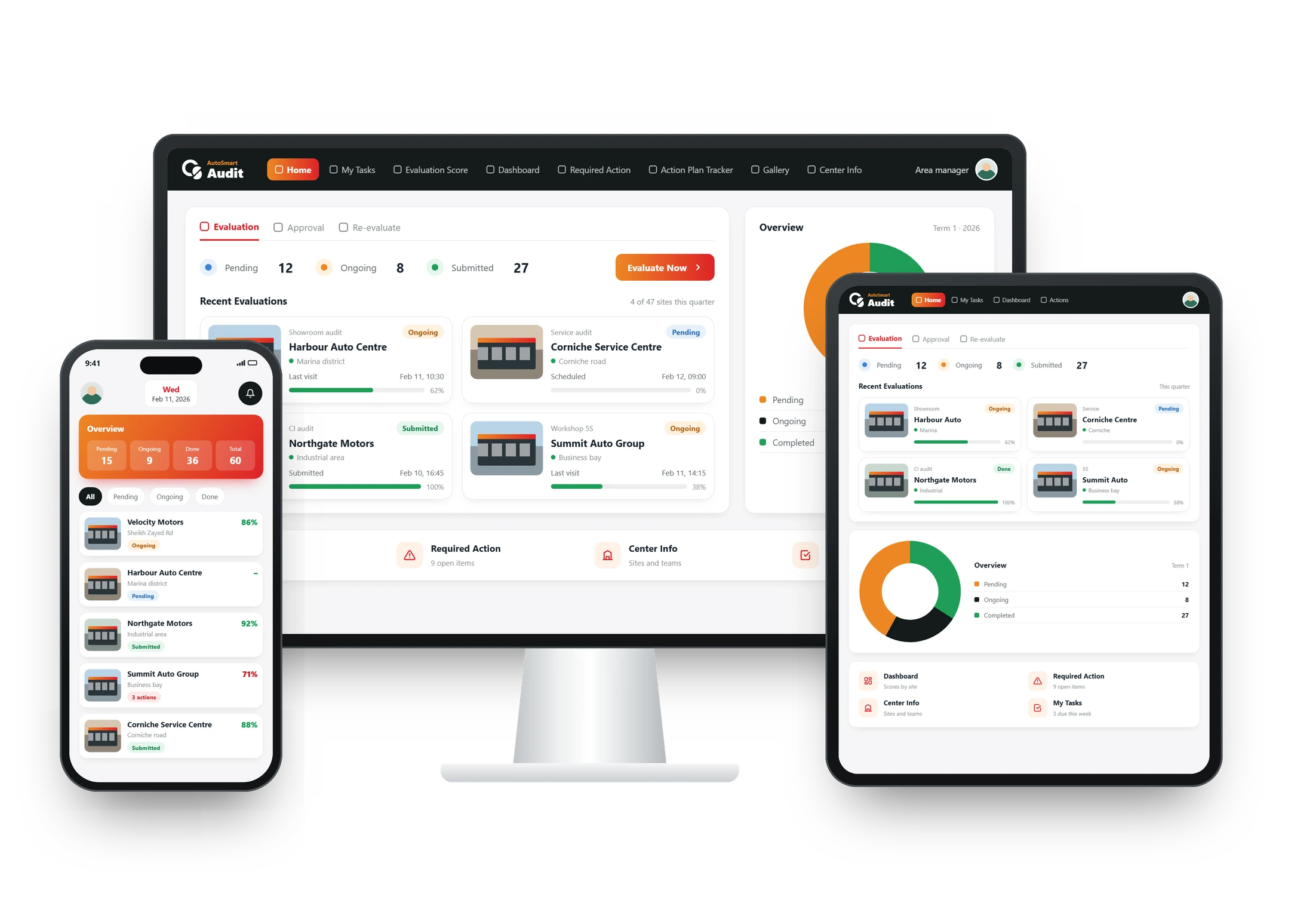
- A standard checklist per claim typeso a brake job and a transmission repair aren’t reviewed against the same generic criteria.
- Job card cross-referencingthe audit pulls from the same job card data the dealership logged, not just the claim submission.
- Severity tagging at the point of reviewcritical, major, minor, applied consistently across auditors.
- Recurrence visibilitya dealership with the same finding across two or three cycles gets flagged differently than one with an isolated issue.
- A closed loop back to the dealerfindings tied to a named PIC and a deadline, not left as an open note in a spreadsheet.
Why This Matters More as Networks Grow
For an OEM with a dozen dealers, warranty audits can still be managed with spreadsheets and a small team cross-checking claims by hand. That approach stops working somewhere between 50 and 100 dealerships. At that scale, claim volume outpaces manual review capacity, and the OEM is left choosing between slower audits or thinner coverage: neither of which actually protects the warranty budget.
The Business Case, Beyond Compliance
Warranty audits aren’t just a risk-management exercise. Warranty spend is one of the largest controllable cost lines an OEM carries, and the gap between “claims paid” and “claims that should have been paid” compounds fast across a large network. A structured audit process, one that checks job cards, tracks recurrence, and flags severity consistently, is what keeps that gap from growing invisibly, quarter after quarter.