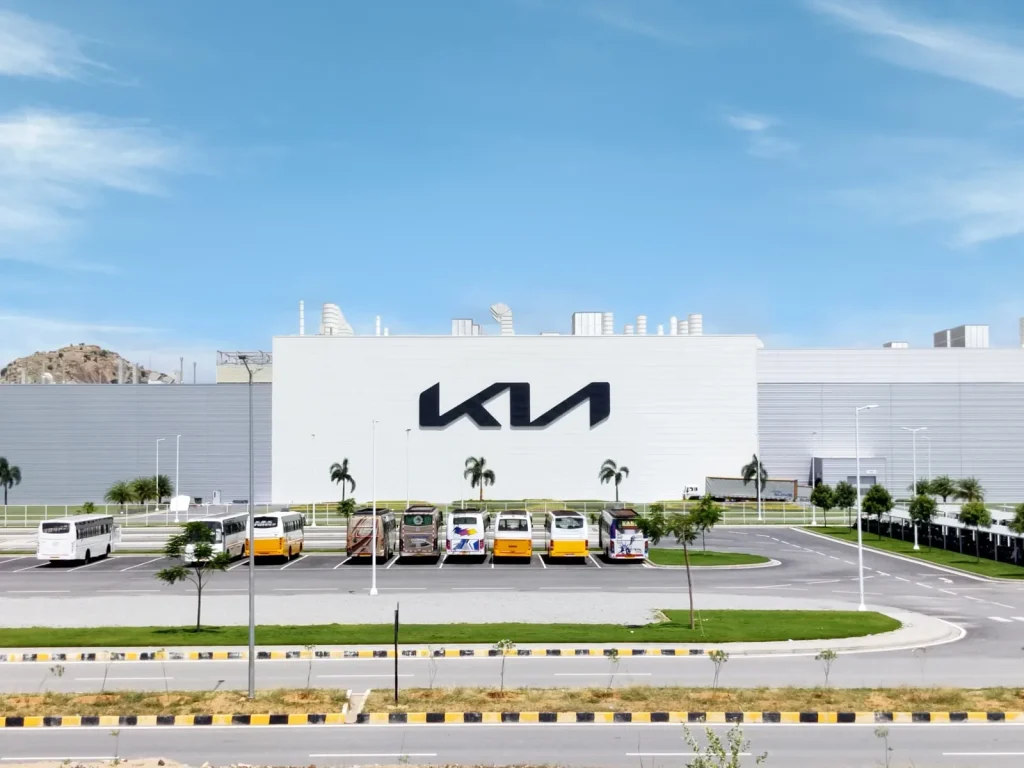











A brand is much more than a logo on a hood in the automobile business. It’s a promise, something that customers can expect each time they walk into a showroom in Tokyo, Berlin, Mumbai, New Delhi, Jeddah, Doha, or New York.
This consistency is dictated by corporate identity standards, rules that dictate how and sometimes even when a brand looks, talks, and acts. But enforcing these standards consistently across geographically distributed dealership networks is operationally complex and that’s where the Corporate Identity (CI) audit is important. So, what exactly is a CI audit, and how can today’s tools like AutoSmart Audits turn this otherwise tedious task into a finely-tuned growth machine?
Defining Corporate Identity (CI)
But, before we start the audit, let’s first clearly specify what it is that we are going to be auditing.
A corporate identity audit is the process of reviewing a dealership’s brand elements, such as logos, messaging, and workplace culture, to ensure they are consistent and aligned with the OEM’s brand image and goals. Corporate identity represents the structured expression of a brand across visual, verbal, and behavioral dimensions. For OEMs, ensuring dealerships consistently reflect this identity is critical to protecting brand equity. It is a structured governance mechanism used by OEMs to monitor and enforce brand compliance across dealer networks.
Based on industry definitions, corporate identity isn’t simply visual, but rather can be broken down into three separate things.
- Corporate Design (Visual): The physical aspects of your brand, logos, typography, color palettes, as well as showroom architecture and staff uniforms.
- Marketing (Verbal): Assumed tone of voice in marketing material, press releases, and customer communications.
- Corporate Behavior (Action): How the company and employees behave, their value-sharing activities, such as the standard of customer services, and social responsibility.
A company can have a strong, cohesive brand when those three pillars come together. But when they break, which is too often because of lack of compliance at the retail end, the brand pays a price.
9 Steps of a Corporate Identity Audit
The preparation for a CI audit can follow similar steps as preparing for a regular OEM audit, but it just focuses on brand image. A CI audit, unlike a standardised OEM audit, is a systematized approach to measuring the gap between how a company would like to be seen in the market and how customers see it. On the basis of common practices in corporate identity literature, we have identified nine critical steps to succeed in a C.I.audit in the automotive context.
Step 1: Selecting an Audit Team
The first task is to form a cross-functional team and gather people. In a manual configuration, that could mean reallocating senior managers from marketing, operations, and sales functions.’ However, this is often resource-heavy. What you’re looking for are people who not only know the OEM brand guidelines but also know them enough to have an opinion, are able to argue in their favor, and can confidently uphold brand standards during dealership evaluations.
Step 2: Assessing the Company’s Identity Elements
The OEM must also have a picture of what compliance looks like before visiting any dealerships. This includes a read-through of the actual brand book. Do the recommendations on signage remain accurate? Have service bay specifications been updated in line with the latest brand guidelines? This is the benchmark against which dealerships’ branding compliance shall be measured.
Step 3: Determining Interview Subjects
A comprehensive audit is not only an audit of the walls, but also of the people. The audit team needs to know who they should be communicating with: Dealership managers, sales consultants, service advisors, or customers, and their feedback helps determine whether OEM brand values are being consistently delivered on the showroom floor.
Step 4: Conducting Interviews
This is a qualitative stage where the audit team conducts interviews. An OEM/Dealership might ask the following questions to assess the people working in the dealership.
- Do my salespeople get the brand?
- Do they feel responsible for embodying the standards of corporate identity? With regular audits, that information is usually lost to handwritten notes and is hard to analyze later.
Step 5: Auditing Identity Factors
This is the main monitoring step. Auditors go to store locations in person to verify dealership brand compliance, like the vehicles, employees, display, etc. Autosmart Audits has created a specific list of checklists for different types of audits.
- Appropriate use of the logo and maintenance of signs.
- Cleanliness and appearance of the customer lounge.
- Adherence to dress codes.
- Consistency in promotional materials.
Step 6: Summarizing Findings
Data collection alone is insufficient without structured synthesis and analysis. The audit team then has to piece together hundreds of data points, photos, scores, and notes from interviews into a clear picture. This is typically the bottleneck in a manual audit, where Excel sheets from various regions need to be merged and cleaned.
Step 7: Identifying Options for Change
Through the results, the team identifies shortcomings. 30% of dealerships are employing old promotional banners, and customer service behavior differs dramatically from one region to another. The aim here is to suggest concrete solutions, be it through training initiatives or infrastructure grants.
Step 8: Presenting Results
The results are also reported to the interested parties, like OEMs and the dealership network. This takes intuitive, visual data visualization to display exactly where the CI audits found strengths and gaps.
Step 9: Strengthening Brand Alignment
The final step is execution. The findings of the audit are leveraged to improve corporate identity standards, training manuals, and assist dealerships in closing the compliance gap.
Challenges for Dealership Audits in Corporate Identity Audits
While the 9-step process sounds robust on paper, executing it across a network of hundreds or thousands of dealerships is a massive challenge.
- Geographical Spread: Sending audit teams to every location is expensive and time-consuming.
- Subjectivity: One auditor might score a showroom a 5/10 while another scores the same condition an 8/10.
- Data Lag: By the time a paper-based report reaches head office, the data is often weeks old, making it impossible to react to dealership branding compliance issues in real-time.
- Perceived Compliance Fatigue Among Dealers: Dealerships often view CI audits as a policing action rather than a support mechanism, largely because the feedback loop is slow and unclear.
How does AutoSmart Audits transform this CI Audit?
This is where AutoSmart Audits come in to address the gap between theoretical corporate identity standards and practical execution. By digitizing the audit lifecycle, we make the 9-step process scalable and relatable for modern dealership networks.
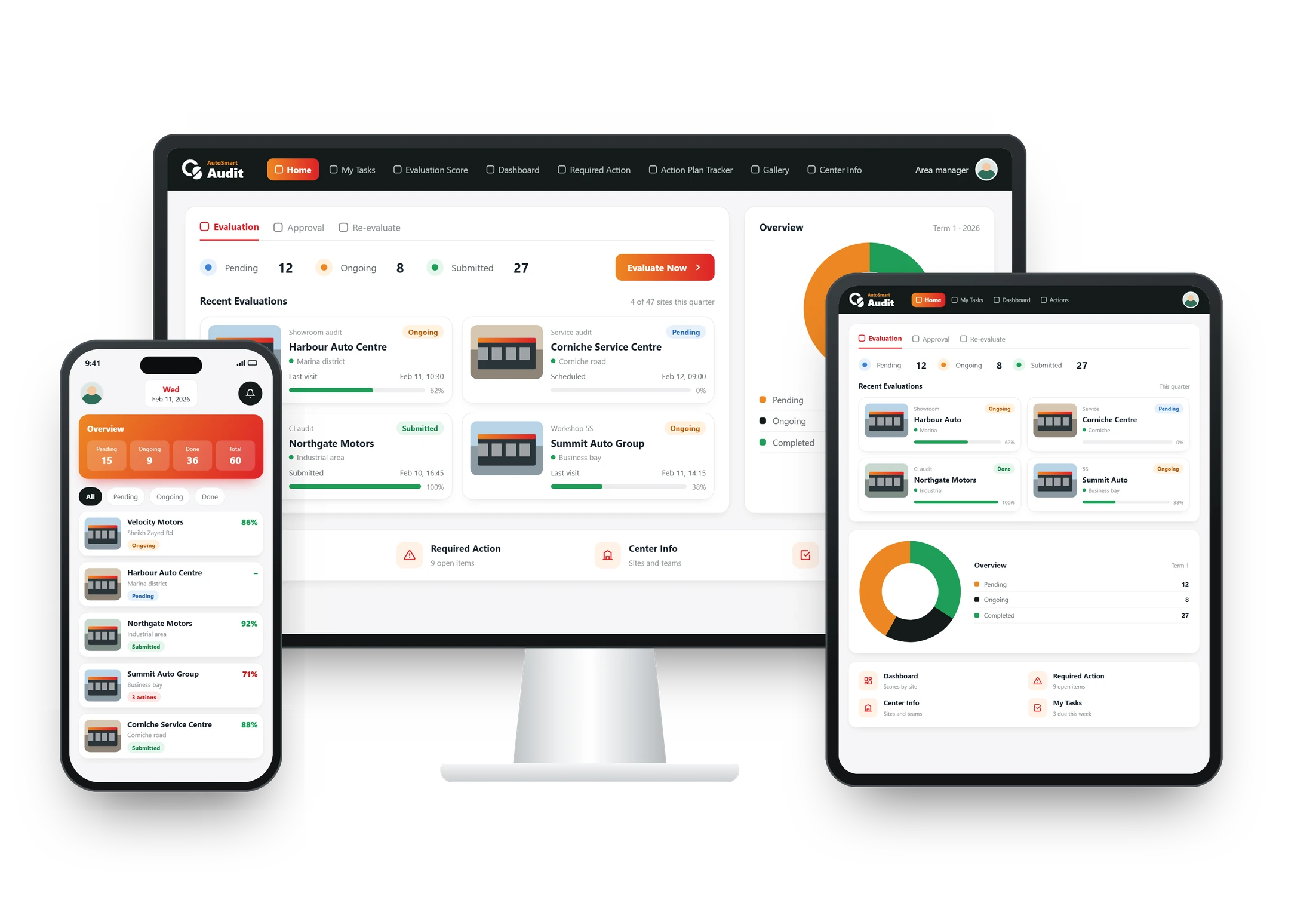
- Digital Standardization: Instead of bulky binders, OEM identity guidelines are pre-loaded into the AutoSmart Audits app. Checklists are standardized, ensuring that every auditor, regardless of location, is evaluating against the exact same criteria. This eliminates subjectivity.
- Evidence-Based Auditing: During the auditing identity phase, AutoSmart Audits allows auditors to capture photos and videos directly within the app. If a dealership’s signage is faded, the auditor snaps a photo, annotates it, and tags it to the specific compliance question. There is no ambiguity; it’s evidence-backed validation.
- Real-Time Data & Summaries: The bottleneck of summarizing findings is eliminated. AutoSmart Audits provides real-time dashboards. As soon as an audit is completed in the field, the data is visible to HQ. Managers can instantly see which regions are failing CI audits and which are excelling, without waiting for manual report compilation.
- Actionable Action Plans: Perhaps the most critical feature is the action plan. In a manual process, a non-compliance note might get lost in an email. With AutoSmart Audits, if a specific corporate identity standard is failed, the system forces the creation of an action plan. It assigns a Person in Charge (PIC) at the dealership, sets a deadline for the fix, and tracks progress. The dealership isn’t just told they failed; they are given a clear, trackable path to compliance.
- Relatability and Buy-In: By using a transparent, mobile-first platform, the dynamic changes. Dealerships can perform self-audits using the same tools, fostering a culture of self-improvement rather than fear. They can see exactly what is required to meet dealership branding compliance, making the relationship between OEM and dealership more collaborative.
Apart from this, we also have a strong presence in OEM, dealership, and quality audits. Our Dealership Audit Management Software minimises workload for both OEMs and dealerships.
Ready to Automate Your Brand Excellence?
A Corporate Identity (CI) Audit is vital for protecting the brand equity that OEMs have spent billions building. However, the traditional methods of conducting these audits are manual, slow, and disconnected, and are no longer viable in a fast-paced market. By leveraging AutoSmart Audits, automotive brands can streamline their CI audits, ensuring strict adherence to OEM identity guidelines while reducing the administrative burden. The result? A stronger brand, a happier dealership network, and a consistent promise kept to the customer.
Preguntas frecuentes
How does the usage of a digital checklist enhance the correctness of a site inspection?
It minimizes subjectivity by enforcing standardized scoring criteria supported by photo-based evidence.
How can a manager measure national progress fastest?
The solution offers a real-time automated platform that refreshes the moment an auditor finishes filing their findings in the field, and a cloud-powered interactive dashboard.
Who has responsibility for addressing deficiencies noted in an inspection at a site?
The system automatically assigns the task to a specific person on the site who has responsibility for fixing it at a particular date and time.

Naseef Umar es el fundador y director ejecutivo de AutoSmart Technology, una plataforma SaaS que digitaliza las auditorías para fabricantes de equipos originales, distribuidores y redes de concesionarios. Con experiencia previa en Toyota (Abdul Latif Jameel) y formación en TI y gestión industrial, escribe sobre auditorías, disciplina operativa y creación de productos SaaS para clientes empresariales de todos los mercados.