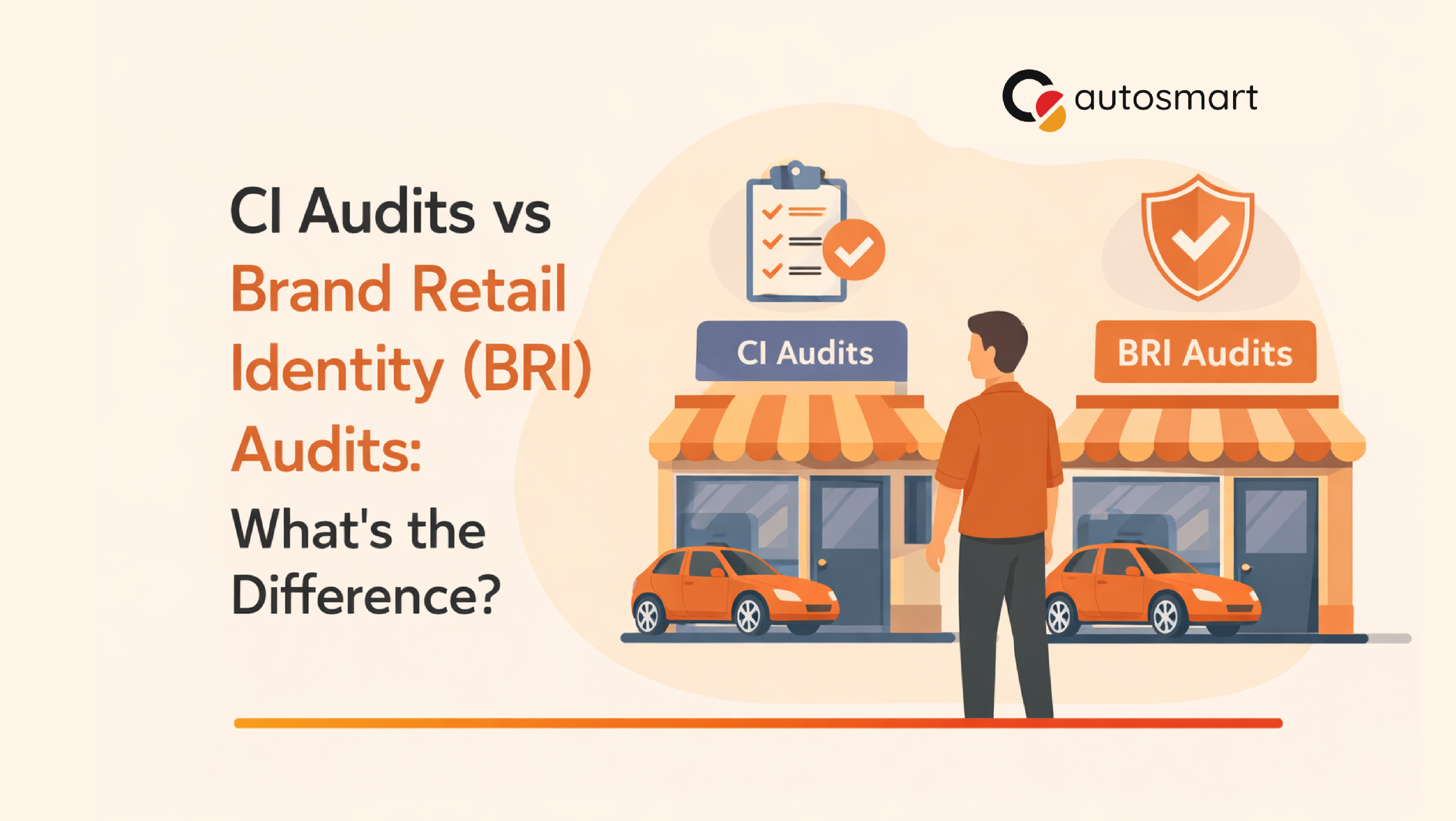
CI vs BRI Audits: Audits of corporate and brand identity play a critical role in determining the brand purpose of an automotive dealer and its alignment with the OEM. These audits are precisely designed and customised to the unique characteristics of each dealer-OEM association.
Even though both audits follow a defined structure for determining a dealer’s market presence, it is important to understand that this is only a minor component of a much more detailed set of standards. These standards define a comprehensive template for operational excellence, from how customers are initially received to how professionals present themselves.
For instance, an Audi dealer must adhere strictly to the manufacturer’s high standards and principles to maintain its global prestige. To achieve perfect alignment across every component of a dealership’s image and personality, dealerships need an automated digital tool like AutoSmart Audit. The key is in recognising the difference between Corporate Identity (CI) and Brand Retail Identity (BRI) in this context.
What is a Corporate Identity (CI) Audit ?
When automotive industry professionals talk about Corporate Identity (CI), they are actually referring to the physical, permanent, and visible fingerprint of the brand. These audits are primarily concerned with the physical and structural aspects that ensure a customer immediately identifies the brand from a distance, whether they are in Dubai, London, or Tokyo.
Is this physical building a true and accurate representation of the manufacturer’s worldwide visual identity?
Key Elements of a CI Audit
To ensure the hardware is up to par and meets the OEM’s expectations, field inspectors will focus their attention on the following high-impact areas for dealerships:
- Exterior Branding: Massive exterior signs, giant pylon signs, and clear directional signs.
- Architectural Integrity: Building architecture and globally mandated colour schemes for both interior and exterior walls.
- Interior Specifications: Flooring and lighting fixture quality and temperature.
- Site Functionality: Specific and unique layout and design of the customer parking area.
Operational Frequency and Financial Impact
Since CI is a physical and structural aspect of the dealership, these audits differ from the day-to-day operational audits.
Audit Frequency: These audits are conducted less frequently than the operational audits (annually) since the hardware is considered permanent.
The Stakes: Failure to comply will result in severe financial penalties or the immediate withholding of large and lucrative OEM bonuses.
The Solution: A dealership should utilise a brand audit checklist to conduct its own audits. This ensures they are prepared well in advance of the OEM auditors arriving unannounced.
Being in compliance with CI is the first step in building trust. If a dealership does not look the part, it is a sure bet that the customers will be affected in a negative way before they walk in the door.
Decoding Brand Retail Identity (BRI) Audits
The CI audit may guarantee the building looks good structurally, while the BRI audit puts the entire focus back on the customer experience within the building. CI may be the hardware of the business, while BRI is the software, the dynamic elements which bring the brand to life every day.
To provide an immersive retail experience which integrates seamlessly with the retail brand guidelines established by the OEM.
Key Elements of a BRI Audit
The BRI audit differs significantly from the CI audit in that it reviews dynamic elements specific to the retail environment:
Dynamic Merchandising
- Vehicle brochure placement and validity.
- Inspection of temporary Point of Sale (POS) items.
- Functionality and contents displayed on digital screen displays.
- Alignment and precise placement of showroom vehicles.
Staff Presentation & Behaviour
- Adherence to uniform standards (pressed, correct style).
- Visibility of branded name badges.
- Manufacturer-specific greeting protocols and soft skills.
The Sensory Experience
Audio: Playing brand-approved background music at correct volume levels.
Olfactory: Using ambient scent diffusers correctly.
Hospitality: Providing premium coffee/refreshments in correctly branded cups.
Why are BRI Audits Critical?
The BRI audit reviews elements which can change at any moment, so they are performed much more frequently than CI audits.
Frequency
These audits occur much more regularly than CI audits, often every month, to guarantee standards are maintained every day.
Customer Impact
The BRI audit is crucial for any dealership aiming for the highest customer satisfaction ratings, as they directly impact the customer’s mood and attitude while at the dealership.
Operational Excellence
Understanding the intricacies involved with Brand Retail Identity (BRI) Audits enables management teams to keep their teams sharp and the retail environment showroom-ready every single day.
CI Audits vs. BRI Audits
| Comparison Factor | Corporate Identity (CI) Audit | Brand Retail Identity (BRI) Audit |
| Primary Ownership | Facilities Manager / Dealer Principal | Sales Manager / Marketing Lead |
| Customer Journey Phase | Pre-visit & Arrival: Driving past or entering the lot. | Engagement & Closing: Interactions inside the showroom. |
| Evidence Required | Architectural blueprints & high-res facility photos. | Live snapshots, staff interviews, & process logs. |
| Corrective Action Type | Structural renovation or contractor-led repairs. | Staff coaching, training, or collateral updates. |
| Data Utility | Long-term network planning and asset management. | Immediate performance benchmarking and KPI tracking. |
| Impact on Revenue | Protects OEM franchise rights and high-value bonuses. | Drives CSI (Customer Satisfaction Index) & conversion rates. |
| Associated Checklist | retail store brand audit checklist | retail brand standards |
The Impact of Compliance on Dealership Profitability
Why do OEMs insist on such rigorous auditing processes, and why should dealership principals care beyond simply avoiding penalties? The answer lies in the direct, undeniable correlation between brand compliance and dealership profitability.
- Building Subconscious Trust: Customers today have incredibly high expectations. When a dealership perfectly aligns with the manufacturer’s global image, it builds immediate trust, translating to higher sales conversion rates and stronger after-sales loyalty.
- Unlocking Financial Incentives: Most OEMs tie significant financial incentives, volume bonuses, and margin holdbacks directly to audit scores. A dealership that consistently aces its CI and BRI audits will unlock maximum financial support, drastically impacting the bottom line.
- Ensuring Operational Precision: Utilising a comprehensive retail store brand audit checklist helps general managers ensure that no detail, no matter how seemingly insignificant, is overlooked during the chaotic daily hustle of dealership operations.
- Mastering the Framework: For those looking to understand the overarching structure of these evaluations, reviewing a complete dealership audit process guide provides invaluable, actionable insights for your management team.
Streamlining the Audit Process with AutoSmart Audit’s Digital Tools
Historically, preparing for these audits involved mountains of paperwork, clunky Excel spreadsheets, and endless, confusing email threads. Today, forward-thinking dealerships are abandoning these error-prone methods to adopt AutoSmart Audit’ high-tech digital audit management software.
How AutoSmart Audit Transforms the Audit Experience?
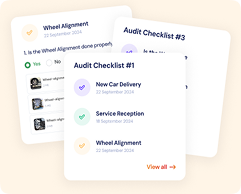
- Effortless Data Capture: By integrating a digital brand audit checklist into their routines, staff can conduct self-audits using mobile devices. They can snap a picture of a showroom floor or a pylon sign, add annotations, and upload them instantly, even while offline.
- Instant Visibility: AutoSmart Audit provides regional managers and OEM representatives with complete, instantaneous visibility into the compliance status of multiple locations simultaneously through live dashboards.
- Automated Accountability: The system automates the creation of action plans for failed items, assigning them to the Person In Charge and tracking resolution progress in real-time.
- Eliminating Logistical Nightmares: AutoSmart Audit removes the hassle of matching photographic evidence to specific checklist items, saving teams up to 80% of their usual auditing time.
Ready to Master Your Next Dealership Audit?
The key to true operational excellence lies in understanding the difference between Corporate Identity (CI) and Brand Retail Identity (BRI). CI establishes the physical platform through architecture and signage, whereas BRI brings your brand to life through customer interaction and staff presentation.
Both are non-negotiable aspects of a profitable OEM-dealer relationship. Failure to address either can result in lost bonuses, eroded trust, and a diminished brand presence in the marketplace. Utilising AutoSmart Audit’ advanced digital systems, along with our carefully crafted brand audit checklists, can ensure that your dealership remains well ahead of compliance curves. Don’t just pass audits; create a premium business that generates sales.
Preguntas frecuentes
Why do OEMs conduct CI and BRI audits for dealerships?
OEMs carry out these audits to ensure global brand consistency and provide a premium experience for customers at all dealerships.
What are the key elements checked during a brand retail identity audit?
These areas include the layout of the showroom, point of sale, staff uniforms, and overall customer experience.
How often should dealerships undergo CI or BRI audits?
CI audits are usually carried out on a yearly basis, whereas BRI audits are usually carried out much more often on a quarterly or monthly basis.
What is the difference between CI audits and BRI audits in retail networks?
CI audits involve permanent architectural features, whereas BRI audits involve operational features such as staff presentation and merchandising.

Naseef Umar es el fundador y director ejecutivo de AutoSmart Technology, una plataforma SaaS dedicada a la digitalización de auditorías para fabricantes de equipos originales (OEM), distribuidores y redes de concesionarios. Con experiencia previa en Toyota (Abdul Latif Jameel) y formación en tecnologías de la información y gestión industrial, escribe sobre auditorías, disciplina operativa y el desarrollo de productos SaaS para clientes empresariales de distintos mercados.