Si te encargas de las operaciones de garantía para un fabricante de equipo original (OEM), ya conoces el funcionamiento básico: un concesionario presenta una reclamación, el OEM la abona y, en algún punto del proceso, se supone que una ficha de trabajo debe justificar el coste. Lo que la mayoría de las redes no saben responder con claridad es con qué frecuencia se comprueba realmente esa justificación y quién lo hace.
Esa brecha es precisamente lo que pretende subsanar una auditoría de garantía. No se trata de un mero trámite de cumplimiento normativo, sino del mecanismo que determina si el dinero que circula entre el fabricante y la red de concesionarios corresponde a reparaciones, recambios y mano de obra reales.
Qué cubre realmente una auditoría de garantía
Una auditoría de garantía no es una simple comprobación, sino un análisis de toda la cadena de procesos que conduce a la liquidación de una reclamación. Por lo general, esto incluye:
- Precisión de la ficha de trabajo: ¿Coinciden la avería, el diagnóstico y la reparación que figuran en la ficha con lo que se hizo realmente?
- Uso de las piezas: ¿Las piezas facturadas fueron las que realmente se instalaron, en las cantidades indicadas?
- Tiempo de mano de obra: ¿El tiempo de mano de obra facturado se ajusta a los tiempos de reparación habituales para esa operación?
- Responsabilidad del técnico y del responsable del proyecto: ¿Hay un técnico y un supervisor concretos asignados al trabajo, o no se ha asignado a nadie?
- Documentación completa: fotografías, fichas de trabajo firmadas, códigos de diagnóstico… todo lo que exija la política de garantía del fabricante original como prueba.
Si se omite cualquiera de estos aspectos, una reclamación puede parecer legítima sobre el papel, aunque en la práctica sea errónea.
Por qué esto difiere de una auditoría de servicio habitual
Una auditoría general de servicios o instalaciones analiza el funcionamiento de un concesionario: la limpieza, el cumplimiento de los procesos y la experiencia del cliente. Una auditoría de garantía tiene un alcance más limitado y un mayor riesgo: comprueba si el dinero del fabricante se ha gastado correctamente. Esa distinción es importante porque ambas auditorías se activan de forma diferente, son revisadas por equipos distintos y conllevan consecuencias diferentes. Una auditoría 5S no superada da lugar a un plan de medidas correctivas. Una auditoría de garantía no superada puede suponer una recuperación de fondos, una investigación del concesionario o la detección de un patrón recurrente en toda la red.
Dónde suelen fallar las auditorías de garantía
La mayoría de las redes no prescinden por completo de las auditorías de garantía, sino que las llevan a cabo de forma irregular. Algunos puntos débiles habituales son:
Muestreo en lugar de cobertura. Con cientos de reclamaciones al mes por concesionario, la mayoría de los fabricantes de equipos originales (OEM) auditan una pequeña muestra y extrapolan los resultados. Esto funciona hasta que resulta que las reclamaciones de la muestra son las que no presentan irregularidades.
No hay ningún enlace a la ficha del trabajo. Las reclamaciones se revisan en función de la documentación presentada, no del historial real de la ficha del trabajo en el concesionario, por lo que cualquier discrepancia entre lo facturado y lo registrado en el taller pasa desapercibida.
Hallazgos que no se transmiten. Una discrepancia detectada en un concesionario no se comprueba automáticamente en los demás, incluso cuando se trata de una tendencia y no de un caso aislado.
No existe un modelo de gravedad establecido. La falta de una firma y una reparación inventada se tratan con la misma urgencia, ya que nada en el proceso distingue las deficiencias administrativas de bajo riesgo de un fraude activo a la garantía.
Cómo es un proceso estructurado de auditoría de garantías
A nivel operativo, un programa de auditoría de garantías debe cumplir una serie de requisitos antes de poder ampliarse más allá de un puñado de concesionarios:
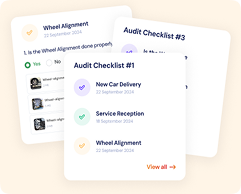
- Una lista de comprobación estándar para cada tipo de siniestro, de modo que una revisión de frenos y una reparación de la caja de cambios no se evalúen según los mismos criterios genéricos.
- Referencias cruzadas de las fichas de trabajo: la auditoría se basa en los datos de las fichas de trabajo que ha registrado el concesionario, y no solo en la solicitud de reclamación.
- Clasificación de la gravedad en el momento de la revisión — crítica, grave, leve — aplicada de forma coherente por todos los auditores.
- Visibilidad de la recurrencia: un concesionario en el que se detecta el mismo problema en dos o tres ciclos se marca de forma diferente a uno en el que se trata de un problema aislado.
- Un proceso cerrado que vuelve al concesionario: las conclusiones se vinculan a un responsable designado y a un plazo, y no se dejan como una nota sin resolver en una hoja de cálculo.
Por qué esto cobra mayor importancia a medida que crecen las redes
En el caso de un fabricante de equipos originales (OEM) con una docena de concesionarios, las auditorías de garantía aún pueden gestionarse con hojas de cálculo y un pequeño equipo que compruebe las reclamaciones manualmente. Ese enfoque deja de funcionar cuando se alcanza un número de concesionarios de entre 50 y 100. A esa escala, el volumen de reclamaciones supera la capacidad de revisión manual, y el OEM se ve obligado a elegir entre auditorías más lentas o una cobertura más reducida, opciones que, en realidad, no protegen el presupuesto destinado a la garantía.
El argumento comercial: más allá del cumplimiento normativo
Las auditorías de garantía no son solo un ejercicio de gestión de riesgos. El gasto en garantías es una de las partidas de costes controlables más importantes que tiene un fabricante de equipo original (OEM), y la diferencia entre las «reclamaciones pagadas» y las «reclamaciones que deberían haberse pagado» se acumula rápidamente en una red de gran tamaño. Un proceso de auditoría estructurado —que compruebe las fichas de trabajo, realice un seguimiento de la recurrencia y señale la gravedad de forma coherente— es lo que evita que esa diferencia siga aumentando de forma imperceptible, trimestre tras trimestre.

Ishaq leads go-to-market at AutoSmart. He spends most of his week in conversations with OEM and distributor teams about how their audit programmes actually run. He writes about network standards, rollout across markets, and building the business case for digital audits.