by Siddharth Sundar | Sep 1, 2026 | Automotive
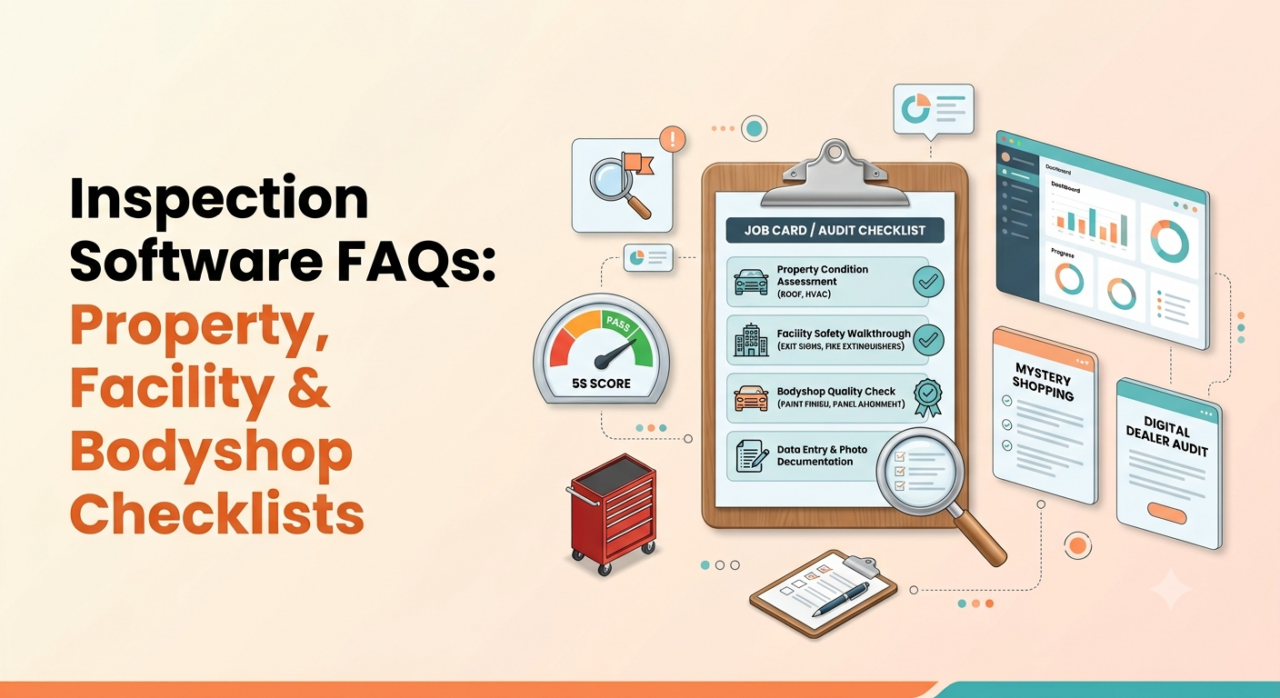
Teams managing properties, facility networks, or bodyshop operations ask the same questions before they pick an inspection tool. They want to know if it works without signal, what a checklist should actually cover, and whether one platform can handle every site type...
by Ejaz Ahammed a k | Sep 1, 2026 | Automotive
Mystery shopping has been part of dealership performance evaluation for decades, but the way it’s managed has changed. What used to mean a clipboard and a paper form now involves dedicated software, structured scoring, and real-time reporting. A mystery shopper...
by Ejaz Ahammed a k | Aug 31, 2026 | Automotive
A dealership carries risk in places that aren’t always obvious until something goes wrong: a hydraulic lift overdue for servicing, a poorly ventilated workshop bay, a process step nobody’s reviewed since the branch opened. Risk assessment software exists...
by Ejaz Ahammed a k | Aug 31, 2026 | Automotive
A workshop injury, a customer complaint, a near-miss on the shop floor: every dealership generates incidents that need to be logged, investigated, and closed out. Where this happens on paper or scattered emails, records go missing, follow-up stalls, and the same issue...
by Siddharth Sundar | Aug 31, 2026 | Automotive
A dealership runs on dozens of repeated processes: vehicle intake, service handovers, warranty claims, customer follow-ups. Where a written standard exists for each of these, staff perform them the same way regardless of who is on shift. Where no standard exists,...
by Ishaq Bhat | Aug 31, 2026 | Automotive
A dealer network with strong products and skilled people still loses money when the processes connecting them don’t hold up. A delayed parts order keeps a vehicle in the workshop, an inconsistent service handover chips away at CSI, and a slow audit leaves...