A dealership carries risk in places that aren’t always obvious until something goes wrong: a hydraulic lift overdue for servicing, a poorly ventilated workshop bay, a process step nobody’s reviewed since the branch opened. Risk assessment software exists to surface these before they become an incident, a compliance failure, or an insurance dispute.
This guide covers what risk assessment software for automotive industry networks actually does, what to look for when choosing one, and how it fits alongside the audits already running at most dealerships.
What Is Risk Assessment Software?
Risk assessment software is a digital tool for identifying, scoring, and tracking risks, workshop hazards, compliance gaps, equipment condition, or process weaknesses, rather than relying on a manager’s memory or an annual paper review. Each risk is logged with a severity rating, an owner, and a review date, so nothing sits unaddressed.
Unlike a one-off audit, it’s built to be revisited. Risks are reassessed on a schedule, new ones logged as identified, and historical data shows whether a given risk is improving or worsening over time. Over months, this builds a documented trail of how risk has been managed across the network, which matters both for internal governance and when an OEM or insurer asks for evidence.
Risk Assessment Software for the Automotive Industry
Automotive dealer networks carry a specific mix of risk that general-purpose safety tools aren’t built for: hydraulic lifts, chemical storage, high-value inventory, and workshop bays running at pace. A generic office-safety platform doesn’t account for the realities of a service bay or bodyshop floor, and forcing one to fit usually means important categories get missed or scored inaccurately.
This is where a platform already covering dealer facility audits has an advantage, since the same zones being risk-assessed are already being inspected for compliance. It also means the baseline data from past audits feeds directly into risk scoring, rather than starting from a blank slate every time a new assessment is set up.
Risk Assessment vs Standard Safety Audit: What’s the Difference?
A standard safety audit checks current conditions against a fixed standard at a point in time: is the PPE in place, is the workshop clean, are the fire exits clear. A risk assessment goes further, asking what could go wrong, how likely it is, and how severe the consequence would be, then prioritising accordingly.
In practice, the two work together rather than replacing each other. An audit tells a dealership what its current state looks like. A risk assessment tells it where to focus first, since not every gap carries the same level of exposure. A missing fire extinguisher and an unlabelled chemical drum both fail an audit, but the risk assessment is what flags which one needs attention today versus next week.
Dealership Risk Management Tools: What They Typically Cover
Dealership risk management tools generally group risk into recurring categories:
- Workshop and facility risk – equipment condition, ventilation, chemical storage, and physical hazards.
- Process risk – gaps in SOPs and procedures that depend on one person’s memory rather than a documented standard, the same gap covered in AutoSmart’s SOP checklist for automobile dealers.
- Compliance risk – exposure to fines or manufacturer chargebacks from outdated certifications.
- Reputational risk – customer-facing issues that affect brand standing if left unmanaged.
Most dealer networks carry a combination of all four, which is why risk assessment works best when it covers the full scope rather than one category at a time.
Health and Safety Risk Assessment Software
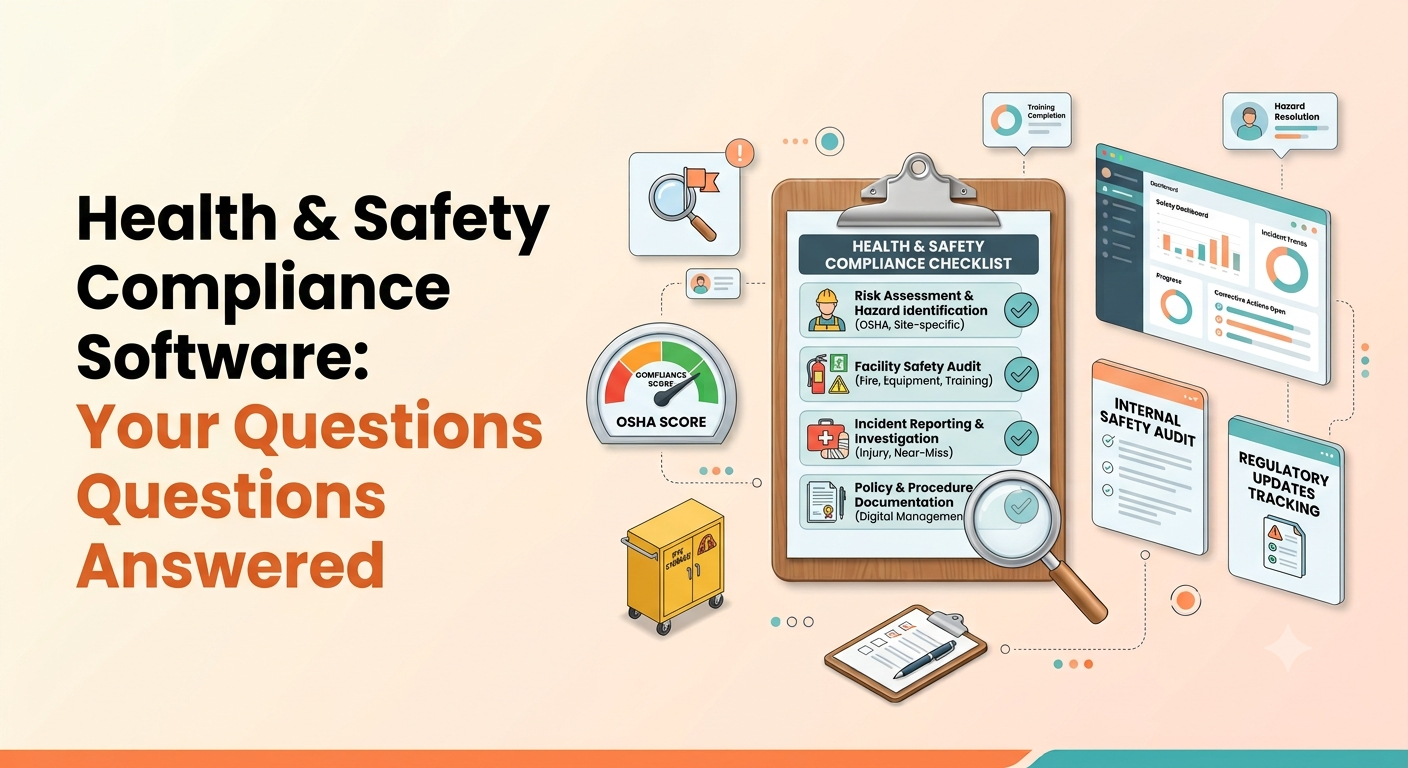
Health and safety carries the highest immediate stakes, since it directly affects staff and customer welfare rather than just operational efficiency. Health and safety risk assessment software typically tracks PPE compliance, servicing schedules, chemical handling, and workshop conditions, feeding into the same health and safety checklist processes already used for routine audits.
Where this becomes particularly valuable is in spotting patterns that a single-site audit would miss. A PPE gap at one branch is a local fix; the same gap showing up at five branches suggests a training or procurement issue at the network level, and that’s the kind of insight that only surfaces when health and safety risk data is tracked centrally.
Risk Assessment App Features to Look For
A few risk assessment app features separate a genuinely useful tool from a basic digital form:
- Severity and likelihood scoring, so risks are prioritised rather than treated as equally urgent.
- Owner assignment and review dates, so each risk has accountability and a fixed revisit point.
- Photo and evidence capture, attached directly to the risk entry.
- Offline functionality, since many workshop and remote sites lack reliable connectivity.
- Trend reporting across locations, so a pattern showing up at multiple branches is visible to network leadership.
How to Choose Risk Assessment Software for a Dealer Network
A few practical questions guide how to choose risk assessment software for a dealer network, and most come down to whether it fits into the compliance tracking a dealership is already running rather than sitting apart from it:
- Does it work offline without losing data on reconnection?
- Can risks be tracked from identification through resolution, with a clear owner and deadline?
- Does it integrate with existing audit data, or run as a separate system?
- Can risk data be compared across branches to spot patterns?
- Does reporting serve both branch managers and network leadership?
How AutoSmart Supports Risk Assessments Across Dealer and Bodyshop Networks
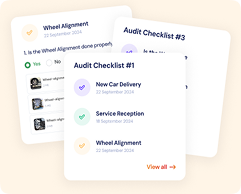
AutoSmart’s audit platform includes dedicated risk management audits alongside its facility, SOP, and compliance modules, so risk data sits within the same system already tracking dealership operations rather than as a standalone tool. Risks identified during an audit are scored, assigned to a specific owner, and tracked through to resolution with the same corrective action workflow used across all other audit types.
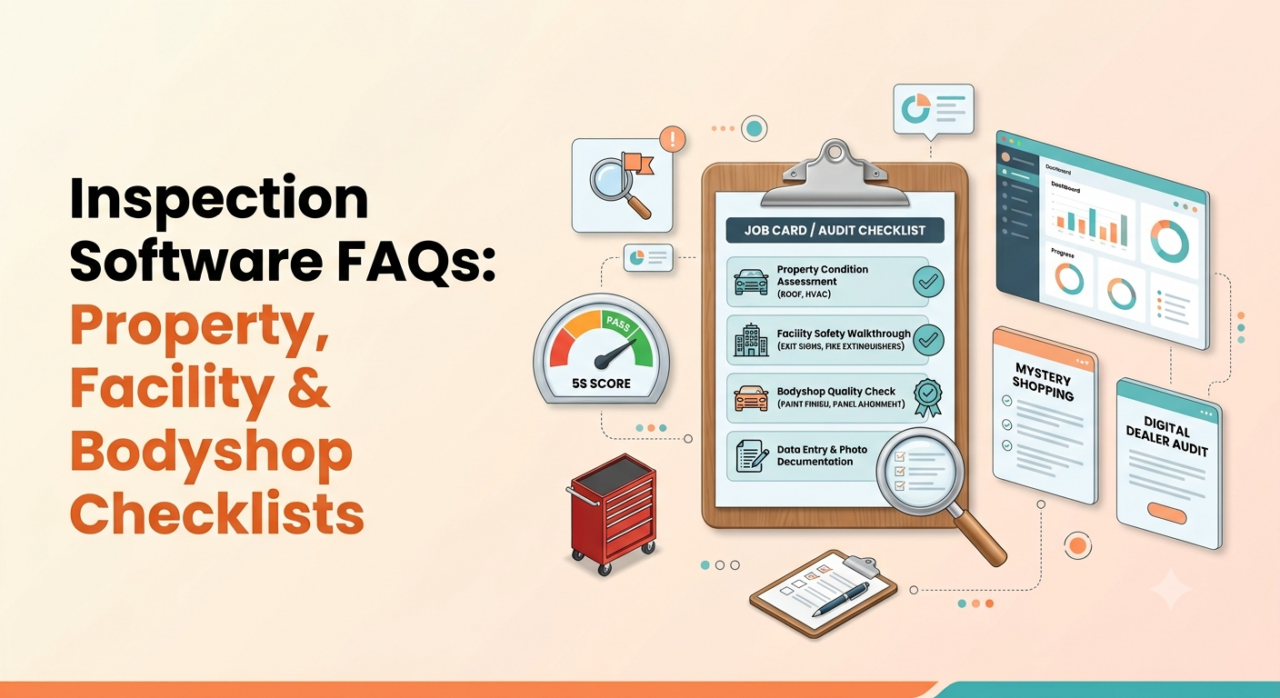
This extends to bodyshop networks as well, where risk around repair quality, insurer compliance, and equipment condition carries its own distinct profile. Network leadership gets a consolidated view across every branch and bodyshop, so recurring risk patterns are visible at the portfolio level rather than buried in individual site reports.
Turning Risk Data Into Action
A risk logged but unassigned, with no review date and no owner, is functionally no different from one never recorded at all. The value of risk assessment software comes from what happens after the risk is identified: whether it gets scored accurately, assigned to someone accountable, reviewed on schedule, and closed out with evidence that the fix actually held.
Dealer networks that build this into their existing audit and compliance workflow, rather than running risk assessment as a separate exercise, tend to catch issues earlier and resolve them faster. For networks ready to bring risk assessment into that same platform, get in touch with AutoSmart to see how it applies to a specific setup.

Ejaz leads engineering at AutoSmart. He built the platform around a constraint most audit software ignores: the auditor is standing in a workshop with no signal. He writes about offline-first architecture, audit data structures, and scoring systems.