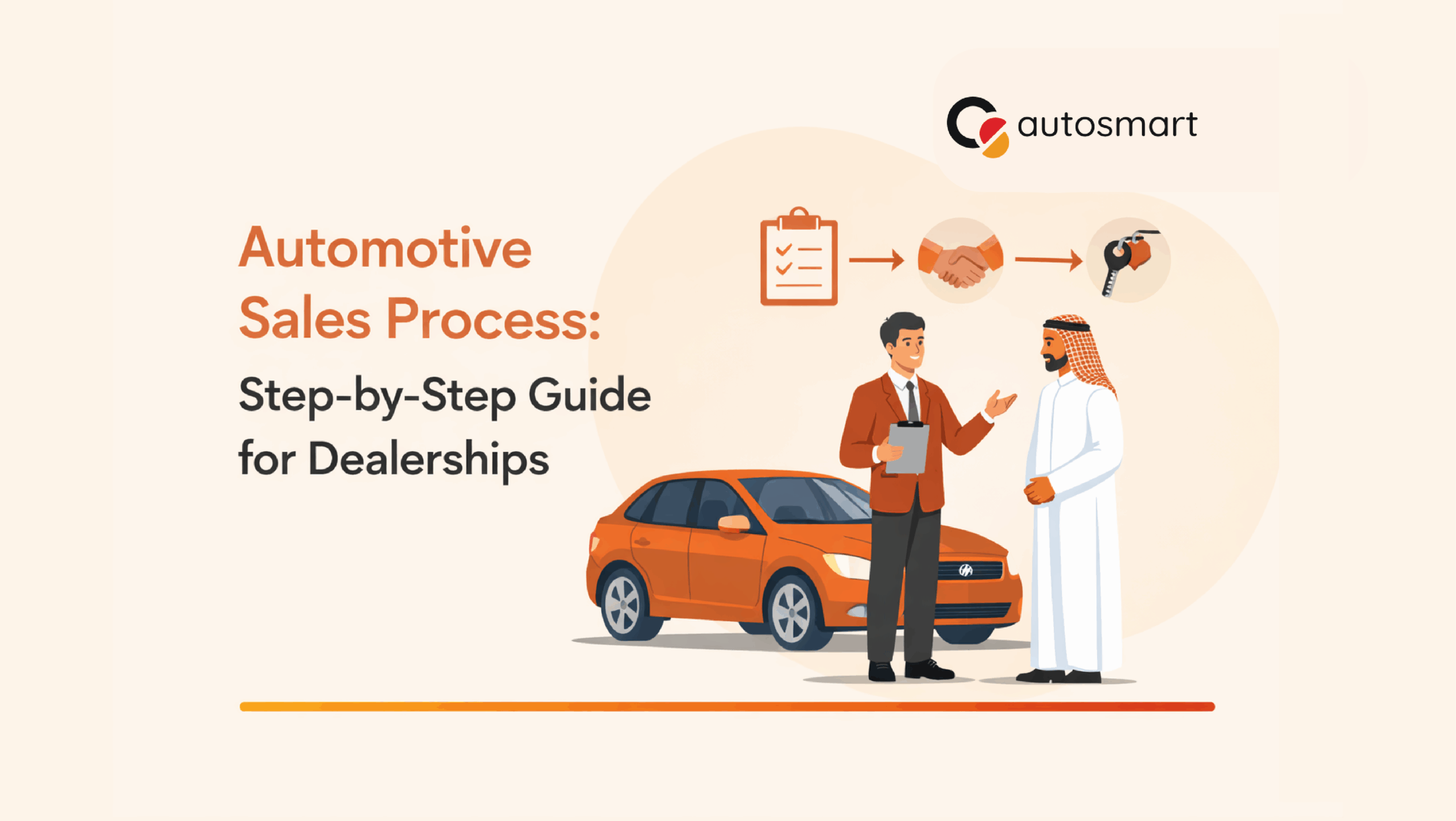
So, if you are any dealership that wants to increase sales and generate customer loyalty, then it is not optional to have a sales process; it is the key to success. Without an automotive sales process in place, you are losing sales at every single step, starting from the first greeting to the last handshake. This blog will walk you through the key steps that every dealership has to follow to generate customers who are loyal to the company, and also explain to you how AutoSmart Audit can assist you in this regard.
Automotive Sales Process Steps:
- Lead generation and prospecting in the Automotive Sales Process
- Customer greeting and needs analysis
- Vehicle presentation and test drive
- Handling objections and negotiation
- Closing the deal in the Automotive Sales Process
- Vehicle delivery and follow-up
Step 1: Lead Generation and Prospecting in the Automotive Sales Process
Every sale starts before a customer walks through the door. Today’s car dealerships utilise a variety of lead generation tools, from digital ads to walk-ins and phone calls. However, the real challenge is qualifying those leads to ensure that the sales team is spending time with customers who want to buy.
A successful sales process for a car dealership involves several steps. Firstly, understanding where leads come from and how they convert is critical. This is where dealerships that participate in structured OEM programs have a competitive advantage over others. This is because they operate within a set of guidelines. AutoSmart Audit helps an OEM provide its dealer excellence program to ensure dealerships align their operations with their OEM partner from the very start.
Step 2: Customer Greeting and Needs Analysis
The greeting sets the tone for whether a customer buys from a dealer or walks out of their store. It is therefore critical to ensure that the greeting is both warm and welcoming. However, this is where the real process of selling starts. It is critical to note that good salespeople listen a lot and talk very little. This means asking the customer about their lifestyle, budget, and what features they need in their next vehicle before they start recommending cars.
This is where a well-trained and audited team makes a huge difference. This is where a team staff follows a defined process for greeting and discovery to ensure conversion rates improve significantly. The automotive sales process is not about convincing someone to buy a car; rather, it is about understanding them. However, understanding them is only possible if they are well-trained and audited regularly.
Step 3: Vehicle Presentation and the Test Drive
Once a salesperson understands what a customer needs, the presentation of the car is no longer generic; rather, it’s tailored to the customer’s needs, like emphasising the car’s most important features to the customer or linking each feature to a real-life benefit that the customer mentioned during the assessment.
The test drive is the emotional high point in any car sale. Research consistently shows that car customers who take a test drive are much more likely to buy a car than those who do not. That is why the car showroom environment, the car’s readiness for a test drive, and the actual test drive experience are so crucial.
Dealerships that invest in facility readiness have better customer satisfaction scores and higher success rates with car sales. A proper new facility activation audit with AutoSmart Audit ensures that new or revamped car showrooms meet every standard before going live so that the customer’s car-buying experience is never compromised.
Step 4: Handling Objections and Price Negotiation
Handling objections is a normal part of the car-buying process for customers; it’s not a sign that the sale is going wrong. A car sales process requires the sales teams to be audited on how they handle customer objections because one wrong move in this step may undo everything that was done correctly before that.
Common customer objections during the car-buying process are,
- The Price Objection: Often a sign that value hasn’t been fully established in the customer’s mind yet.
- The Trade-In Gap: Requires a transparent explanation of market data and reconditioning costs to build trust.
- The Finance Options Barrier: Indicates a need for more clarity regarding monthly budgets, interest rates, or the total cost of ownership, or
- The Time to Think Delay: Usually indicates a lingering unanswered question or a lack of perceived urgency in the solution provided.
Understanding the car sales process steps at this stage enables dealerships to empower their sales staff with the information they need to handle customer objections.
Step 5: Closing the Deal in the Automotive Sales Process
Closing is not just a step; rather, it is a natural outcome of all the steps taken previously in a professional manner. If the customer has been dealt with professionally throughout the process up to this step, then closing is a natural outcome rather than a hard sell.
Transparency is a key element at this step in the automotive sales workflow. If the customer has been given transparent information throughout the process up to this step, then he or she is more likely to close the sale, less likely to back out, and much more likely to refer the dealership to a friend.
This is also the step where F&I products, accessories, and services may also be sold to the customer.
AutoSmart Audit’s dealer audit management software provides a real-time overview for dealership managers to understand how their sales consultants are performing during the closing step.
Step 6: Vehicle Delivery and Post-Sale Follow-Up
Vehicle delivery is arguably the most emotionally charged step in the automotive sales workflow for the customer. The delivery process should include a walkthrough of the vehicle, an introduction to the service team, and an explanation of the warranty and maintenance schedule.
If done well, then a one-time customer turns into a regular customer.
A well-designed automotive sales workflow does not end with the sale; rather, it extends to follow-up with the customer. A call within 48 to 72 hours after delivery to check on customer satisfaction is a great way to create a sense of genuine customer care that most people have never experienced.
For dealership organisations that need to ensure that all their outlets are always ready for any customer service or sales scenario, the dealer outlet readiness evaluation developed by AutoSmart Audit provides a benchmark for each outlet against set service and sales standards before and after customer interactions.
How AutoSmart Audit Strengthens Every Step?
The good news is that understanding what needs to be done in a retail store is quite easy. The difficult part is actually delivering all of this across all shifts, across all locations, and this is where most dealerships struggle. This is where AutoSmart Audit comes in, providing the digital platform for you to turn your sales manual into a live, breathing culture of excellence, using the following pointers:
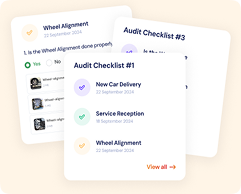
- Digitised Compliance: Stop using paper-based compliance tools and monitor the automotive sales process using a mobile-first platform, even when you are offline.
- Visual Accountability: Auditors can take live photos and markups during mystery shopping or auditing of facilities, ensuring indisputable visual evidence.
- Real-Time Dashboards: Managers can now have a live view of who is or is not following the automotive sales workflow.
- Automated Action Plans: If a standard is not being followed, such as a dirty demo vehicle or a missed follow-up call, an action plan is automatically generated for the manager.
- OEM Alignment: Ensure you are always audit-ready for manufacturer inspections, keeping a constant live pulse on your automotive sales standards.
- Proactive Risk Mitigation: Spot areas of failure, such as missing test drive waivers or incomplete privacy statements, before they turn into costly liabilities or manufacturer penalties, ensuring your new facility activation audit is green across the board.
Ready to Transform Your Dealership’s Sales Performance? Start with AutoSmart Audit
A proven automotive sales process is only as good as your ability to monitor and execute it at the dealership level. That’s where AutoSmart Audit comes in, providing you with everything you need to do just that. Are you looking for a better way to eliminate inconsistencies, improve customer satisfaction, and take your dealership’s performance to new heights? Sign up for a free demo today and experience the power of structured auditing.
FAQ
What are the main steps in the automotive dealership sales process?
The key steps include lead generation, customer greeting and needs assessment, vehicle presentation and test drive, objection handling, deal closing, and post-sale delivery with follow-up.
How can dealerships improve their automotive sales workflow?
Dealerships can improve by standardising each sales stage, consistently training staff, and using audit tools to monitor compliance and identify gaps in real time.
What role does customer experience play in the car sales process?
Customer experience is the deciding factor at every stage, from the first greeting to delivery day, directly influencing purchase decisions, referrals, and repeat business.
How can digital tools help streamline dealership sales operations?
Digital audit and compliance tools like AutoSmart Audit replace manual checklists with real-time monitoring, automated action plans, and live dashboards that drive consistent performance across all dealership locations.

Ishaq leads go-to-market at AutoSmart. He spends most of his week in conversations with OEM and distributor teams about how their audit programmes actually run. He writes about network standards, rollout across markets, and building the business case for digital audits.