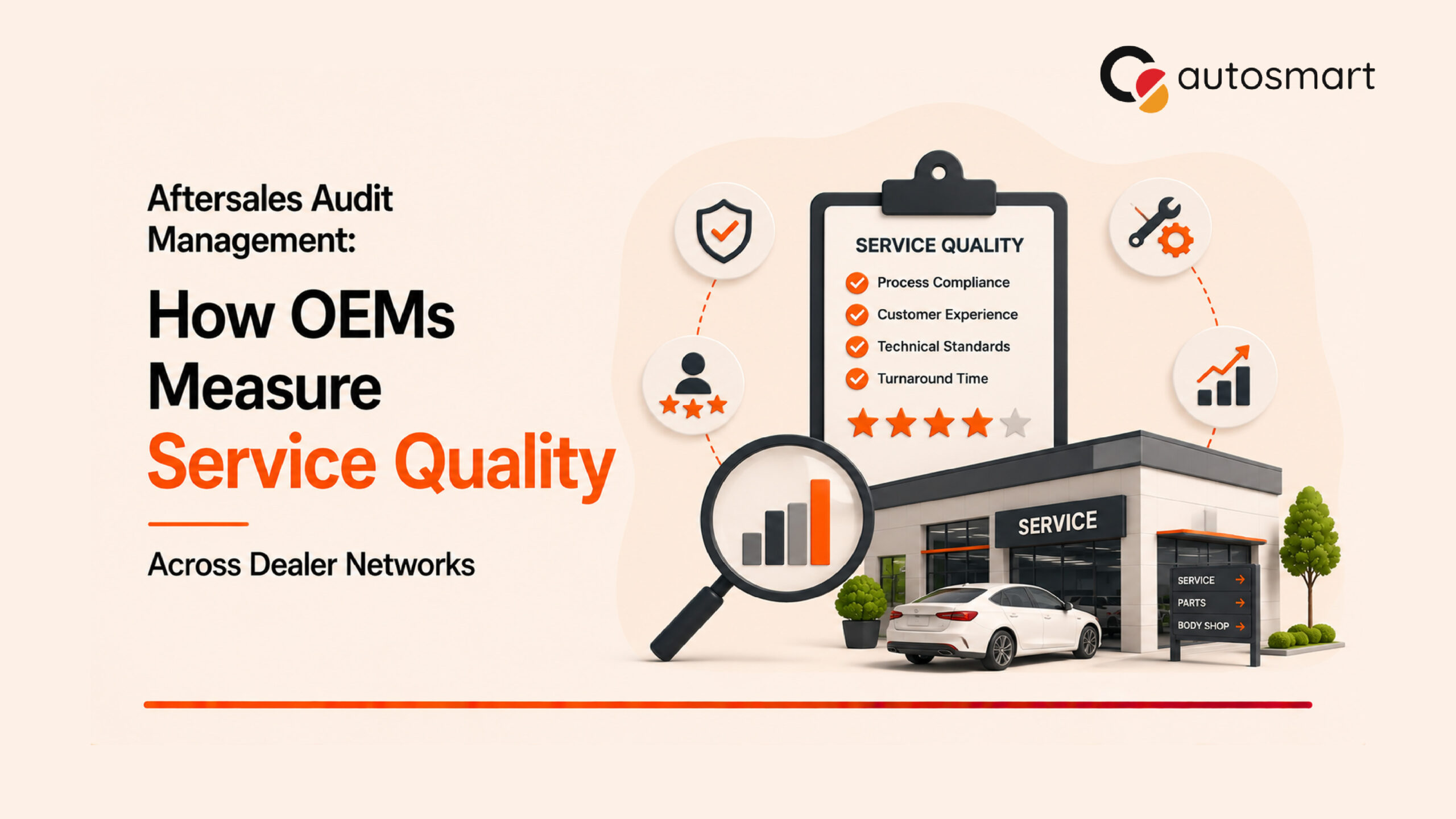
Aftersales performance is one of the most visible measures of how well a dealer network operates. Customers notice when standards are inconsistent. One centre delivers a smooth, professional experience. Another keeps them waiting, misses follow-up calls, and returns vehicles with unresolved issues.
For OEMs, that inconsistency is a brand risk. Aftersales audit management is the process that helps address it. It gives OEMs a clear, structured way to measure service quality, identify gaps, and hold every centre in the network to the same standard.
This guide covers what aftersales audit management involves, how a structured OEM aftersales audit works in practice, and what a strong service quality audit dealership programme looks like across a large dealer network.
Understanding Aftersales Audit Management
Aftersales audit management is the process of reviewing how well dealer centres deliver aftersales services. This includes service reception, workshop operations, warranty handling, customer communication, and follow-up activity.
It is not a one-time check. It is an ongoing programme that helps OEMs track performance and drive consistent improvement across every centre.
A structured OEM aftersales audit does more than tick boxes. It tells you whether your standards are being applied in practice, not just on paper.
Aftersales Audit Management and Dealer Network Performance
Poor aftersales performance has a direct impact on two things customer retention and brand reputation. This is what happens when aftersales performance is left unchecked:
- A customer who has a bad service experience is unlikely to return for their next vehicle.
- For OEMs managing large dealer networks, the challenge is keeping standards consistent across every centre.
- Standards may be clear at the top but how they are applied at centre level often varies.
- Without a regular service quality audit dealership programme, these gaps go undetected until they appear in complaints or satisfaction scores.
Aftersales audit management gives OEMs the visibility to act before problems escalate.
What Gets Evaluated During an OEM Aftersales Audit
Service Reception and Customer Experience
Covers how customers are welcomed, how their needs are understood, and how the visit is managed from start to finish. Getting reception right sets the tone for the rest of the visit.
Workshop Standards and Technician Processes
Reviews how work is planned and completed. Checks whether technicians follow standard procedures and whether quality checks are done before handover.
Warranty and Compliance Processes
Checks whether warranty claims are processed correctly and whether documentation meets OEM requirements.
Customer Communication and Follow-Up
Covers how centres keep customers informed during and after the service visit, and whether follow-up activity is completed consistently.
OEM Methods for Measuring Dealer Service Performance
Measuring service quality across a large dealer network is not simple. Every centre operates differently and faces different pressures. A structured aftersales audit management programme makes it manageable.
Step 1 : Set clear standards
OEMs define what good looks like across each area of aftersales performance. These standards become the basis for every service quality audit dealership visit.
Step 2 : Conduct consistent audits
Audit teams visit centres using the same structured framework. This keeps results comparable across the network.
Step 3 : Record findings in one place
All audit findings, evidence, and scores go into a central platform. OEMs get a single view of performance across every centre.
Step 4 : Assign corrective actions
Where gaps are found, corrective actions are assigned with clear deadlines. Centres must respond with evidence of completion.
Step 5 : Track improvement over time
OEM aftersales audit results are tracked across cycles. This shows whether standards are improving and whether corrective actions are working.
Step 6 : Identify network-wide patterns
When the same issue appears across multiple centres, it signals a bigger problem. The programme flags these patterns so OEMs can respond at a network level.
OEM Aftersales Audit and Aftersales Audit Management in One Platform
AutoSmart Audit is built for OEMs and dealer groups managing complex, multi-site audit programmes.
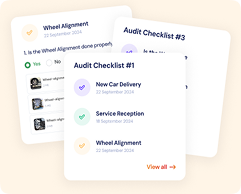
The platform brings aftersales audit management into one place. Audit findings, corrective actions, evidence, and performance trends are all visible in a single dashboard. OEM audit teams and senior leaders get the clarity they need to make faster decisions.
For service quality audit dealership programmes, AutoSmart Audit supports consistent evidence capture, structured corrective action, and real-time visibility across every centre.
OEMs using the platform report clearer oversight, faster resolution of findings, and stronger consistency across their networks.
Structured Audits Are the Foundation of Strong Aftersales Performance
Aftersales audit management only works when it is consistent, structured, and visible. A programme built on spreadsheets and manual follow-up will always produce patchy results.
OEMs that invest in a proper OEM aftersales audit process gain something valuable. They get a clear, reliable view of how their standards are applied across every centre, every cycle. That visibility is what turns audit activity into real service quality improvement.
We are happy to show you how AutoSmart Audit works in practice.

Naseef Umar es el fundador y director ejecutivo de AutoSmart Technology, una plataforma SaaS dedicada a la digitalización de auditorías para fabricantes de equipos originales (OEM), distribuidores y redes de concesionarios. Con experiencia previa en Toyota (Abdul Latif Jameel) y formación en tecnologías de la información y gestión industrial, escribe sobre auditorías, disciplina operativa y el desarrollo de productos SaaS para clientes empresariales de distintos mercados.