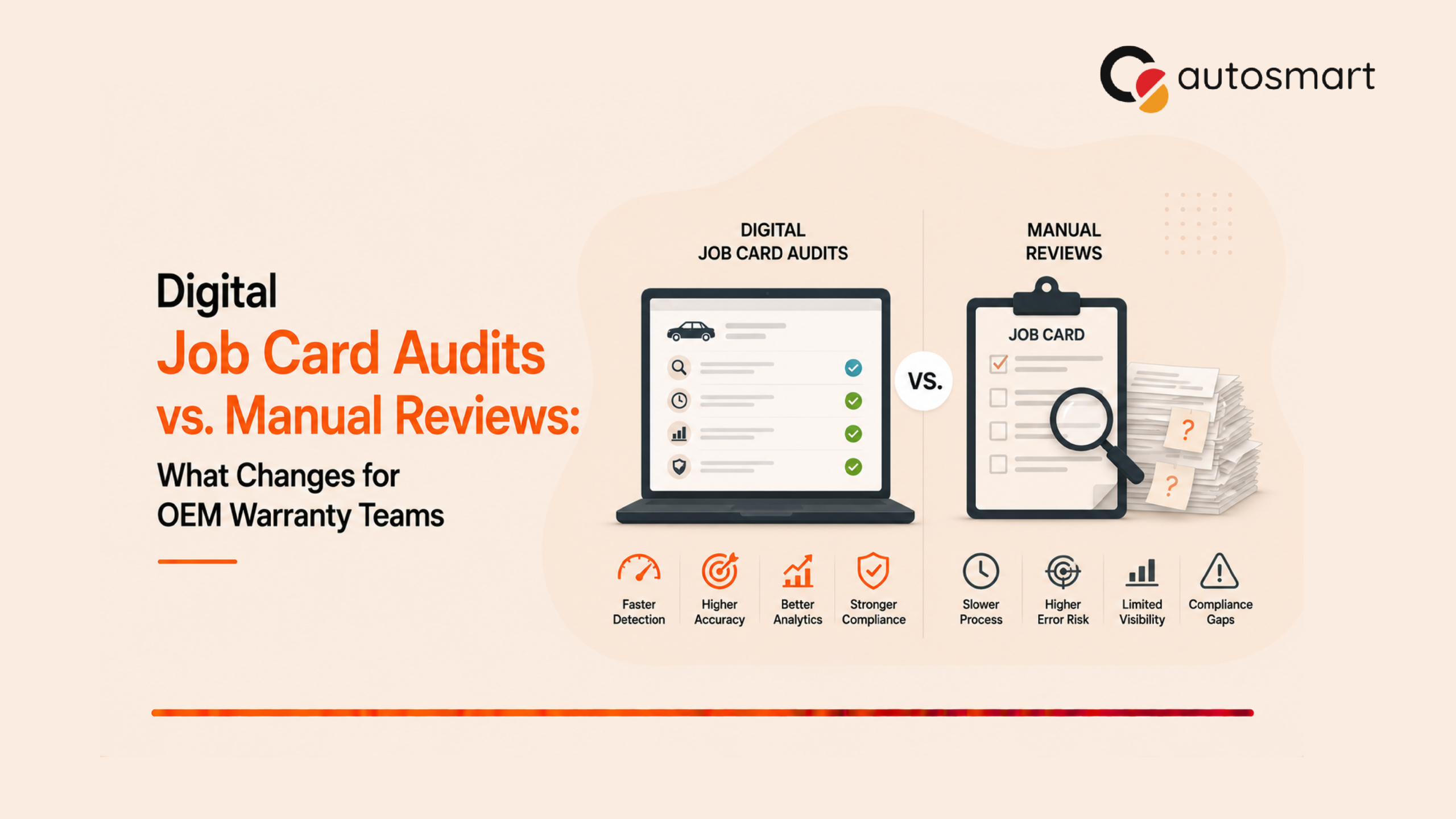
Most OEM warranty teams didn’t choose manual job card review as a strategy they inherited it. Paper job cards, disconnected dealer systems, and claims processes that predate any real digital infrastructure all combined to make manual review the only option for a long time. That’s changed. The question now isn’t whether digital job card audits are possible, but what actually changes for a warranty team once they move from manual to digital because the shift is bigger than just “faster.”
The Baseline: What Manual Review Actually Looks Like Today
In most manual setups, a warranty team reviews claims as they come in, occasionally requests supporting job card documentation from the dealership, and works through a sample rather than the full volume. Findings live in whatever system the team uses to track them — often a spreadsheet, sometimes an email thread, rarely something that carries history forward automatically. Nothing about this is careless. It’s just the ceiling of what’s possible without digital infrastructure underneath it.
What Actually Changes With Digital Job Card Audits
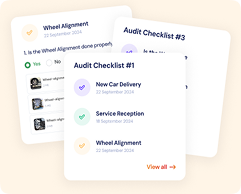
Coverage moves from sampling to full-pass review. Instead of a percentage of claims getting checked, every job card can run through a consistent first-pass evaluation, with only flagged ones escalated for manual attention.
Findings carry history automatically. A recurring issue at a dealership is visible because the system holds the last several cycles, not because a reviewer happens to remember a prior report.
Severity gets applied consistently. A digital system tags severity the same way every time, rather than depending on which reviewer is doing the check that week.
Cross-dealership comparison becomes possible. A pattern showing up at one location can be checked against others in the network automatically, instead of staying isolated to wherever it was first noticed.
PIC accountability is structural, not optional. Digital job cards can require a named technician and supervisor before submission, closing a gap that paper-based systems leave open by default.
Turnaround time drops meaningfully. Findings that used to take days to surface requesting documentation, waiting on a response, manually cross-checking happen as part of the claim submission process itself.
What Doesn’t Change
Digital job card audits don’t remove the need for judgment. Flagged findings still need a person deciding what action to take a clawback, a conversation with the dealer, a deeper investigation. What changes is what gets escalated to that person in the first place. A digital system narrows a warranty team’s attention to the findings that actually warrant it, rather than spreading that attention thin across a sample that may or may not include the real problems.
It also doesn’t remove the dealership relationship from the equation. A digital audit process still needs to be communicated and adopted at the dealer level a system nobody uses correctly generates bad data just as easily as no system at all.
Where OEMs Tend to Underestimate the Shift
The most common mistake isn’t skepticism about digital audits most warranty teams are already convinced these are directionally right. The mistake is treating the switch as primarily a technology purchase rather than a process change. Moving from manual to digital job card audits works when severity definitions, escalation criteria, and PIC accountability structures are decided before the system goes live not left for the software to figure out. A digital tool applied to an undefined process just produces undefined results faster.
Why This Matters More for Larger Networks
For a small dealer network, the difference between manual and digital review is meaningful but manageable either way a warranty team can still, with effort, keep a mental map of what’s happening across a dozen dealerships. That stops being true past roughly 50-100 locations. At that scale, manual review isn’t a slower version of digital review it’s a fundamentally different, much narrower slice of the actual claim volume, and the gap between what gets checked and what should get checked only widens as the network grows.

Ejaz leads engineering at AutoSmart. He built the platform around a constraint most audit software ignores: the auditor is standing in a workshop with no signal. He writes about offline-first architecture, audit data structures, and scoring systems.