

The Mercedes‑Benz Dealer Evaluation (MBDE) checks if authorized dealerships meet global retail standards consistently. It assesses facility presentation, sales process integrity, after-sales service, employee skills, and customer experience. All this aligns with Mercedes-Benz’s promise of “The Best or Nothing.”
Many dealers grasp the importance of MBDE, but fewer have a clear strategy for MBDE audit preparation. This guide covers what auditors check, typical dealership issues, and ways to maintain compliance. This approach can turn MBDE from a stressful task into a regular strength.
What Do MBDE Auditors Actually Evaluate?
MBDE assessments focus on several connected pillars. Understanding these is key to effective preparation.
1. Corporate Identity & Facility Compliance (MAR2020 Standards)
Mercedes‑Benz uses its MAR2020 retail design standard as the benchmark for showrooms globally. Auditors check signage placement, lighting, display layouts, lounge presentation, and external branding. Even small issues like misaligned logos, worn upholstery, or dim lighting can lower your MBDE score. Facility compliance is often the most visible pillar and frequently flagged.
2. Sales Process Effectiveness
This pillar examines how well the sales team follows the customer journey set by Mercedes‑Benz.
Auditors look for:
- Structured needs assessments
- Correct vehicle presentation
- Test drive protocols
- Proper use of digital tools like the MBUX configurator
The focus is on process adherence, not just conversion rates.
3. After-Sales & Service Quality
The service department is assessed on workshop efficiency, technical readiness, service-advisor communication, parts availability, and workshop safety. Warranty-process compliance and vehicle handover quality are closely scrutinised. This pillar is crucial as it affects repeat customer relationships and long-term retention.
4. Customer Experience Integration
Mercedes‑Benz tracks customer feedback through its Voice of the Customer (VoC) programme. MBDE auditors check how dealerships respond to this data. They assess if negative feedback leads to corrective action and if teams are trained to improve experience touchpoints, from the first greeting to post-service follow-up. Strong dealers don’t just collect feedback; they weave it into weekly operations.
5. Employee Training & Competency
All customer-facing staff must complete Mercedes‑Benz product training, brand-immersion modules, and role-specific certifications. Auditors verify training records and may conduct scenario-based checks on applied knowledge. Gaps often arise from poor documentation, not lack of training, so MBDE compliance starts with clean, centralised records.
How to Build an MBDE-Ready Dealership: Key Preparation Strategies
Preparation for MBDE should start long before the audit. The dealers who score highest treat MBDE as an ongoing standard, not a one-off project.
Conduct Internal Pre-Audits on a Set Cycle
Internal audits should mirror the MBDE process quarterly or monthly to identify gaps before a Mercedes‑Benz assessor does. Walk-throughs should follow the actual evaluation structure: facility, staff readiness, process adherence, and customer data review. Use a dealer evaluation checklist linked to MBDE pillars to standardise your pre-audits.
Assign Pillar Owners
Each major MBDE pillar needs a designated internal owner:
- A Facility Manager for MAR2020 compliance
- A Sales Manager for process adherence
- A Service Manager for workshop and warranty standards
This ownership spreads accountability and prevents compliance from resting on one person.
Maintain a Live Training Tracker
Training completion is one of the easiest pillars to fail on documentation alone. A centralised, always-updated tracker showing certification status for every team member eliminates last-minute scrambling and provides immediate proof of compliance. This document should link to completed modules, expiry dates, and future training plans.
Close Findings Within Defined Timelines
Post-audit findings that remain unresolved raise red flags in future evaluations. Establish a clear corrective-action workflow where every finding is assigned to someone, with a deadline and sign-off step. This shows operational maturity to Mercedes‑Benz representatives and reduces repeat issues.
Integrate Customer Feedback Into Weekly Operations
Dealers who excel in the customer experience pillar review VoC data regularly, not just before audits. Making feedback part of weekly management meetings helps catch patterns early and document improvement actions. Use AutoSmart-style dashboards to track complaint trends, resolution times, and satisfaction scores by department.
The Bottom Line
Passing the Mercedes‑Benz Dealer Evaluation isn’t about cramming before an audit. It’s about running a dealership that consistently meets luxury retail standards every day. Dealers who struggle with MBDE are rarely uninformed; they often lack systematic processes. The solution is structured, trackable, daily compliance.
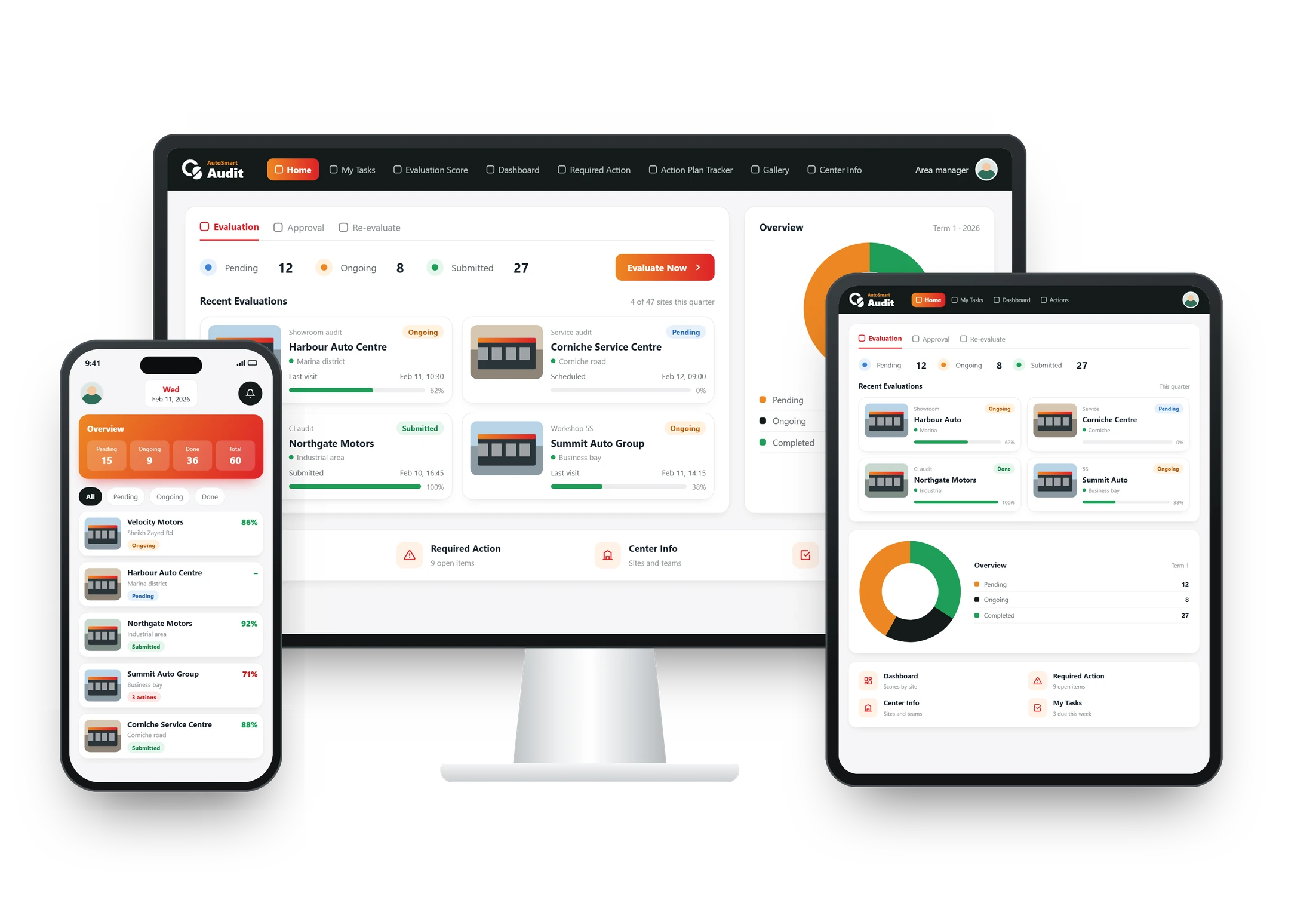
AutoSmart Audit aids Mercedes‑Benz dealers in importing MBDE-aligned workflows into daily operations. This includes pre-audit checklists mapped to MBDE pillars and real-time reporting. If your team is ready to move beyond reactive preparation, explore how AutoSmart Audit works for dealer networks.