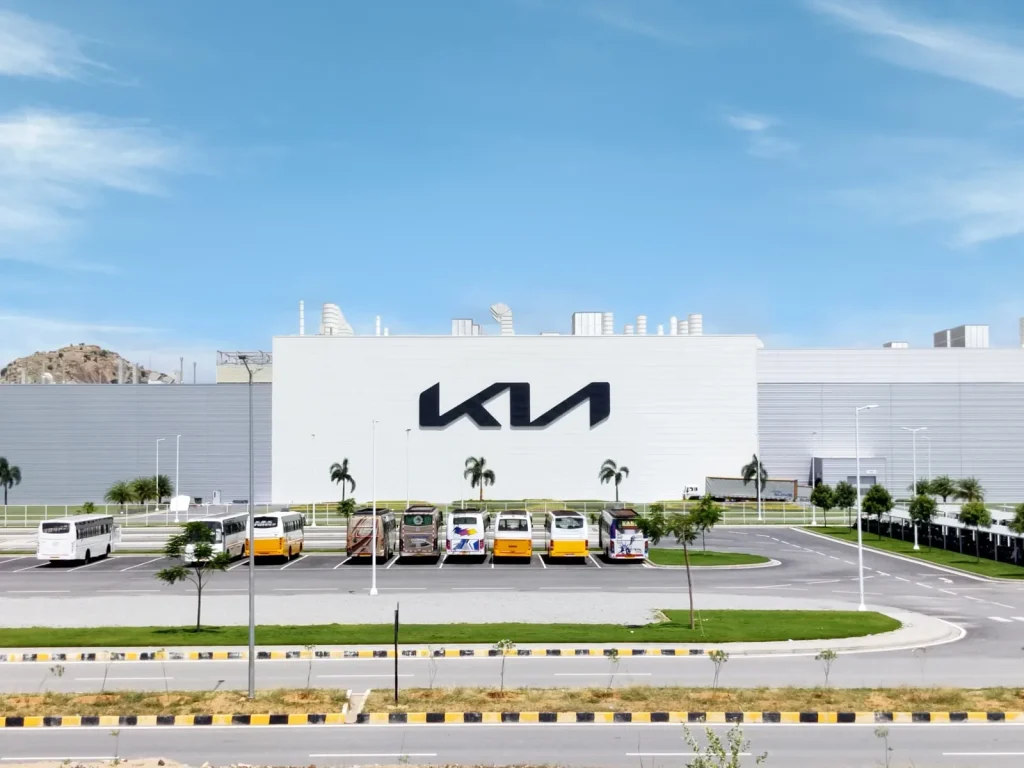













For years, dealer excellence has been a loose report card, a clipboard exercise that dealers loathed due to inconsistent grading. However, in an age of shifting to EVs and digital-first buyers, what was once considered aspirational is now a minimum operating standard. Today, a dealer excellence program is the essential framework that knits each franchise together around global brand and technical standards.
Modern network governance replaces reactive policing with structured, data-driven oversight, ending decades of policing with static PDFs and beginning a partnership based on transparent, real-time data. By replacing old friction with a single digital source of truth, we turn the audit into a high-performance engine for network-level scaling.
The Four Pillars of a High-Performance Dealer Excellence Program
A dealer excellence program is only as good as the data that underpins it, and most dealers are lacking consistent, objective evaluation metrics. To build a program that drives actual ROI rather than just filling cabinets, we must look beneath the shiny floor and focus on the bones of the business.
1. Brand Integrity
This goes beyond clean windows. It’s about ensuring the visual identity (VI) is perfectly executed. In a global network, brand dilution happens slowly, a wrong font here, a non-compliant pylon there. This pillar ensures the physical environment reinforces the premium price point of the vehicles.
2. Operational Readiness
We audit service capacity. Do the technicians have the specific high-voltage tools required for repair? Are the service bays configured to handle the throughput of modern software-defined vehicles? Excellence here means the dealership is technically open for business.
3. Technical Connectivity
We evaluate network quality standards, Wi-Fi signal strength in the workshop (critical for software flashes), and the uptime of on-site chargers. If the technical backbone is weak, the entire customer experience lags, leading to silent opportunity costs that drain millions from the network.
4. Regulatory Compliance
This is about risk mitigation and adhering to strict OEM dealer standards. From GDPR/data privacy regarding customer vehicle data to local energy mandates for charging stations, non-compliance isn’t just a point deduction; it’s a legal liability. A robust framework treats these as contractual non-negotiables.
Empowering Excellence with Autosmart Audits
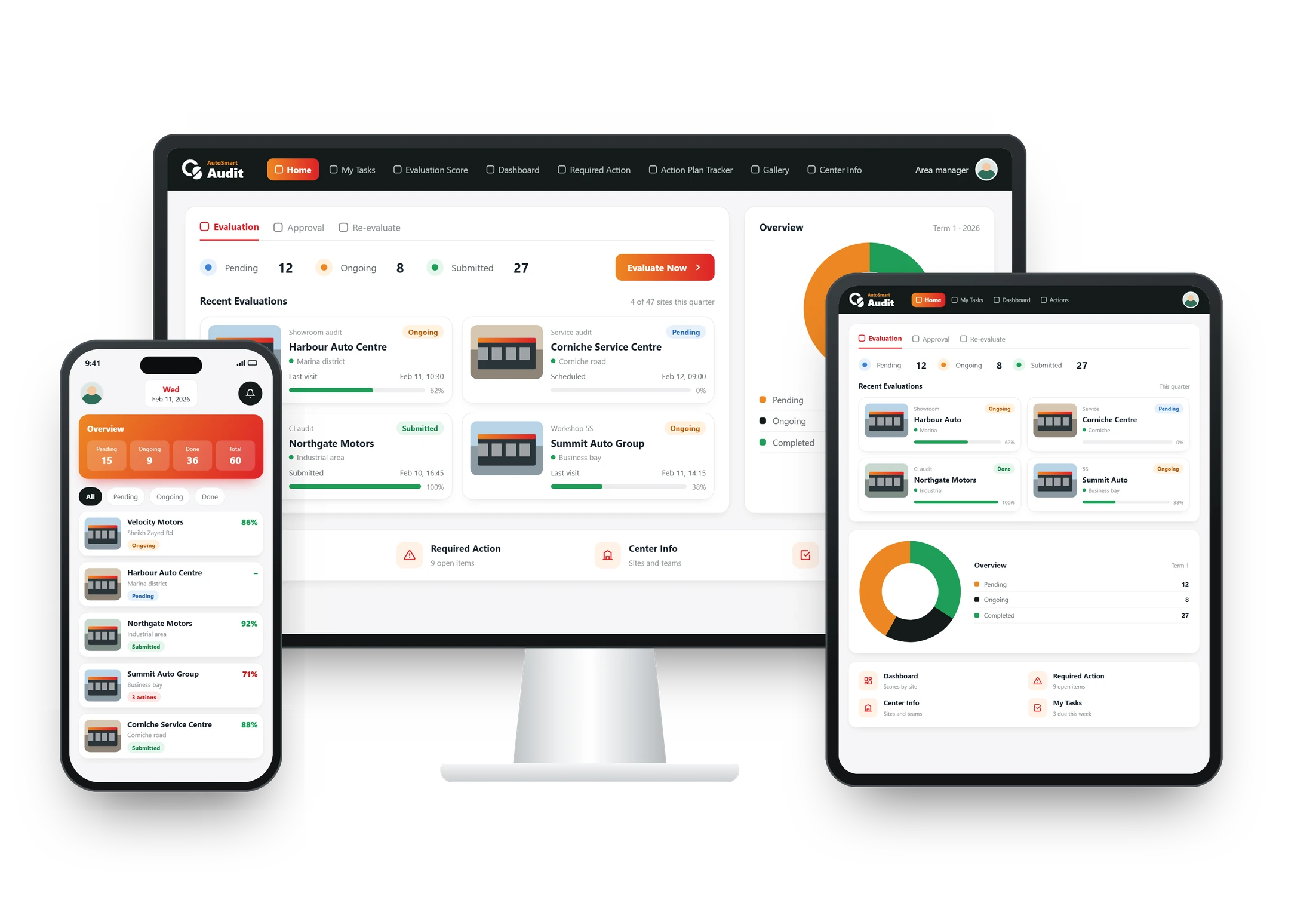
To bridge the gap between high-level strategy and the dealership floor, you need more than a checklist; you need a digital central nervous system. Autosmart Audits is the engine that drives the program, converting static manuals into a live operation that replaces guesswork with real-time data.
Brand Integrity: Beyond the Polished Surface
- Visual Standard Synchronization: The platform pushes global brand updates to every dealership simultaneously, ensuring new signage or furniture layouts are uniform across the network.
- Elimination of Grading Bias: By requiring high-resolution, timestamped photo evidence, the platform ensures the dealer performance evaluation is based on reality rather than an auditor’s personal opinion.
- Instant Brand Correction: When a non-compliance issue is flagged (e.g., incorrect pylon lighting), the system triggers an immediate alert to the facility manager.
Operational Readiness: Maximizing Service Throughput
- Specialized Tool Verification: It automates the check-off for mandatory EV tools; if a high-voltage battery lift is missing, the system flags it as a service-stopping risk.
- Bay Capacity Optimization: By auditing the condition of diagnostic bays, it ensures available bays are actually functional, preventing revenue-crushing bottlenecks.
- Standardized Workflow Audits: OEMs can track whether technicians follow prescribed diagnostic steps, reducing costly comebacks and increasing customer trust.
Technical Connectivity: Hardening the Digital Backbone
- Wi-Fi Strength & Software Flash Success: The audit includes signal testing to ensure vehicle software updates don’t fail mid-process due to dead zones.
- Charger Uptime Monitoring: Dedicated modules verify the integrity of on-site chargers, ensuring dealers are actually capable of delivering electrified vehicles.
Automated Action Plans: The Follow-up Revolution
In a traditional audit, identifying a problem is only 10% of the battle; the real failure happens in the follow-up. Autosmart Audits transforms every failed audit point into a live, trackable project. This is why the Automated Action Plan is the best service for your dealer excellence program.
Accountability and Resolution
- Person In Charge (PIC) Assignment: It automatically routes failed items to specific department heads, ensuring accountability isn’t lost in a general inbox.
- Real-Time Proof of Fix: Dealers must upload after photos directly into the action plan for digital verification by the OEM.
- Zero-Lag Resolution: Because the action plan is generated the second the audit is submitted, the fix-it window starts immediately.
Analytics and Risk Management
- Risk-Based Prioritization: The system categorizes failures into Critical (24-hour fix for safety/legal risks), High (7-day fix for revenue issues), and Medium (30-day fix for cosmetic standards).
- Geotagged Verification: GPS-stamped and time-dated photos prevent ghost fixes or the reuse of old compliance photos.
- Automated Escalation Paths: If a critical item remains unresolved, the system escalates the alert to Regional Managers or OEM Executives.
- Chronic Failure Tracking: The system flags repeated mistakes, allowing OEMs to move from fixing symptoms to solving root causes.
Develop an Organized and Scalable Dealership Excellence Program
Today, dealer excellence is not a scoring mechanic; it is a governance framework that protects brand equity, operational stability, and legal compliance across the network.
With AutoSmart Audits, OEMs and dealer groups are able to:
- Real-time performance visibility
- Structured accountability
- Closed-loop resolution
- Risk-based prioritization
Book a strategy session to design a scalable dealer excellence framework for your network.
Preguntas frecuentes
How does the framework avoid Report Graveyards?
It turns static findings into live, trackable assignments with automatic due dates to guarantee that every issue found actually gets fixed.
Can AutoSmart Audits assist dealers with EV compliance?
Yes, it provides on-the-spot verification of charging station uptime and specific tool availability to satisfy strict manufacturer requirements.
What is the biggest advantage of active plans?
They eliminate follow-up friction by demanding digital evidence of the fix so that no discovered vulnerability is left unresolved.