
Car dealership standards play a crucial role in ensuring smooth operations by establishing consistent procedures for sales, customer service, and vehicle maintenance. These standards help streamline processes, improve customer satisfaction, and maintain regulatory compliance. By adhering to these guidelines, dealerships can offer a seamless experience, build trust with customers, and enhance overall business efficiency.
Introducción
Imagine a car dealership that is inconsistent and inefficient in its operations—this would definitely affect its growth and customer satisfaction. To avoid this, adopting and following established car dealership standards is crucial for success. These standards provide a framework that ensures all operations are carried out smoothly, consistently, and effectively from start to finish.
In this blog, we’ll explore car dealership standards, their benefits, and key areas covered to ensure smooth operations. We’ll also look at how digital auditing tools like AutoSmart Audit can help dealerships implement, monitor, and capitalize on these standards.
What are car dealership standards?
Car dealership standards are rules or guidelines that maintain uniformity across various dealership operations. These standards cover everything from employee behavior to safety protocols, sales processes, vehicle maintenance, and customer service, ensuring every customer experiences the same high-quality service anytime or anywhere they visit that dealership.
By standardizing these operations, dealerships can reduce errors and stay compliant with industry regulations. These standards also help car dealerships maintain a competitive edge through improved customer satisfaction, higher operational efficiency, and greater profitability.
Benefits of standardization for car dealerships
Here are the benefits of standardization for car dealerships:
1. Improves customer experience
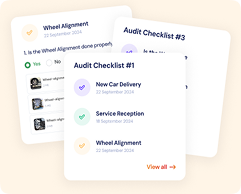
When car dealerships use standardized procedures, customers can expect consistent, high-quality service throughout. Streamlining operations ensures a seamless and satisfactory experience, whether it’s the sales process, vehicle delivery, or after-sales service. AutoSmart Audit, for example, helps dealerships maintain these standards through regular checks and audits.
2. Increases operational efficiency
Standardizing operations aligns processes and reduces mistakes or mishaps, enabling dealerships to function more efficiently. It also minimizes the time spent onboarding new staff, processing sales, etc. A digital tool like AutoSmart Audit is critical in helping dealerships stay aligned with their operational goals by automating the tracking and reviewing processes.
3. Better compliance and risk management
Following industry regulations and standardizing operations helps car dealerships comply with legal requirements, reducing the risks associated with safety violations, legal issues, and other mistakes. Digital auditing tools like AutoSmart Audit help identify potential risks and ensure dealerships comply with local and national standards.
4. Reduces costs
Streamlining processes and minimizing errors can significantly reduce waste, lower employee turnover, and improve financial performance.
Key areas covered in car dealership standards
Car dealership standards cover key areas to ensure smooth operations across all departments. These areas include:
1. Sales processes and customer service:
A consistent sales process ensures customer satisfaction. Standardizing car dealership procedures can give every customer a uniform and positive experience.
2. Vehicle maintenance and repairs:
Dealerships that follow industry practices for servicing vehicles—such as safety inspections, regular maintenance schedules, and quality control checks—contribute to higher customer satisfaction and fewer repair issues in the future.
3. Employee training and development:
Standardized employee training programs help ensure that all staff members have the knowledge and skills to provide excellent service. Regular training keeps staff updated on the current industry trends and dealership practices.
4. Safety and regulatory Compliance:
Standardized safety protocols are essential for avoiding accidents to protect its customers and employees while reducing hefty fines or legal issues.
5. Equipment and tools management:
Through comprehensive evaluation of their tools and equipment, car dealerships can ensure that all equipment and tools are functioning effectively, properly maintained, and replaced when necessary, minimizing downtime and enhancing service quality.
Conclusión
Thus, car dealership standards are required for smooth operations, efficient working, and success of a dealership. These standards help dealerships create a consistent customer experience, improve operational efficiency, and ensure compliance with industry regulations, which scales up for long-term success. Tools like AutoSmart Audit can significantly aid in monitoring and maintaining these standards, helping dealerships stay on track with regular audits and compliance checks.

Ejaz leads engineering at AutoSmart. He built the platform around a constraint most audit software ignores: the auditor is standing in a workshop with no signal. He writes about offline-first architecture, audit data structures, and scoring systems.